Listening is a Superpower: Why Just Being There Matters More Than You Think

You don’t have to be a therapist to support your teen’s mental health. You don’t need a perfect script or an answer to every problem. In fact, sometimes the best thing you can do is… say nothing at all.

Just listen.
Really listen.

It sounds simple, but research shows that active listening—listening with your full attention, without interruption or judgment—is one of the most powerful tools a parent or caring adult can offer. It’s also really, really hard!

What Is Active Listening?

Active listening is more than just hearing words. It’s a relational skill that helps your teen feel safe, seen, and understood. It means you’re fully present—not planning your next response, not checking your phone, planning your grocery list – and not rushing to fix or advise.

Instead, you’re creating a moment of connection.

According to the United Nations Office on Drugs and Crime (UNODC), active listening supports healthy brain development and emotional resilience in children and teens. Their Listen First campaign highlights how simply being available—with warmth, curiosity, and no judgment—can reduce stress and promote long-term mental well-being. Sometimes it’s hard because we are adults, and have already survived adolescence, but this is our youth’s first time around. Find your patience and your gentleness.

Why It Works (Backed by Research)

A study by Harvard’s Graduate School of Education found that when youth feel genuinely heard, it activates brain regions associated with emotion regulation and trust. That means better coping skills and fewer emotional outbursts down the line. (I think we all know some adults who could use more emotional regulations skills!)

Another study from the Journal of Experimental Psychology showed that when people put their emotions into words (a process called affect labeling), their stress levels drop and emotional clarity improves. But this only happens in environments where they feel safe enough to speak up.

And safety starts with listening.

Another experiment by Harvard Business School scholars found that perceived listening (smiling, nodding) may not reflect actual or active listening. Real connection requires verbal cues— asking clarifying questions, reflecting feelings, or gently checking in. Source: Did You Hear What I Said? How To Listen Better.

What It Looks Like in Real Life

Picture this:

Your teen storms in and vents:

“School was so fake today.”

Instead of jumping in with solutions, try:

“That seems frustrating. Want to vent, or would advice help?”

Then—just breathe, listen, and reflect:

“It sounds like today felt… exhausting.”

This pause and presence builds emotional safety far more than any “fix.” When teens feel heard, they come back again and again.

3 Quick Tips for Active Listening with Teens

  1. Make Space Before Words
    Body language speaks louder than advice. Turn toward them. Put your phone down – no, really, put it down. Nod gently. Be still.
  2. Reflect Instead of React
    Use simple reflections: “That sounds really frustrating.” / “You were hoping it’d go differently.” It shows you’re with them.
  3. Ask, Don’t Assume
    Try: “Do you want advice, or do you just want to vent?” Giving them choice empowers them and builds communication.

Why This Matters

Right now, youth are facing historic levels of stress, anxiety, and loneliness. According to Mental Health America, over 60% of youth with major depression never receive mental health treatment. But research consistently shows that just one supportive, listening adult can be a protective factor—reducing the risk of suicide, depression, and long-term disconnection.

You can be that adult.
You don’t have to have the answers.
You just have to listen first.

Join us in our mission to teach adults how to listen better and support youth mental health in our communities! Learn more at http://www.teentalkingcircles.org and how to support our nonprofit!
Next Training is August 21-24th, 2025.

Talina Wood, Somatic Embodiment Coach, Teen Talking Circles Executive Director & former youth participant 1994-1997

Reviving Human Connection: Empowering Teens through Teen Talking Circles

In a world where screens dominate our attention and digital distractions seem ever-present, the essence of genuine human connection has become increasingly scarce. This is particularly challenging for teenagers, who are navigating the complexities of developing their identities and forming healthy relationships amid the allure of technology. However, amidst this disconnection epidemic, I believe a beacon of hope emerges — Teen Talking Circles. 

Many of us can reminisce about the childhood moments when we sought guidance from a non-parental adult during high school. It might have been a teacher, a sports or theater coach, or a trusted family friend. Whether grappling with complex social decisions, celebrating accomplishments, or navigating life’s challenges, these interactions laid the foundation for healthy communication, connection and self-awareness. Reflecting on my conversations with Circle Facilitators during my own high school years, I realized the profound impact of having supportive and non-judgmental adults to help me explore my identity and aspirations.

Teen Talking Circles aspire to create this invaluable environment for today’s youth. These circles provide young individuals with a structured, secure space where they can openly and authentically express themselves with caring adults.

Teen Talking Circles represent a vital solution to the disconnection epidemic. Through our experiential training programs, adult community members are empowered to create Circles where teenagers can be truly seen and heard in any community or setting. Once in these Circles, youth learn essential social communication skills, gaining interpersonal confidence in a world that often feels isolating.

Participating in Teen Talking Circles equips teenagers to navigate life’s interpersonal challenges with skill and confidence. These circles foster a sense of belonging, providing the tools necessary for teenagers to forge genuine connections in an increasingly disconnected world.

In an age where teenagers find it easier than ever to turn away and numb themselves with technology, Teen Talking Circles become a refugea place where the allure of screens takes a back seat to the richness of face-to-face interaction. The circles offer a unique opportunity for youth to break free from the isolating grasp of digital distractions and cultivate authentic connections with their peers.

By participating in Teen Talking Circles, teenagers gain more than just social communication skills. They develop a profound sense of belonging and empowerment. These circles become a training ground for navigating the intricacies of life, allowing young individuals to embrace challenges with resilience and authenticity.

Reviving human connection is a collective responsibility, and Teen Talking Circles provide a tangible and impactful way to address the disconnection epidemic among teenagers. As advocates for the well-being of our youth, it is crucial to support initiatives that empower them to thrive socially and emotionally.

I extend a call to action, inviting individuals and organizations to consider supporting Teen Talking Circles. Your contribution will make a lasting impact on the lives of teenagers, offering them a pathway to genuine connections and a foundation for future success.

In a world that often seems dominated by screens and digital distractions, the mission of Teen Talking Circles stands out as a beacon of hope. By providing a safe space for authentic expression and connection, these circles empower teenagers to navigate the complexities of life with confidence and resilience. Let us come together to revive human connection and empower the next generation through nonprofits like Teen Talking Circles, ensuring a brighter and more connected future for our youth.

– Talina Wood, Teen Talking Circles Executive Director & former youth participant 1994-1997

“Fostering Authentic Connections: Empowering Teenagers through Teen Talking Circles”

“In a world increasingly dominated by screens and digital distractions, genuine human connection has become increasingly scarce. Teenagers, who are already navigating the complexities of developing their identities and forming healthy relationships, find it easier than ever to turn away and numb themselves with technology. This is where Teen Talking Circles comes in.

Teen Talking Circles provides a vital solution to this disconnection epidemic. Through our unique training, we empower community members to create spaces where teenagers can truly be seen and heard. In these circles, they learn essential social communication skills and increase their interpersonal confidence in a world that often feels lonely.

By participating in Teen Talking Circles, teenagers become equipped to navigate life’s interpersonal challenges with skill and confidence. They gain a sense of belonging and develop the ability to forge genuine connections in an increasingly disconnected world.

Join us in making a difference. Volunteer, donate, or help spread awareness about Teen Talking Circles. Together, we can create a world where teenagers feel supported, connected, and empowered to thrive.”

If you are ready to directly help youth, we have two upcoming trainings: Late Summer In-Person Training or our Fall Virtual training, or you can donate to support others taking the training. Visit www.teentalkingcircles.org to learn more about how you can help!

A Message from our Board Member

David Coxon, LMHC, Founder of Cascadian Counseling Services https://cascadiancs.com

Circle is the Light

“I find Hope in the darkest of days” – Dalai Lama

Even in my darkest days, I find hope in Circle. I find it in my teen circles, in generational circles, in parent/child circles, in terminal youth cancer circles. I find hope anywhere a compassionate caring person chooses to create safe spaces for circling in their community.

Depression, anxiety, self harm and suicide are on a dramatic rise for American youth. According to The Seattle Times “the total number of youth hospitalizations nearly doubled” from 2015-2021. At a vulnerable time in personal development, our youth faced crippling societal disruption, school closures & virtual classes that robbed them of creating vital bonds with peers and social skill building opportunities. Youth need the hope of Circles.

Many teenagers have nowhere to go to socialize and confide in others what they were experiencing, which only exacerbates loneliness and disconnection. The State of Wisconsin just released results from their 2021 Youth Risk Behavior Survey showing a staggering 52% of students say they struggled with anxiety throughout the year.  New studies are arriving that confirm what the American Psychological Association has called “a crisis”. Youth need the deep connectivity and support of Circle. 

There is a special kind of pain we experience as parents watching a child struggle with depression, seeing how alone and disconnected they feel, wrestling with overwhelming feelings of social ostracism and isolation.  Often feeling rejected by peers and society, adolescents strain to maintain a mask of strength and feelings of hope without a fully developed toolbox of psychological skills to guide them safely through the turmoil. Navigating adolescence is difficult enough, and we added the strain & stress of a pandemic and divided national political culture to that! Youth need safe and stable places to create relationships with peers. 

How do we as adults support our youth and relieve some of the burden carried by overworked & under resourced schools? How do we, adults who are also tired and may have experienced loss ourselves, help teenagers regain some of the forfeited life that they have been deprived of?  
We listen. We model vulnerability. We create opportunities for youth to come together in safe spaces to be honest, to share, to bond, to cry and laugh, and to learn how to create healthy relationships.

We empower them to support each other. We use the power of Circle to save lives. 

You are ready to help youth. Take our upcoming Late Summer In Person training or our Fall Virtual training, or donate to support others. Visit www.teentalkingcircles.org to learn more about how you can help!

Warmly,

Talina Wood, Executive Director Teen Talking Circles & Original Circle Participant

TTC Founder’s Poem for the month of February

wordpress1

Homeless youth in Seattle

Happy Valentine’s Day 2020

A Poem to Read to Each Other 

Take a few minutes and ruminate on this beautiful reminder… And read it to someone you love. Talk about it for a few minutes…Spread love to those you don’t know as you walk down the street. You never know how much they might need your kindness. I met these kids on the street in Seattle, bought them some hot chocolate and we talked for a while. We’re all living with what life deals us. But if we can we can make it better for someone else, just by paying attention and listening.

Love, Linda

A Ritual to Read to Each Other

If you don’t know the kind of person I am
and I don’t know the kind of person you are
a pattern that others made may prevail in the world
and following the wrong god home we may miss our star.
For there is many a small betrayal in the mind,
a shrug that lets the fragile sequence break
sending with shouts the horrible errors of childhood
storming out to play through the broken dike.
And as elephants parade holding each elephant’s tail,
but if one wanders the circus won’t find the park,
I call it cruel and maybe the root of all cruelty
to know what occurs but not recognize the fact.
And so I appeal to a voice, to something shadowy,
a remote important region in all who talk:
though we could fool each other, we should consider—
lest the parade of our mutual life get lost in the dark.
For it is important that awake people be awake,
or a breaking line may discourage them back to sleep;
the signals we give — yes or no, or maybe —
should be clear: the darkness around us is deep.
William Stafford, “A Ritual to Read to Each Other” from The Way It Is: New and Selected Poems. Copyright © 1998 by William Stafford.  Reprinted by permission of Graywolf Press.
Source: Indivisible: Poems for Social Justice (Norwood House Press, 2013)

Happy Valentines Day

ttcflower

We have so much good news for you — stay tuned for information on our 26th year and our rebirth of TTC, with new staff, new trainings, workshops, retreats, and most importantly circles. May this year be a better year for everyone, for all your loved ones, for you, for the planet, for our country and the world. Compassion for self and others, and service to something greater, and acceptance and being here now…. being present with what is, and taking positive taking action where we can – these are the truly satisfying ways to live.

So, Valentines Day… On this day, more than anything I urge you (and me) to fall in love with yourself. To be your own beloved. It takes embracing all of who we are — worts and all. Here’s the truth about me. I fall apart regularly, and just like the weather, I go through a pattern… I do my best but niggling thoughts creep up over time — guilt, ugly self talk, frustration, loss of self control and I begin to beat myself up and feel all dark and twisty – I know I’m heading for a big cry… I can feel it coming like rain. So, I start to tell my people the truth… the truth I’d only tell those who really love and know me for all my seasons…then I start to cry, hopefully before I begin to lash out, but I do that too… it’s the pain and pressure building up inside me… I’m sure I’m not alone — you must understand this pattern because it’s so human. But I feel I’m the only one who does it at that point… and I should be locked away so I don’t hurt anyone… But, I have my people, and I talk with them and I cry it out as I tell my truth, the truth I’m ashamed of and know that I don’t really mean sometimes… sometimes I just feel so bad I don’t think it’s going to go away. But after enough times of getting it off my chest, it’s like I’ve been renewed. I often feel embarrassed that I had to go through it all again, but I have to live with that as well. But I come back and remember who I am… I begin to feel I’m that bigger self, the Linda who loves herself and accepts what is happening in my life, and gets back on the horse and keeps going. The humor of it all starts to come back. In fact, with my daughters, I can be in the middle of crying about it all and burst out laughing with them at the absurdity, the cosmic joke of it all…but the realities we live with are not a joke… they’re life and death, and old age, and aging parents, and parents with  Alzheimers and financial issues, and stresses beyond stresses… and world situations we can do nothing about but watch as they go down, powerless… and causes that bring up so much passion we almost become dangerous. Life is simply LIFE… just like the Buddha says… BUT, I believe each phase of this way I go through life is an essential part of the spiral of growing onward in time and space. And the way I do it may be more dramatic than some folks, but it brings me back to health. After all the orgiastic feelings, I come back to treating myself better and others better, apologizing for anyone I may have injured when I was down and hurting, and doing my best to be the best I can be all over again. Once again, I have gained more perspective, forgiven myself and forgiven others for being human. And then, laughter and hope and positivity return.

I don’t know how we do it without each other  — We people carry so much love and grief and pain, and disappointment, loss, fear… — I don’t know how we carry on as care givers for our aging parents, friends, ourselves without people who just sit and hold us and listen to us when we need to lose it and feel it all out. There is no “OK” or “happy” we get to live in, like some advertisements would like us to believe — they are simply moments we might find of relief and joy, but it’s always going to come back to chop wood, carry water, hold our dying parents and feed our hungry children and work to “save” the world — it’s going to always be an inside job to live with the ebb and flow of real life and real emotions and the real things we are grappling with inside. So, we just have to accept that that is just plain good enough and keep on keeping on.

WE ARE GOOD ENOUGH AS WE ARE.  We must keep remembering that. And keep remembering that we are so much bigger than the small thoughts we have about ourselves, the ways we put ourselves down… we all do it. We must forgive the mistakes we make — the less than good enough times when we treat others poorly because we feel poor of spirit. All we can do is what Maya Angelous told me  –  forgive ourselves and ask for forgiveness from others. Relationships are not simple, but good ones are those that keep forgiving us our trespasses, as we forgive others for theirs. Right? Relationships give us a chance to hold each other’s worst and best in a wholeness much bigger and more human than we even know. ,

So happy Valentine’s Day… may your best relationships be those who truly love you as you are and are willing to stay in the ring, to sit in the fire, to go through it all, knowing that we are all everything… and that we are imperfect, impermanent and incomplete. Until the day we die, we are worthy of love. And love is much bigger than hearts and flowers on Valentines day.

Love, linda & the whole TTC family.

Gift of beauty, kindness & gentle wisdom: Heather Wolf’s workshop at Hollyhock for adults and youth

A beautiful workshop is coming up at Hollyhock.

Immerse yourself in the practices of folk fermentation and herbalism— living arts passed through the ages by cultures the world over. Through play and hands-on experience, learn to make a wide variety of vegetable ferments, brews, herbal elixirs, and medicines. Open to the magic, healing, science, story, and song of these important wisdom traditions.

Folk arts live in the collective, are passed by way of the people, and belong to everyone and no one at once – expressions of living culture in all respects. Fermentation and herbalism are central spokes in a great wheel of these traditions, with near endless manifestations throughout the world, including dance, song, story, theatre, art, food, healing medicine, ritual, ceremony and celebration. By connecting to one of these strands of folk wisdom, one is instantly drawn into the kaleidoscope of culture. Likewise, this wheel of folk tradition emerges directly from human relationship with earth and cosmos, held within the cyclic spiraling of time. The practice of these arts is the foundation of healthy living culture, instilling wellness to all levels of individual and collective being; they integrate us into relationship with ourselves, our relatedness, and existence itself.

Heather Wolf comes from a background of immersive study and practice in a wide variety of world folk traditions: herbalism & healing, fermentation, mythology & ritual arts, dance, music & theater. She is Co-Founder of Iggy’s Alive & Cultured, an artisanal raw-fermentation company based in the South Salish Sea, on Bainbridge Island. As Founding Brewess of Iggy’s Honeybrew Kombuchas, her formulations are inspired by old world herbal tonics. She has a deep reverence for the magic of fermentation, plants, bees, the healing alchemy of herbal brews, and living culture.

Iggys.com

Instagram @heatherwolf

TUITION: $545 CDN / 5 nights (meals & accommodation extra)

In this older interview, Maya Angelou speaks about how to make it through tough times. Always relevant….

Maya Angelou is one of the great voices of contemporary literature and a remarkable Renaissance woman. In the 1960s, at the request of Dr. Martin Luther King, Jr., she became the northern coordinator for the Southern Christian Leadership Conference. Her books include an autobiographical account of her youth, I Know Why the Caged Bird Sings and Gather Together in My Name. She has been awarded over 30 honorary doctorate degrees and been nominated for a Pulitzer Prize. These are not the accomplishments one might have predicted from knowing her in her early days.

Linda Wolf: What do you tell young people who look out and see nature being destroyed, so much violence, everything falling apart?

Maya Angelou: It seems terrible and it’s true; it is pretty terrible. There’s racism and sexism and ageism and all sorts of idiocies.

But bad news is not news. We’ve had bad news as a species for a long time. We’ve had slavery and human sacrifice and the Holocaust, and we’ve had brutalities of such measure that in truth today, sitting in Seattle, Washington, in 1995, we can’t imagine what Attila the Hun did; we can’t imagine the cruelties of the Inquisition. We can’t imagine it.

Today we say “Ahhh, how horrible!” But the truth is we have had bad news a long time. Somehow we have survived, amazingly. While on the one hand we have the brutes, the bigots, the bullies, and at the same time we have had men and women who dreamed great dreams. We’ve had Galileo and Aesop, Paul Laurence Dunbar and W.E.B. Du Bois; we’ve had Sholem Asch, and Shalom Aleichem – great dreamers. We’ve had women who stood alone, whether it was Harriet Tubman or Mother Jones. We’ve had Margaret Sanger. We’ve had women who have stood in the gap and said, “I’m here to try to save the world.”

So I would say – not to the young people, but to you and to other adults – bad news is not news. Somehow, miraculously, we’ve survived and had a chance to laugh at each other and with each other, and fall in love and honor each other, and make dinners for each other.

This is what young women and men should know. They should know that we are carnivorous yet we have decided somehow not only not to eat our brothers and sisters, who may be delicious, but to accord them some rights and to try to love them and look after them. Look at that. That’s amazing!

I don’t want young men and women looking around at this little lonely planet and saying, “Oh my God! Mea Culpa. It’s so awful.” It’s bad, but it’s also good, and it’s up to each one of us to make it better – everyone of us. We deserve our future.

Linda Wolf: Dr. Angelou, you have done a lot in your life. You’ve taken drugs and written about it. You were a madam for lesbian prostitutes. You were a teenage mom. You tried prostitution. You had incredible experiences, deep and rich, that you wouldn’t have had if you had followed the straight and narrow?

Maya Angelou: Yes, but I wouldn’t suggest it for anybody. I mean if you happen to fall into the gutter, see where you are and admit it. As soon as you admit it you can be like the prodigal son, the prodigal daughter: get up and go to a safe place. Get up and go to someplace where your spirit is not kicked and brutalized, and your body misused and abused. Get up! But you can’t get up unless you see where you are and admit it.

I wrote about my experiences because I thought too many people tell young folks, “I never did anything wrong. Who, Moi? Never I! I have no skeletons in my closet! In fact I have no closet!” They lie like that, and then young people find themselves in situations and they think, “Damn, I must be a pretty bad guy. You know, my mom or dad never did anything wrong, so I’m pretty bad,” and they can’t forgive themselves and go on with their lives.

So, I wrote Gather Together in My Name, meaning that all those grown people, all those parents and grandparents, and teachers and preachers, and rabbis and priests who lie to the children can gather together in my name, and I will tell them the truth.

Linda Wolf: Where did you find the inner strength to keep liking yourself and feeling good about yourself through all the hardships, the scary times, and the painful times?

Maya Angelou: Well, I don’t know if I continue, even today, always liking myself. But what I learned to do many years ago was to forgive myself. It is very important for every human being to forgive herself or himself because if you live you will make mistakes. It is inevitable. Only the angels, the cherubim, and about three rocks don’t make mistakes. You’re going to do that.

But once you do and you see the mistake, then you forgive yourself and say, “I’m sorry,” to the people who you think you may have injured, and then you say to yourself, “I’m sorry,” and then you can like yourself again.

Quite often if we hold onto the mistake we can’t see our own glory in the mirror because we have the mistake between our faces and the mirror, so we can’t see what we’re capable of being. It is equally important to see the mistake and to forgive oneself for it. You can ask forgiveness of others, but in the end the real forgiveness is in one’s own self.

I think that young men and women are so caught by the way they see themselves. Now when a larger society sees you as unattractive, as a threat, as too black or too white, or too poor, or too fat, or too sexual, or too asexual, that’s rough. But you can overcome that. The real difficulty is to overcome how you think about yourself.

So, I think my blessing has been that I have been able to see a lot of my mistakes, and I’ve been able to forgive a lot of them and try to become better the next time.


Linda Wolf: Dr. Angelou, what advice do you have for young people growing up today?

Maya Angelou: To laugh as much as possible. Always laugh; it is the sweetest thing one can do for oneself and one’s fellow human being. When people see the laughing face, even if they’re jealous of it, their burden is lightened. But do it first for yourself.

Laugh and dare to try to love somebody, starting with yourself. You must love yourself first, of course, and you must protect yourself when you can. You say, “Just a minute! I’m worth everything, dear.”

If you really realize that, you realize everybody else is worth everything. Everybody, fat and thin and plain and pretty, white and black, rich and poor, thick and slow and brilliant, everybody is worth everything. Start with yourself though.

Linda Wolf is the co-founder of the Daughters/Sisters Project. (See Been There Done That in this issue.)

Interview with Linda Wolf, Founder and Executive Director of Teen Talking Circles

In early May, three 8th graders from Hyla Middle School, an independent private school on Bainbridge Island, asked to interview Linda Wolf, TTC Founder and Executive Director in support of their final project for their Global Communities class. The culmination of this class project is scheduled to be presented at the Living Futures unconference in Seattle on May 18th.

At Hyla Middle School, 8th grade students have the opportunity to explore issues that impact their lives through the Living Futures Global Education curriculum. This year, students have focused their energies on a wide array of issues including environmental and inclusivity issues of the Puget Sound area, and building community for youth. This particular group focused on inclusivity and community building for youth on Bainbridge Island, WA. Their goal is to bring attention to strategies and solutions that can serve as potential models for other communities. As teens, they understand the need for change and see themselves as active agents in that change.

hyla8thgrade

Hyla Middle School 8th Graders

In this interview, Linda Wolf touches on poignant topics such as connection, empowerment, activism, substance abuse, grief, self-love and compassion and how TTC builds vibrant and authentic relationships that support and empower us in our personal growth which informs our capacity to affect social change.

On a personal note, as assistant to the Directors of TTC, I was deeply moved by the reactions of the teens listening to Linda speak. Their faces softened, their voices relaxed, and their eyes seemed to fill with relief. They were nodding their heads, saying, “Yes! Yes! This makes sense!”

It was an honor for me to witness this connection and I believe the true strength of our organization is that it allows us to see each other and connect in this deep way, listening from the heart and being heard and witnessed profoundly heals our wounds and this positively impact everything from our personal relationships to deep divisions in the political and social climates. Please let us know your thoughts and take-aways from this interview.

To listen to this interview on Soundcloud, click here.

Thanks for reading,

Jeny Rae Vidal
Assistant to Directors at TTC


Olivia: How long have you been on the Island?

LW: Since 1990

Olivia: How long have you been with TTC?

LW: Since 1993

Olivia: So, do you feel like you are pretty tapped in to the community of youth, ages middle age to high school?

LW: I have a lot of experience in the past but I haven’t worked directly in circle with teens on the Island for a few years; I run a middle school aged circle in Seattle, now. But, we look forward to offering multiple local circles on the island, starting this Fall.

Olivia: How would you describe the youth community on Bainbridge?

LW: I would say, in general the youth on Bainbridge are pretty privileged, mostly white, upper to middle class – they have mostly college-educated parents who are either stay-at-home parents or business people. The kids here have a lot of opportunities to be in nature versus growing up in the city. Being on Bainbridge is sort of like living in a gated community. I think there is a lot that young people on Bainbridge are missing out on though – one of the most obvious is a connection with youth from Suquamish. There is a whole diverse culture that is only 5 minutes away that this community has not merged with… and you don’t get that in cities where there tends to be much more diversity. I do see youth on this Island going through the exact same things that youth go through all over the world go through in general as adolescents and teens, though I think many youth on this island are perhaps more conscious about alternative ways of living.
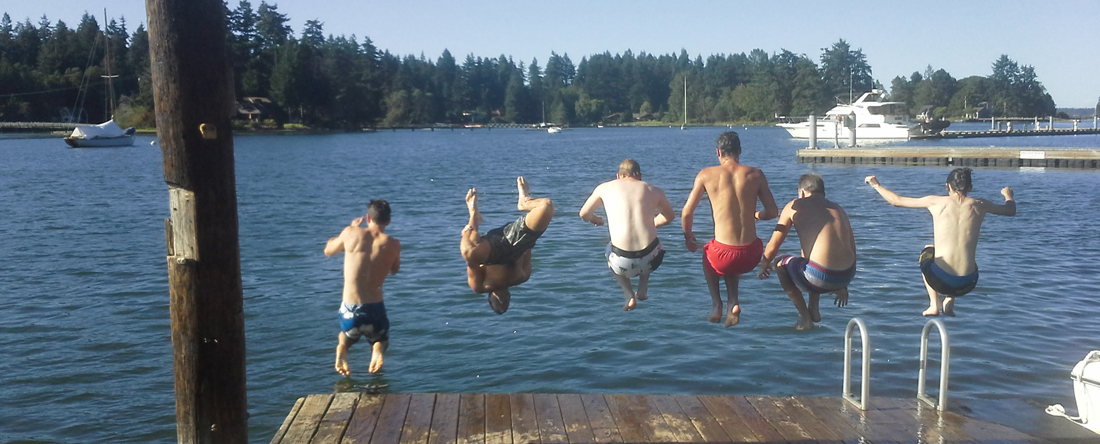
hidden-cove-dock-slide

Dock Jumping on Bainbridge Island, WA

Jacqueline: Do you see patterns in middle school or high school that lead to drug use, alcohol use, failing classes or school?

LW: Yeah, I do. The way I would describe the biggest problem for all of us in this world, including teens, is that we live in a toxic system – an unhealthy paradigm of dominance versus partnership. The larger paradigm is one of power-OVER instead of power-WITH. For example, white men over everyone, men over women, adults over children, people over animals, people over the planet. It’s dominating and controlling power versus cooperative partnering and collaboration. We live in a system that doesn’t honor compassion, cooperation, sharing, communication, true friendship, equality, and respect as primary principles to live by, even if we espouse it as a value. We live in a system of power over. “You are less important than me because I am an adult.  You are less important to me because you’re brown. You’re less important because you’re Jewish. You’re less important because you’re a woman. You’re less important because you’re gay.” It’s all about domineering over people, the planet, animals. How can we be well when we live in a system where the paradigm is dominance?

We need a system of power-with, a paradigm of cooperation and partnership. I think that is the biggest problem we all have. Every single solitary one of us world-wide. The most important thing for me is to create something that holds us all in partnership, in cooperation, and respect – that has been the overriding value of the Teen Talking Circles Project. TTC is not about an adult coming in to a circle and lording over you. We are not going to try to mentor you, fix you, or tell you how to live.

TTCs are about listening and having the answers and wisdom come from you. What is it that you are longing for? What is it that you want out of life? As a facilitator we’re saying I was once a teenager, and even though I am 67 I have the teenager in me just like every adult has the teenager in her. Your parents have a teenager still inside of them. You happen to be teenagers. It’s co-mentoring that is most important to us. What do you know that you can teach me? What do I know that I can teach you? This creates a space where we can be truthful with each other.

Alcohol and drugs are a complex issue. What drugs are we talking about? Are we talking about marijuana? Are we talking about MDMA, acid, heroin, cocaine, meth?

Olivia: We are talking about substance abuse in general… It could be anything, like sugar.

LW: That’s a complex subject. Much of it has to do with wanting to escape our feelings. When we want to escape our feelings, we could do it in a number of destructive ways, as you say, through sugar, overeating, alcohol, cutting, sex –all kind of ways to distract ourselves and numb ourselves to real life and our feelings. The opportunity that life affords us is to feel grief – and joy. When we feel grief, our hearts break open and that is where the compassion comes in, the self-love comes in. If we are trying to avoid feeling pain, we’re going to use all kind of methods to avoid the wound, the pain, the grief, the shame.

What Teen Talking Circles gives us an opportunity to do is to share those feelings and find out that for goodness sakes, we are not alone. We all feel the exact same things. We all bleed red blood. We all have hurt. We all have shame. We all have wounds… so what?! That doesn’t mean that’s who you are; who you are is so much bigger. To see who you are is also a great healing and helps us to not want to divert, numb ourselves, leave the room, avoid people, not be real, or not be authentic. Right?

Olivia, Jacqueline, Keenan: Yeah! Yeah!

“There is a crack in everything. That’s how the light gets in.” — Leonard Cohen Expansion: Sculpture by Paige Bradley

LW: See, these are things you already know… Young people have their ear to the world like listening with a stethoscope. Someone just said to me recently, “We radio out what we are feeling, seeing, imaging.” We radio it to each other energetically. That’s why we can feel what’s going on with other people at school. You know when someone’s giving you the eye. They don’t have to say a thing. You know when you feel safe – you know when you don’t. How are you to trust an adult if you feel an adult is not walking their talk? If you feel an adult isn’t facing themselves? How are you going to trust an adult if you know an adult isn’t really going to listen to you? How do you know when you are really being heard? Being heard is one of the greatest gifts you can give each other. Being heard heals us.

For years, I couldn’t say what I thought about “drugs,” like pot. I’ve wanted to just say to adults, ‘Look, there is going to be experimentation in the teen years, face it. Why? Mostly because they just want to know what is it already!’ Young people just don’t want to feel dumb around other young people who have done it and have to say they don’t know what it’s like. Now, there is religion, wisdom, parental advice that young people need to hear, no doubt about that … of course the advice I gave to my daughters was “don’t do it!” but the reality is that there is going to be experimentation. I experimented as a teen and almost everyone I know has experimented as a teen.

But, there is a real difference between experimenting safely and abuse, self-harm, or lack of self-esteem. I would bet that teenagers have been experimenting in every generation since there was ever a group called “teenagers” and adults haven’t liked it because we know that it can cause so much pain and worse. We know the pain that can happen but sometimes we have to let our kids find that pain, otherwise they will never learn – never make their own choices. They need to ask themselves what is a boundary that I don’t want to cross? How do I create a happy life? What is a healthy life? Balance. Balance.

TTC is an extraordinary place for young people to come together and be heard wherever they are at. We stand by the idea that if we as facilitators hear you or feel that you are hurting yourself with drugs or anything or being hurt by anyone, we are first going to encourage you to talk about it – and if we feel it is dangerous to you or others, we’re going to stand with you to get help outside of circle. But young people who are experimenting with something like pot and talking about it and showing up consistently to circle every week… we’re going to think you’re pretty much doing ok, most likely. But we’re going to ask you to dig into what is behind what you’re doing and the choices you’re making. It is all about balance and well-being and our facilitators are trained to be conscious about all this.  As a circle, we all agree to this on day one. This is talking circle – this isn’t psychotherapy, although it is very therapeutic. The thing about TTCs is that one of the basic agreements that we make with youth in circle from the get-go is that we are all coming to circle to become healthier, wiser, and more self-loving and self-accepting as well as caring about each other and others in general. So we assume that is what you want if you are committed to coming to circle each week.

Also, you young ones are the ones who become activated the quickest if you see or hear that one of your circle mates is hurting themselves or being harmed. Often in circle you would be the ones to ask permission from Joe to talk about it with him. We’ve seen this many times in circle. You develop real care for your brother or sister in circle and it becomes another opportunity to become co-mentors to each other, which is really a beautiful thing. This is part of the empowerment and growth young people develop and practice in themselves and with each other in circle.
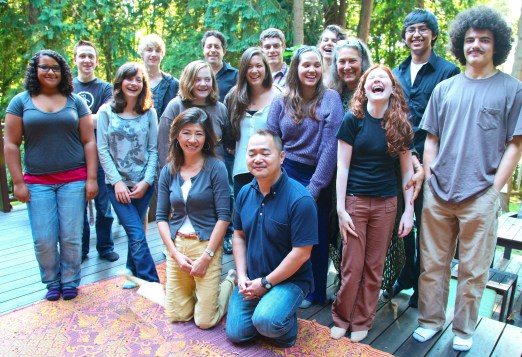
group portrait

TTC on Bainbridge Island

Olivia: What kind of social changes have you seen over your time here on Bainbridge Island?

LW: I think change is cyclic. Things change but then they come back to be dealt with again and again but from a new place. It’s the same in our personal lives. We make changes and then time goes on and we have to learn the lessons all over again, each time growing and evolving.

Over the last 20 years,  circle has stopped being such an odd, unusual thing. It’s more common to have a “Gender Talks” group or guy’s circle, where guys are looking at the cost of sexism to them. I would say that activism is a lot more normal. Sexual identification is more gender fluid. But, it seems to me, from a larger perspective we’re back to a starting point on some of the same issues we had 20 years ago, especially right now with our current president, his administration, many of those who voted for him and a general political climate in the world right now. For us in the US, the rug has been lifted up and the stuff that has been swept underneath it for a long time is coming out again. Many of these issues came up when I was 16 and I was working against nuclear power, war, sexism, homophobia, racism – working for civil rights, for environmental issues, for women’s empowerment. I think this is coming back up to the forefront and young people and adults are going to have to awaken on a whole new level.

Keenan: How did TTC come about?

LW: TTC started because a friend and I wanted to write a book for teens, telling them everything we had learned that could help them navigate the teen years. We brought together 21 teens from Bainbridge and Suquamish ages 13-21 and we met for 10-weeks and created safe space to find out what the issues were for each one of the teens in the room and what they wanted the book to be about. We called our first circle a focus group – to focus on the issues — and a safe space to tell the truth. After 10-weeks, we thought we would write this book on teenagers for teenagers. We didn’t want to write another book for adults that would make adults feel comfortable about teens. We wanted to write one teens would pass to teens. Just so we’re clear — adults aren’t ever, usually, going to feel comfortable about your teen years, especially parents; it’s scary for them. They know what can go wrong. It’s scary and it’s exciting, and sometimes you live out what your parents did or didn’t do or what they wished they could have done and it’s crazy – very complex.

Anyway, after 10-weeks was up the girls in circle said, “Please! Please don’t stop, we have nowhere else to tell the truth like this! We have no place where we can totally be real and tell people what’s going on with us without being judged, labeled, punished, or where we are vulnerable to gossip or it being used against us.” So, we kept the circle going for two years and then we wrote the first book, “Daughters of the Moon, Sisters of the Sun: Young People and Mentors on the Transition to Womanhood.” Afterwards, we kept meeting every week. Actually a lot of kids from Hyla were part of our first circles. We held circle outside of school so none of the kids would get in trouble from the teachers or administrators if they talked about the more edgy stuff. The book ended up selling over 50,000 copies and was so successful people helped us start the nonprofit so that we could train other adults to lead circles in their communities.
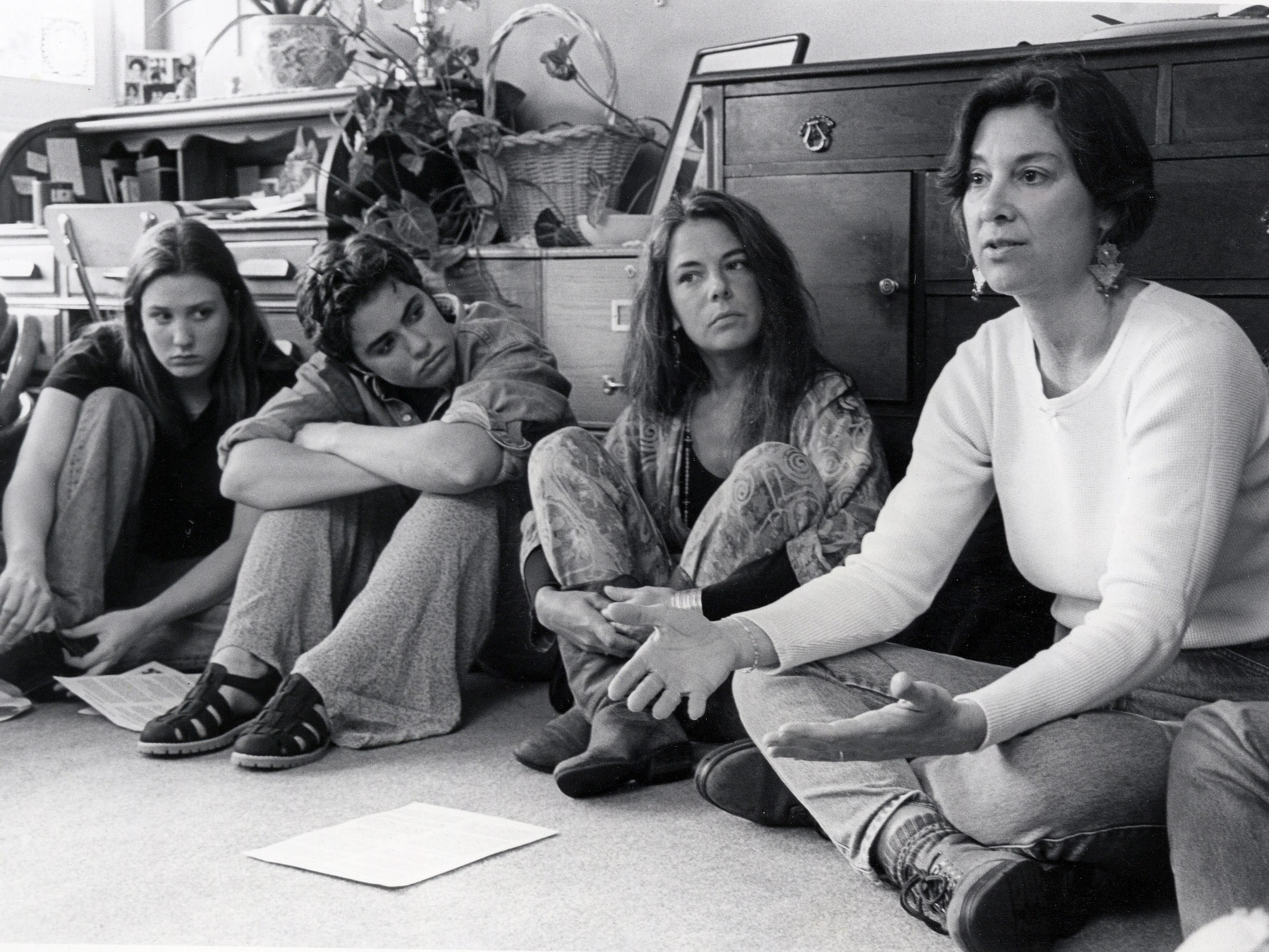
groupshotwind.jpg

First Teen Talking Circles with Co-Founders Wind Hughes and Linda Wolf

Years later, we wrote a second book called Global Uprising: Confronting the Tyrannies of the 21st Century – Stories of a New Generation of Activists. The idea being that each of our personal issues are connected to global issues. For example, one of my personal issues as a teen was over-eating, which is how I tried to escape my feelings of insecurity and lack of self-esteem, I just ate and ate. I didn’t know how to throw up, I would just stuff myself with food and eventually cry. It was a paradox.

So where does that come from? I felt too fat. Why did I feel too fat? My mother was a fashion model and I compared myself to her. Where else was I getting the message that I was ugly if I was fat? Magazines, TV, movies. Who was selling me those magazines? Men and corporations interested only in exploiting me though promoting cultural norms around what a woman should look like and though ads in those media sources. How did I come to feel so objectified? Sexist messages were coming in from all sides. So, we once I started identifying and connecting my personal issues to global issues and started seeing all of the tentacles that interwove in creating my thinking that I was not good enough, I could start to take some action. I could become an activist. Once we can identify with our power to take action, we no longer have to be muted or overwhelmed by our personal issues.

Global Uprising came about because we were inspired by the WTO protests in Seattle that happened in 1999, where young people came together from around the world protesting these very things – Advertising messages, sweatshop labor, animal cruelty, the prison industrial complex, institutionalized racism, etc. Global Uprising is a book for teens, your age, that will teach you what’s wrong and why are we are behaving this way.

Olivia: So, what you are really saying is that we need empowerment?

LW: Again, a very deep question with many answers, empowerment. What is true empowerment? What I learned recently was that there is a real difference between force and power. True power can be very graceful, something I have to learn myself because I fought so hard in the 60s and still feel like I have to fight hard what’s going on in our country today. One of the greatest ways to have true power is through self-knowing, to cultivate self-respect and respect for others. To see your elders and the authority figures around you as human beings. To understand what it means to change the paradigm from power-over to power-with. There are many ways we can nurture our own agency. Being around people who support and uplift you is also so important, which is what circle offers.

Who are you? See yourself. You’re not this little thing that’s been labeled you. You are this enormous consciousness, you are not limited. You’re everything. What happens with a lot with young people is that someone will say to them, “Who do you think you are?” That’s disempowering beyond belief.
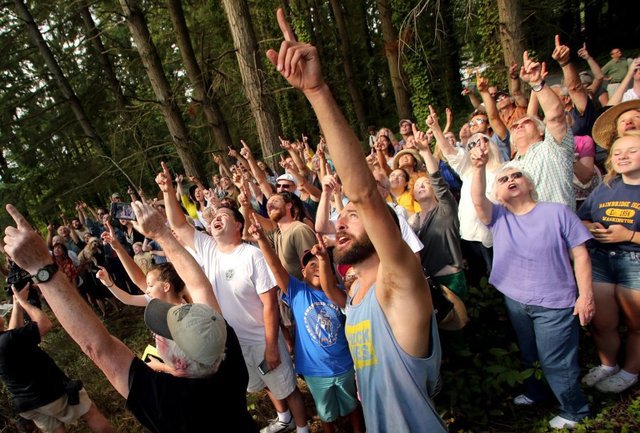
girlintree01_7461172_ver1.0_640_480

“Girl in the Tree” Protest on Bainbridge Island. Driven by a deep sadness that her home town was developing unsustainably, teen activist, Chiara Rose protests 800+ trees being cut down for shopping center build. Hundreds of people show up in support of her. Great example of bringing the personal issues to external action.

TTC: Let’s turn the tables for a minute and ask you teens something. What one thing do you wish adults knew about the teen community?

Keenan: I would like them to know that we are mature and if we show that we are mature they need to know that we can handle more. Sometimes, say they are mature and their parents still treat them that they are not

Jaqueline: Here at Hyla, adults trust us that we are going to do the right thing… maybe a few of us need a steer in the right direction every once in a while. I think adults should know that we can make the right decision but nobody can always make the right decision.

Olivia: I want them to know that we are ready. With Internet and everything, there isn’t a time in our lives that we don’t know. There is no use crying about it, it’s done – you can’t stop it. You have to stop protecting us from things we already know because it’s counter-productive and annoying. All of that effort can be used to teaching us knew things. Of course, we are going to make our stupid jokes and goof around but we are mature, we just don’t act like it because aren’t expected to and it’s kind of fun to not be… but we still have it in us.

LW: It sounds like you don’t feel like adults are giving you credit for having a much broader understanding of the world. And that you do have a much broader understanding of the world even though you are still “kids”… and you are still kids in some ways because you aren’t working or having to work for your living – you’re still dependent. It sounds like you want adults to jump levels and treat you as more mature — perhaps they aren’t ready themselves to do that. It’s hard to let go of our children into an adult world that has so many pit-falls.

Olivia, Jacqueline, Keenan:  Yeah! Yeah! Exactly!

Olivia: Thank you for meeting with us. You have been so apt at hitting all of our questions. We would love to have you come in to our class and speak about this more! We would love to have TTC in our class next school year if possible!

LW: Yes of course! We would love to!

Thank you, Olivia, Jacqueline, Keenan, for inviting us to sit down and chat with you. We look forward to more opportunities to talk with you and see what we can learn from each other.

If you are interested in learning how to start at Teen Talking Circle in your community, please contact us at info@teentalkingcircles.com.

Interview has been edited slightly for clarification.

High School Rape Survivor Takes Action

April is Sexual Assault Awareness Month which affords us a specific opportunity to break the silence of sexual violence and reinforce the need for prevention efforts.

TTC is committed to having truthful conversations even when they contain tough topics that are often silenced and hidden in our society. In this blog post, we will explore sexual violence and provide information on what to do when you or someone you know has experienced it. Both victim and perpetrator suffer when sexual violence occurs.

Rape culture affects all of us. In a country where our president has been accused of sexual assault, it is more important than ever to bring awareness to this reality. Four women have come out against Donald Trump and are pursuing legal recourse. Last year, a 2005 recording leaked in which Trump bragged about kissing women (“I don’t even wait”); as well as how easy it is for celebrities to “grab them by the pussy” because, “they let you do it.”

In the following interview, we turn our attention to Hailey, a courageous teenage girl, who has taken action in her high school.

Hailey is a senior on an island in the Pacific Northwest who started a campus club called “Students United Against Sexual Violence” whose mission is to raise awareness of the prevalence of sexual assault in her community and to prevent assault from happening. Early on in our interview we learned about Hailey’s motivation for starting the club. Two years earlier, Hailey was forcibly raped by a friend during a casual hangout. She’s suffered through the pain of hiding her rape; the pain of coming out with it — and now works to help others. Unfortunately, Hailey is not alone. There are heartbreaking stories of rape just like hers all around the world.

Statistics on rape and other sexual assaults are notoriously difficult to calculate due to inconsistent definitions of rape, different rates of reporting, and a variety of other issues. For example, some countries may not criminalize marital rape. In some countries, women do not report rape because they fear retaliation or persecution (Honor Killings) or prosecution due to laws against premarital sex. Across the world, there may be a general distrust in local law enforcement to handle the case, which magnifies the trauma.

In Hailey’s case, there was distrust of local law enforcement because the perpetrator was an intern at the police department. Her case was never reported just like so many others. In fact, it is estimated that 54% are not reported.

rape stats

TTC: Thank you, Hailey, for meeting with us! We are excited to hear about the Students United Against Sexual Violence club you started at your high school. Why was it important to you to start this club?

H:  In my sophomore year, I was raped. He was a friend of mine. He knew my parents, I mean, we were friends for a long time. One day, we were driving home and he said, “Hey, I want to show you this cool place I found.” I was like, “Ok sure,” because this is something that kids do; we show each other cool abandoned places, views of the water and stuff like that. So he drives us there. It was an old deserted patio overlooking the water and he forcibly raped me there. We were just hanging out. I didn’t really know that was going to happen.

He grabbed me and threw me against the railing, shaking me, and yelling at me. I felt stuck. I didn’t know where I was so I couldn’t really leave. He was pushing me so hard against the post it was starting to hurt my back. I was telling him to stop. He didn’t. He continued. It was physically so painful and I was so scared. When it was over, he told me to “Get in the fucking car” and he dropped me off at my friend’s house.

TTC: Did he threaten you if you told anybody? 

H: I didn’t tell anyone for a long time. He worked at the police station as an intern answering phones and he had access to files. My parents found out a year later when I had a break down. I got caught at school with drugs. My dad was like, “What is going on? I know something is triggering this.” So I told them. I didn’t tell them who it was but I think they may have figured it out by going through my phone.

In the US, victims are not reporting for the following reasons:

  • 20% feared retaliation
  • 13% believed the police would not do anything to help
  • 13% believed it was a personal matter
  • 8% reported to a different official
  • 8% believed it was not important enough to report
  • 7% did not want to get the perpetrator in trouble
  • 2% believed the police could not do anything to help
  • 30% gave another reason, or did not cite one reason

TTC: So, what happened with the guy?

H: I kind of felt like I had to keep up appearances because he was in the same friend group. When I told my friends, they stopped inviting him places. Didn’t bother him much; he had a bunch of other friends. He was a typical all American guy, popular, jock. He’s at college now. I guess it just sort of got buried.

TTC: How do feel you toward him now?

H: Super pissed! I had a few conversations with him about it at first but he kind of shut it down. After a while he was like, “Okay, okay, I guess that’s what happened, I’m sorry.” For me that wasn’t enough.

TTC: How do you think that’s affecting you now?

H: More than anything the experience has empowered me. I started a club at my high school called Students United Against Sexual Violence. The school won’t let me fundraise yet because the club has to be around for a year before it can become an official club. One of the club’s sponsors is the mother of the guy who raped me. She comes to our meetings and helps pay for our events but she has no idea that it was her son. My parents never confronted his parents, I wouldn’t let them. It’s so hard to be in meetings with her and openly talk about my experience looking at her face which looks so much like his. I don’t want to tell her because I am afraid she will stop giving us money and the club will be closed.

At the same time, I met one of my current best friends through the club. She came up to me at school and said she needed an older girl to talk to about being raped. I worked with her and two days later she told her parents. We’ve become such great friends. I realized that I could be helping people like her. I want to be making a difference. That’s something our generation wants to do – make a difference with our work. I think that outweighs the stress of having to work with this woman.

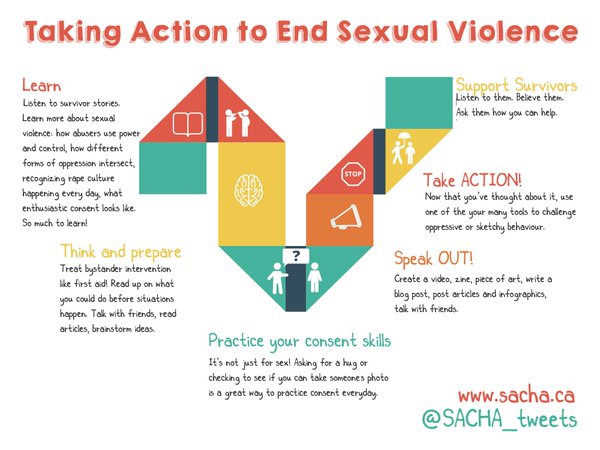
take action

TTC: Wow! What a story of transmutation! Taking your pain and turning it into something that can really help people. Tell us more about your club at school.

H: The school threatened to shut the club down because they said sexual assault wasn’t happening until I came along. One school administrator would single me out and harass me anytime I was talking to a girl, even when the campus police where present. There was one time she came up to the campus detective when a girl was reporting a case and said, “Hailey is just trying to make up cases and have all these girls report it to make a scene at my school.” The detective said, “If you are not nice to Hailey, I can take your job away.” She kept giving me a bunch of crap. When we made a website, she blocked it from the school district. Eventually she was fired. The school officials told her that she had to meet with them on Friday and she knew what was coming. The day she was supposed to meet them, they came in to her office and it was empty. The rest of the school just thinks she quit because the official statement was that she was going into a new phase of her life…. but the school admin told me what happened.

TTC: Would you ever consider telling this woman that it was her son who raped you?

H: I was considering telling her next year. The only reason our club is around is because of her advocacy. The school told us that they would shut the club down and that I could get in academic trouble because they didn’t like that I was bringing this negative attention to our student population. Until this summer, when I started talking about it, there were very few rape reports. Just this fall, four girls reported to the school administration, “I can’t be in this class because this boy has raped me.” I think they just don’t want to admit it’s a problem. They make it difficult for me to promote the club.

For example, all school clubs are allowed to hang up posters as long as they don’t have any nudity, drugs, or swear words. I had a poster with our club name and meeting time and the office said we couldn’t hang them up. The day before I was hanging posters for another club and the office was so supportive. So, when they said no to the Students United Against Sexual Violence club posters, I was like, “This is not okay!” I gave them a lot of push back. My parents’ friends who were lawyers sent a letter to the school about all the legalities that they are breaking. The school’s response? They gave us permission to hang two posters. The limit for every other club is 12… so I said, “No, I want to be treated the same way the other clubs are being treated.”

Eventually, it all worked out but there was a ton of resistance I had to get through. That’s why it’s so important to have this one advisor support us. I know that they are going to make it so much harder for us to be a formal ASB club next year. Once things fall into place with the club, I may tell her that it was her son who raped me.

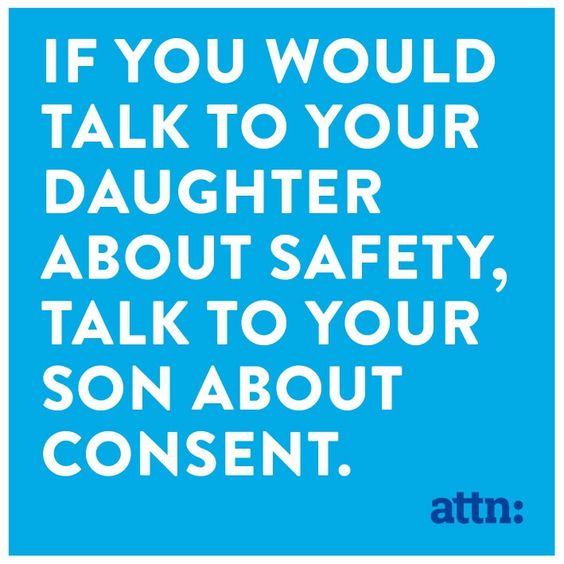
consent

TTC: Do you think he will do this to someone else?

H: I think he is scared as hell. He saw that perfect opportunity to do it but then he saw how much shit I brought to the table. I don’t think he would do it again but I can’t be sure.

TTC: What do you think about when people say, “she asked for it”?

H: I hate it when people say that “she asked for it.” If I were to get mugged tomorrow and somebody stole my purse, I would immediately call my mom and ask for her help. If I were on that same street and someone pulled me into an alleyway and raped me, the last thing I would want to do is tell my mom. 

TTC: Why do you think so many girls don’t tell their parents?

H: I felt like I was letting my parents down… and I still haven’t really figured out why. No parent wants to hear that their child was raped. I have seen my parents cry over it and know that I have caused them sadness. I don’t feel responsible for what happened to me but knowing that the people I love and the people who love me are hurt by my coming out with it makes me feel like I should keep it to myself.

Also, a common complaint is that when you do tell your parents, they begin to freak out and I think that’s where a lot of the victim shaming comes in. Like with my parents when I told them, they were like, “Okay, you are just not going out again!” I felt like I did something bad and was being punished. My friend’s parents took her phone, read all of her text messages, and won’t let her out past 11pm because they’re scared – it’s understandable to be scared but it just makes the kid feel like they are being grounded for getting raped and that goes into the huge subconscious place of victim shame. I actually want to start educating parents on how to treat their kids who have been raped and what to do.

For a primer on how to talk to kids about sexual assault, please check out these resources:
https://www.rainn.org/articles/talking-your-kids-about-sexual-assault
http://www.stopitnow.org/ohc-content/tip-sheet-8
http://teentalk.ca/hot-topics/consent-2/
https://www.breakthecycle.org/blog/back-school-talking-teens-about-sex-and-sexual-assault

If you or someone you know has been sexually assaulted, you can seek help by calling the National Sexual Assault Hotline at 800-656-HOPE (4673). For more resources on sexual assault, visit RAINNEnd Rape on CampusKnow Your IX, and the National Sexual Violence Resource Center.

Please help TTC continue our work bringing to light the dark truths of sexual assault this month on social media and in conversations. It is especially critical to talk to the youth about consent, mutual respect for bodies, and how they might advocate for awareness amongst their peer groups. We ask that adults educate themselves on how to talk with the youth, how to help, and how to listen compassionately, without overreacting, during these sensitive conversations.

Thank you for taking the time and care to help us raise awareness and create a safe and loving world for all.