Drugs, Sex, Race, and White Privilege: Teens Speak with Teen Talking Circles

Hello TTC Friends,

We’ve begun a series of interviews with teens, starting with two volunteers in our predominantly white community who answered questions we posed to them concerning drug use in high school, racism, sexism, white privilege, and their experience as teens in 2017 in a US dominated by a Donald Trump presidency. Stay tuned for diverse teen perspectives over the next few months as we delve into the topics that matter. Please feel free to share our blog on FB or with young people in your life and anyone who works with youth

Our mission has always been to educate and empower young people. This year, Teen Talking Circles is 24 years old. We are honored to begin the process of supporting TTC to be an adult in the world, so to speak, and will be re-visioning  in conjunction with a new youth advisory board, board of directors, group of advisors and leadership. I’m delighted to announce that Jeny Rae Vidal has joined me to administer TTC. Along with our board and advisors, Jeny Rae will play a vital role in ushering in a new generation of facilitators and youth as we craft a renewed vision, mission, and strategy moving forward.

Before we get into the interview, please take note that a TTC Facilitator’s Training is online for registration. If you have wanted to join us we have space for 10 people and scholarship funds to offset the cost — especially for folks working with groups of refugee, immigrant, and/or marginalized youth. Check our training site and get in touch if we can help you come.  ttcsummer2017.eventbrite.com

Our first interview is with a young man named Derek (not his real name), from Kitsap County in the Pacific Northwest.

_DSC0170.jpg

Derek Interview: 1/31/17

D: My name is Derek. I am 16 and a junior in high school. I like baseball. I like playing guitar. I like spending time with my friends. Typical teenager things. I would say I’ve had a diverse upbringing — moved around a lot and lived in a lot of different places, met a lot of different people, experienced a lot of different communities. I’ve lived in the South of the US, and also in California, and now I live in the Pacific Northwest – one of the liberal parts of the Pacific Northwest.

TTC: What’s your take away from living in so different communities?

D: I think I have a better time transitioning between groups of people than others, just because I’ve done it my entire life.

TTC: So now you’re here in the PNW, going to a pretty liberal school. What’s it like for teenagers here?

D: Pretty good. It depends on who you are as a person. It’s a pretty accepting community of everybody’s differences. I can’t really tell you if it’s better or worse here but I would say that the general consensus is that there is a lot of partying and stuff that goes on here.

TTC: What do you mean?

D: A lot of kids here are into heavier drug use and drinking and stuff like that — even at school. Also, some groups of parents party and stuff, too. This community has a small town vibe but the reality is we’re less than a 20 minute boat ride from Seattle, which means that if you’re trying to get some coke it’s not that far away or hard to get. For kids further up the peninsula like in Port Townsend it’s a lot harder to get that kind of stuff. My experience is that teens can do a lot more at young ages here than most kids from small towns in other parts of America.

TTC: What kind of substances and drugs are kids doing here?

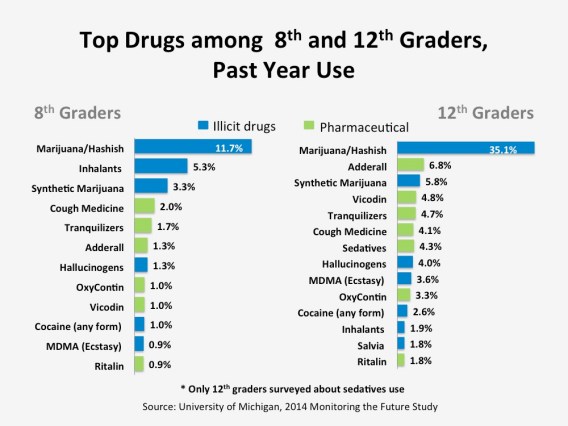
D: Pot and alcohol are as common as they always have been. Beyond that, I would say pills; a lot of pill usage –anything that can give you a good time – Oxy, Adderall, all the Adderall types, Vyvanse, Ritalin, Vicodin, and other pills that teens steal from their parents. Lots of kids use them at finals times. Also, there are recreational drugs like Molly, which is MDMA. I can’t actually say that I’ve ever met anyone whose done heroin though, but definitely coke — but I think coke is kind of outdated at this point. Acid is definitely a big thing, and ‘shrooms – those are two really big things.

TTC: Are the administrators of your school aware of all this?

D: Our vice-principle is in denial about drug at our high school. He sent out a bunch of emails so far this year saying that we don’t have a ton of problems. He thinks only about 1/10th of the student body has experimented with substances. I thought to myself, “You are shitting yourself if you actually think that!”
studentdruguse2014

National Statistics based on 2014 Monitoring the Future Study. The Monitoring the Future Study has been funded under a series of research grants from the National Institute on Drug Abuse, a part of the National Institutes of Health. MTF is conducted at the Institute for Social Research at the University of Michigan.

TTC: The same thing happened in your school with the book I co-authored about teen girls and the issues they deal with. One of the administrators had the book banned from the campus library saying she didn’t know any girls like the ones in our book! 90% of the girls who told their stories in that book were from that school!

daugters-sisters-book

Daughters of the Moon, Sisters of the Sun written by K. Wind Hughes and Linda Wolf banned by campus library because the administration “didn’t know any girls like that”.

D: Well, of course, they aren’t going to know. Why would anyone tell them? The way school administration works is that it’s not like there’s a counselor you can go to talk to confidentially. So why would they know of anyone like that? Their approach is bad; they are really militant and authoritarian. Our vice-principle and some of the counselors have been in the military. That’s just not a good approach to have to help form young adults. Since they’re in denial, it makes the cases that do come forward seem more extreme and then they’re more extreme when they have to be disciplinarians.

TTC: What would you like to see from adults in positions of power?

D: People you can relay your problems to if you feel the need to, so that you can have a back and forth conversation rather than, “You’re doing this wrong and this wrong.” Even if you went in to talk to the principle, he’d be able to say “I understand, I drank in high school also…” But, it’s not the way the school system is set up. The administration is set up so you can’t relate to them at all and thus they can’t relate to you.

TTC: So having something like Teen Talking Circles is still very, very unusual and needed.

D: Yes, it’s needed. The good thing is that it gives you a place to come and talk and have a back and forth with other people about your problems and you can relate to each other. The bad thing is that it won’t have an impact on the larger system you have to live in — only on the way you’re relating to people. Because you still have to go back to the other “world.”
_dsc5654-edit

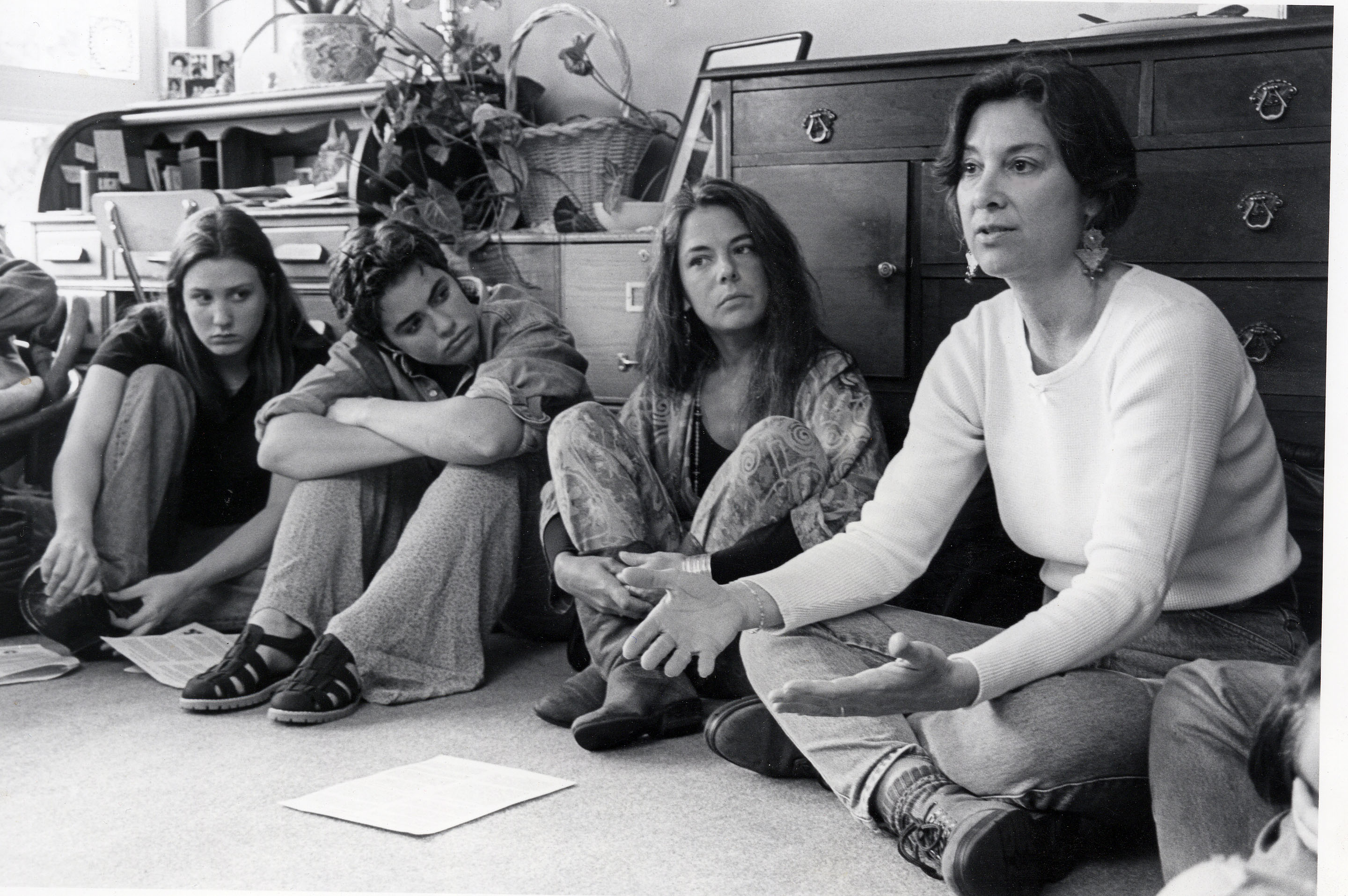
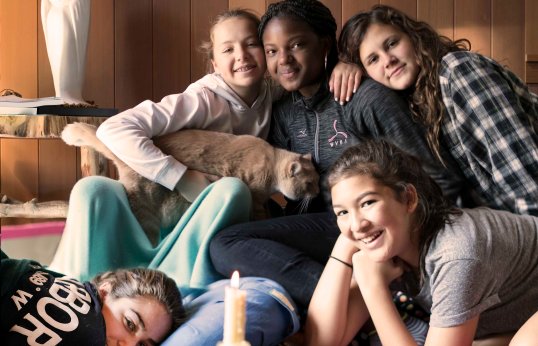
Teen Talking Circles — Seattle Girls Group 2016

TTC: Yes, that’s true, but by practicing other ways of being heard and hearing yourself that changes you – and you then carry back into your other world a different expectation of how you can relate with adults and peers. When you change, you change everything around you. Why do you think so many teens do so many substances? Just for fun, or other reasons?

D: Different things apply to different people. For a lot of kids here there’s a work hard/play hard kind of mentality where it’s like they have to do really good at school—they’re under so much pressure because their parents are really successful so it’s what’s expected of them –but they also party really hard. They party a ton. Also, you have people that either their parents are wealthy or they have a comfortable lifestyle so they don’t really have repercussions in life, so they just don’t really care. They just do what they do and party and stuff. And they don’t really care about school or anything like that because they will probably be fine in life no matter what. They can get a job at their dads company or something after they graduate. And then there’s a big group of people that don’t do any substances –they just do good in school — but I would say that’s only about a third to a fourth of the school’s population. Most teens do experiment with substance use because that’s just what we do. Then, there are kids who do have legitimate problems. They do drugs and drink because that’s their way of coping with stuff.

TTC: Do you know any other ways in which ways young people are coping? Are there kids you know who are not coping and who may be suicidal?

D: Oh yeah, totally. I don’t know in terms of other ways of coping, but I think that there are people who make it through and the people who don’t. Some just do better in society. I just think that there are a lot of really depressed people, especially in this part of the country. Just the weather makes it depressing—there are definitely are a lot more depressed people here than other places. So yes, depression and suicide is higher here.

TTC: But, do you ever hear any kids talk about committing suicide?

D: No, not in a serious manner, no.

TTC: Have you ever known anybody in school who has committed suicide? Or attempted.

D: (Hesitates) Yes. There was a kid in another school near by who died this summer. He did acid then went home and shot himself. But I don’t know if I would call that suicide, honestly. Yes, he did kill himself but he was tripping on acid – he wasn’t thinking clearly… The kids I know who knew him said he wasn’t somebody who would ever have done that.

TTC: Do you know girls who are harming themselves through cutting, over or under eating, or sexually putting themselves in situations that cause them pain?

D: I don’t know any girls anymore that cut. I think that’s kind of a middle school thing. I don’t think there’s a ton of people who have legitimate eating disorders like bulimia and anorexia but there’s a lot of stuff that people do related to body image that is unhealthy –like extreme dieting. Not like, “I’m going to quit eating corn syrup” but like avoiding eating altogether and stuff like that – not true anorexia but close. I know one chick that does laxatives so that it just passes through.

TTC: So pressure on girls to be thin?

D: I wouldn’t say pressure; it’s more their own personal thing, it’s what they think. Nobody is saying, “You’re fat! Go throw up in the bathroom.” It’s their own image of themselves. No one else is imposing on them.

TTC: Except it’s still the model of beauty for girls and women, to be thin; although there is quite a movement these days against such a narrow, old fashioned, and hurtful idea of beauty. Do you think there still a stereotypic “beautiful person” that makes one person more popular than another?

D: I don’t know what I would define as beautiful. If you’re talking about beauty being skinny people, I don’t know if I would describe that as beautiful. People are very fit here in this community, which means that the ones that are not as fit as the others stand out. It’s kind of weird to see a truly overweight person in this community; whereas in other places in the Midwest or the South, the majority over there are overweight people.

TTC: What about racism? Do you see racist behaviors in your school?

D: I don’t know if I would say that there’s any true racism. There are people making stupid, ignorant comments but its kind of tongue in cheek — it’s not done in a hurtful and mean manner. I think we have a very inclusive community for all races and sexual identities. We are used to a certain amount of political correctness here. Like, if somebody hears a Jew joke, they’d just be kind of like shocked. I mean come on, it’s not a good thing but it’s not something to raise all hell about, you know what I mean?

TTC: You said that if somebody said a Jew joke it would be no big deal?

D: No it would be a big deal because people are so shocked by something like that here because every thing is so politically correct!

TTC: In this community and at your high school there isn’t much diversity? The statistics I got from your school came out to be 80% Caucasian. The Suquamish reservation is right near you but there are only 0.6% Native Americans and about only 3% blacks in your high school.

D: I don’t think that it shows our community is discriminatory or anything; that just shows that not a ton of black people live here and not a ton of Native American people live here. Whether that’s because of where they’re at financially, which is a huge part of it, or whether or not they would like to live here, who knows? I would not say that there’s a ton of white people here because there’s a ton of discrimination. I would say that it’s just because there’s white people that already live here they’re gonna have kids, and the kids are going to stay here or move back here after college. It’s just kind of the community. I think that also this type of community is more attractive to hippie-esque white people because it is such a liberal community.

TTC: I’m surprised you don’t know more about the history and legacy of racism and how it plays out in the culture? Racism and white privilege permeates all aspects of our lives and communities. Have you ever heard of institutionalized racism? Have you ever considered how white privilege fits into the reality of ongoing institutionalized racism?

Seattle Times put together a great project called “Under Our Skin” which has incredible videos intended to get the conversation started… Check it out!

D: Well, I think you have poor white people, poor black people, poor Native Americans, poor Asians – in every race you have poor people. I don’t think whether or not they move up in life you can attribute that to racism. Maybe in a different era, like the 1820s, where there were plantations where black people were slaves and stuff, yes, that is racism. In modern society whether or not somebody moves up in society and can afford to live here or something like that is kind of dependent on how they do in life, not the color of their skin or what their background is or religious views or anything.

TTC: Actually, all that has everything to do with racism, sexism, and religious intolerance over the history of this country. Do you have any friends of color? Do you have a diverse group of friends?

D: Yeah, I mean I wouldn’t say so diverse. I have a few friends that are black. I have a few friends that are Asian. I have a few friends that are Native American.

TTC: Have you ever asked them how it feels to be in their skin?

D: No. I mean I have never asked my friends out right. Personally, I think if we focus on racism or focus on sexism we can protest that, yeah, for sure. But, like, when you watch a commercial and you see that the commercial has made it a point to have a black dude, an Asian, and a bunch of every nationality just to come off as politically correct, I think they’re making too big a deal of it. Whereas, if we didn’t focus on it, it wouldn’t really be such a big problem. Diversity is good and we should show where it fits. But, there’s no need for every single kid to be diverse in a commercial — that’s not necessary for us to be a perfect liberal society.

TTC: Are you politically aware of what’s going on in the past couple of weeks with the recent immigration ban? If so, how is that hitting you?

D: It’s depressing, as far as “Chumps” ban on people flying in from the Middle East. There are people with legitimate reasons and rights to be here and people who are refugees and immigrant families. I mean, they have a total right to be here. Telling people they can’t come because they have a citizenship in a certain country, I think that’s wrong. It’s sad, but as a 16-year-old I try not to focus on it too much because I have a lot of other stuff going on in my own life that impacts me. If I worried about political stuff all the time, I’d just be stressed out of my mind.

TTC: Would you consider yourself an activist? Do you believe in standing up, speaking out; in protesting, marching, that kind of thing?

D: No. I’ll stand by my beliefs but I feel no need to go out and display them. I see the necessity for it in certain time periods, like women’s suffrage and the MLK rallies, but no, there hasn’t been something that has me out protesting.

TTC: Do you have any idea what might draw you out?

D: Human rights stuff that goes on near me because I can’t go to New York and occupy Wall Street because I have no means of getting there. If there is a clear, blatant, “this-is-just-wrong”, civil rights or human rights issue, I’d protest.

TTC: Will you participate in the Black Lives Matter March in Seattle this April?

D: Black Lives Matter is a very tumultuous group. I think the message is good but it’s how I was saying with the commercials. I’m not one of those people who say “all lives matter” even though I believe all lives do matter and black lives matter, as well. I think it’s another thing where the differentiation is harmful to society because when you put a label like that on something, it detracts from the true message of it, which is what they’re saying –that there’s a disparity of treatment between white people and black people in certain parts of society. I think that many of the people who are in the Black Lives Matter movement are racist themselves as well. You can be black and be racist. I think there are many who are racist towards white people and other ethnicities. I think a lot of people in Black Lives Matter are #1. Bandwagoning and #2, for a white kid to go to a Black Lives Matter rally is iffy because, depending on what part of the country you’re from it can be a very unsafe place any white person to be. Quite honestly, it’s not like the peaceful protest of MLK’s day. It’s more radical.

Seattle Times has put together an excellent compilation of videos meant to probe the deeper issues and complexities of language when we speak on issues of race and racism. We encourage you to click this link to learn more about everything from Political Correctness to Microaggression, All Lives Matter to Institutional Racism. #UnderOurSkin is a conversation starter. “For those who freeze up at the prospect of talking about race, we hope this project will help break the ice. For those who tend to take sides right away when the issue of race comes up, we hope Under Our Skin will challenge assumptions and build common ground.”
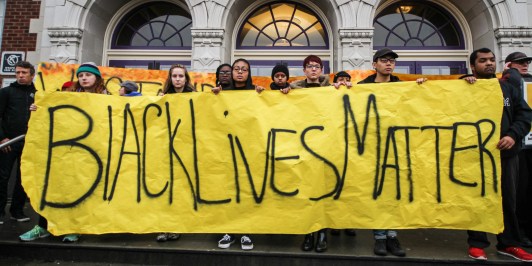
TTC: In MLK’s day, protests were not so peaceful. The recent Women’s March in Seattle, now that was peaceful! Even the police were out in the streets holding our signs with us. So what are your biggest concerns as a 16 year-old guy?

D: My biggest concern is how if I have a problem with someone, how it’s going to divide my group of friends. That’s one thing I worry about because I don’t like to see that. I want to continue to spend time with people who I want to spend time with.

TTC: So you’re biggest concerns are relational concerns? Are you a peace builder?

D: I don’t think I’m a piece builder or an antagonist but I think I have my moments when I’m really pissed off at people and then moments when I’m really nice to people. I think it varies by how I’m feeling.

TTC: How do you work out your feelings? Are you emotional?

D: I would say that I’m an angry person depending on who I’m interacting with. I probably take my anger out on my family and my closest friends the most — in my family, I take it out on my mother and my little brother.

It’s not like I’m going to like throw a chair at the wall. It’s more like I’m just angry and pissy and stuff. And it’s not just me choosing to be angry, it’s usually prompted by something. Like when my mom is being irrational about something… Like if she agreed to something earlier and she was totally fine with it and we talked about it and stuff and then she gets in a mood and changes her mind. That’s when I get really angry. Also, I think it’s just my family’s way. We can be very fast and we can be smart asses and fire back very quickly. That’s just how we do our thing. We escalate and it escalates until we have to be apart for a few hours.

TTC: How do you work things through?

D: Normally, we just kind of separate and a few hours later we come back. Depending on what it is, we both just come back and accept each other’s views or come to a conclusion. I can be very harsh. Especially with people who are not part of my family who talk shit to me, I can be harsh but 20 minutes later I’m like shit that was kind of mean. I can be negative at certain times.

TTC: Are you clear about your own sexuality?

D: I would say I’m attracted to whoever I’m attracted to. 99% of the time I am straight. I mean I’ll make out with a dude, I don’t give a fuck about that, but that’s about it

TTC: Have you been in love yet?

D: No, I have not.

TTC: Have you made love yet?

D: Oh, yeah.

TTC: But not with someone you are in love with?

D: No I actually haven’t dated anyone in my high school. Teens just do things. Like if you’re at a party, you’re like, “What’s up”? I don’t think sex is that big of a deal. It’s not like we schedule it; it’s just spontaneous. Yeah, it happens a lot in the community and has various times for me

TTC: Is it satisfying? Or are you missing something?

D: It kind of depends on the situation but I think sex is definitely different when you have some type of feelings for the other person other than just pure attraction.

TTC: Do you have any kind of sense about how you want your life to go? Do you imagine your future?

D: I hope I make it in something artistic because I really don’t want to just do a monotonous job. I’m saying this as a 16-year-old right now, but I feel like I would be more satisfied with working just a shitty job until I sell a painting for a quarter of a million dollars or something like that. I feel like I would be more satisfied working the drive-through at McDonald’s than accepting that I should probably go through a career in accounting or something like that. So yes, kind of, but not really. I don’t really have any vision for my life.

your-money-or-your-life-joe-dominguez-vicki-robin-a34351

“When you understand money as YOUR life energy, the hours of your life you invest to put dollars in your wallet, you translate it into something knowable… and limited: the hours of your life.” Vicki Robin, Co-Author of Your Money or Your Life


TTC: Do you do well in school?

D: I do okay.

TTC: Okay enough to want to go on to study something?

D: Yeah, I don’t know what yet. I plan to figure it out when I get there. I know that that often backfires, but it’s all I got.

TTC wishes to thank Derek for being so honest and forthcoming about his experiences of high school and his teen years and for his willingness to share his views and opinions.
 

Bibi McGill Interview

Recently, Heather Wolf, Eric Kuhner and I visited Bibi at her home in Portland. She graciously spent a couple hours with us. This month, we’ll be sharing photos and the full interview. Until then, here is a sweet video of Bibi offering us a tea ceremony and speaking with us about her life as Beyonce’s guitarist and musical director – what she went through staying true to herself.

Stay tuned for the full interview and much much more from one of the most inspiring and inspired women in the world today… ms bibi mcgill. xo linda

PS – TTC’s annual Seattle fundraiser is happening October 16th. Save the date — more about this in our next post.

Bibi McGill shares her truth

Thanks to Audrey Lane for editing this portion of our interview with Bibi

Linda Wolf Interview with Warren Haynes

Warren Haynes cover.jpgPhoto: Linda Wolf 2016

An Interview with Warren Haynes

June 2016

In 1970, when I was 19, I was a member of the Joe Cocker Mad Dogs & Englishmen Tour as a photographer. JCMD&E was a two-month traveling circus of 45 young people: musicians, singers, girlfriends, roadies, a 5 person film crew, 2 official photographers, some children, a nanny and a dog! We traveled around on a private plane and played concerts in something like 50 states. The Tour is iconic — out of it came a documentary movie, a double album, the “JCMD&E Memory Book” I created last year, live albums, and many tribute concerts worldwide. The original Tour is considered by many to be one the top 10 R&R tours of all time. In fact, Derek Trucks and Susan Tedeschi modeled their 12 piece band, the Tedeschi Trucks Band, after the JCMD&E Tour.

A couple years ago Derek (Trucks) and Susan (Tedeschi Trucks) got in touch with Joe about collaborating on a tribute to the Mad Dogs & Englishmen tour. Joe was game, but sadly he died before it could happen. Not long after that, Derek, Susan and the band decided to go ahead with the tribute but to make it a  memorial concert to Joe and a reunion of us original members. The idea emerged to perform the show at the 2015 Lockn’ Festival in Virginia. Long story short I was contacted by the producers of the Lockn’ Festival as they began to seek out the original alumni and soon the majority of us still alive agreed to come reprise our roles from the Tour.

Leon Russell on piano; Chris Stainton on organ & piano; Space Choir members Rita Coolidge, Claudia Lennear, Daniel and Matt Moore, Bobby Jones, and Pamela Polland; Bobby Torres on Congas and me as official photographer. Besides the 12 members of Tedeschi Trucks, we were also joined by Dave Mason, Warren Haynes, Doyle Bramhall II, Chris Robinson, and a number of other well known musicians.  We all came together for 5 days to rehearse, hang out, perform and have a great time and that it was. Jesse Lauter and Jojo Pennebaker assembled a film crew to capture the whole thing and a documentary is in the works to come out next year about it all.

DSC03049

Warren Haynes with the Tedeschi Trucks Band – JCMD&E Tribute

In the months before we all congregated at Lockn’,  I started reading about the musicians who were going to join us on stage and one in particular stood out to me– Warren Haynes. From the get-go I wanted to meet Warren in particular and it struck me that he would make a great interview for this blog. I read about his life and discovered he’d grown up with brothers and his father but not his mom. I wondered how his life developed without a mother. I wondered if he had women in his life who were role models. At Lockn’, I mentioned the idea of interviewing him and he said he’d be glad to.  A few months later through his record label, Hard Head Management | Evil Teen Records, we set up the interview for March 28th in Seattle, where he was going to be playing at the Moore.

_DSC6208-EditI asked Audrey Lane, my TTC assistant and videographer  (Fem de Film), musician Zach Fleury, and my daughter, Heather Wolf to assist me. We arrived at the Moore just as sound check was happening and we set up our cameras in Warren’s dressing room. I thought the interview would last about 20 minutes but we ended up talking for well over an hour, and even that was not long enough.

Warren was exactly who I’d imagined him to be. Generous, warm, smart, funny, personal, and willing to reveal his authentic self. Warren is a multi-talented, openhearted person — a husband, father, brother,  musician, songwriter and producer who, for over two decades, has produced an annual Christmas concert in North Carolina in support of Habitat for Humanity.

Warren is considered one of the greatest guitarists in the world. He has been part of and/or has founded many famous bands including but not limited to The Allman Brothers Band, Les Claypool, Coheed and Cambria, Dave Matthews Band, The Dead, The Derek Trucks Band, Tedeschi Trucks Band, Dickey Betts Band, Gov’t Mule, Kevn Kinney, Phil Lesh and Friends, Jerry Garcia Symphonic Celebration and the list keeps growing. It was an honor that Warren allowed us to video a portion of his show, Ashes and Dust, and a delight to get to know such a special man.

For more information about upcoming shows and and Warren’s summer tours, check out warrenhaynes.net

PART 1 Video: https://vimeo.com/169013594

“I hate to think what my life would be without music…” Warren Haynes

Extras: More Q&A:

Linda: Why wasn’t your mother around after your parents divorced?

Warren: She met someone else and they fell in love. And they’re still together. My parents were like so many parents from that era; childhood sweethearts, known each other their entire lives. They were from the country in North Carolina and when you get married and are raising kids at such a young age you’re almost to kid yourself. They were 20 years old. The norm’s changed now. Now, people are choosing to have kids later, which I think it is a good thing. I had mine at 50, which I don’t necessarily recommend, but it worked out for me! Being 50 is a bit of a challenge because my son’s in the modern world and I tend to gravitate towards sealing myself off from the modern world but I can’t really do that.

Linda: They were practically teenagers themselves! As a teen did you do things that you regret?

Warren: Yeah, but I was not as wild-natured as a lot of my friends and it could’ve been a lot worse! But, I definitely experimented and did things that I regret, things many teens do. For example, I started drinking at an early age and now I don’t drink it all, but that’s what everybody who was cool was doing so that’s what I wanted to do.

PART 2 Video Interview: https://vimeo.com/169103163

https://vimeo.com/169103163/settings/embed

As a musician you are as student for life… if you’re lucky to have something like music in your life there’s all these levels that you can explore. You can enjoy it on a fundamental, basic level where it is just about enjoyment or the other extreme is this enlightenment that you try to achieve a few times in your life and hopefully will be able to and everywhere in between. The only way to truly grasp the true power of music is through a lifetime of study and committing yourself to it.

Linda: Were you brought up religious?

Warren: We grew up Baptist but at some point it became less and less important. One of the things we learned in an unspoken way back then was that you don’t have to adhere to all the dogma and the fear factors that can be part of that whole scene.

Linda: Were your brothers musicians, also?

Warren: Both of my brothers are artists. One is a folk artist and the other is a wood carver. Both are very talented and were into music. My oldest brother plays a little bit but both my bothers have not only amazing taste in music but a great passion for music, which is where I got mine. When I was growing up my brothers had thousands of records I could go through, and that made a huge difference for me.

I lovingly referred to my brothers as the music police when I was growing up. They would say things like, “Don’t listen to that, listen to this — don’t waste your time with that –check this out.”

Because of my brothers, I was able to avoid getting trapped listening to what every other kid was listening to, all the trends of the day. I don’t mean to take away any value that trendy music may have, but in general trendiness is not something that helps shape or mold our personalities. Usually, it is highly marketed to us even if we don’t want it. Marketing can be highly manipulative. I understand that marketing is important but when you take something that someone inherently does not want or even like and repackage it to manipulate them to want it, it’s just wrong.

_DSC6482-Edit

Zach Fleury, When you’re doing a show, how do you judge if it was a good night for you?

Warren: When it’s kind of effortless and I’m not struggling. There has to be a bit of a struggle but when everything I try seems to fall into place and I’m not having to fight too much that’s a good night for me, but I can’t imagine anyone walking off stage thinking they did absolutely the best they could ever do — I just don’t think that’s a possibility. Whoever the greatest guitar player in the world is walks off stage sometime saying, “Wow, I sucked tonight,” because that’s just the way it is. I think as people, we tend to only focus on what we did wrong and not what we did right. But I think that makes you better because it’s those people who were like, “Wow I’m great” that are not going to get any better, that are not going to peel off layers of discovery and find something new. I’ve had nights that I thought I played really good and somebody came up to me and said, “I’ve heard you better.” And there are times I’ve walked off stage thinking, “Wow, I didn’t do anything new tonight, I didn’t create anything that I haven’t been practicing my entire life, and somebody will come up to me and say, “That’s the best I’ve ever heard you play,” and it kind of freaks me out a little bit and eventually I realize it’s because everything I did was tried and true, it was all stuff that’s made the grade; that I’ve made as part of my vocabulary. I’m happy when I’m finding something new some new territory. That doesn’t mean someone listening is going to think that way.

The way all the projects that I’m involved with and the way I approach music is from a conversational standpoint and so the more conversational it is the more musical it is and the more dimensional it is, from my perspective. We always walk on stage and do something we call rumble where in a symphonic way we make little musical noises just to get our bearings — like a two minute improvisational thing that happens before the first song and on a good night the very beginning of that falls into place. The beautiful thing about playing with great musicians is that everybody’s listening so intently and that’s one of the hardest things for musicians to achieve; how to listen and perform at the same time; how to play what’s coming into your mind and also be influenced by what you’re hearing from across the stage coming from someone else.

I always tell people my favorite band is probably Miles Davis with Herbie Hancock, Wayne Shorter, Ron Carter and Tony Williams. That quintet. Everything they played sounded like a musical conversation and no one knew what they were going to play next until they heard what somebody else played and what they played was the response to that. That’s the most rewarding way to play music for me.

If you’re playing with the right musicians you can play forever. If you’re playing with the wrong musicians it’s over really quick and that’s just the way it is because what I’m playing depends completely on what I’m responding to.

It has to be an equal playing field onstage. When I joined the Allman Brothers in 1989, even though I wasn’t an original member and an equal member so to speak, musically we were all equal because we wanted the music to be the best it could it could and there had to be that quality on stage.

Linda: That’s one of the reasons why Joe Cocker Mad Dogs and Englishmen was such a success. All of us, the kids, the nannies, the roadies, the friends, the girlfriends everybody, we were all treated as equals. And sometimes Leon would have the house lights turned up so that everybody would feel part of it all.

Warren: That opens up a whole other sense of a kind of communal connection it’s an energy you can tap into from a different source. That’s why I think trying to do as many different projects as I do has always worked for me because I learn from every experience. People ask me why do I do so many different projects and the reason why is so that I don’t get stagnate. Each project brings fresh energy.

Linda: Warren, we better let you go prepare for the concert! Thank you so much for taking so much time tonight.

Warren: We can do this again sometime, I really enjoyed it.

_DSC6403

Ashes and Dust 2016

Other exciting news from TTC:

Upcoming Teen Talking Circle Facilitator’s Trainings:
August 25 – 28th in Oregon
September 22 – 25th on Bainbridge Island

TTC in Cuba with Taj Mahal

Stay tuned for our next blog interview with the legendary Jim Keltner

N22_32.jpg


The Athena Award

Athena Award

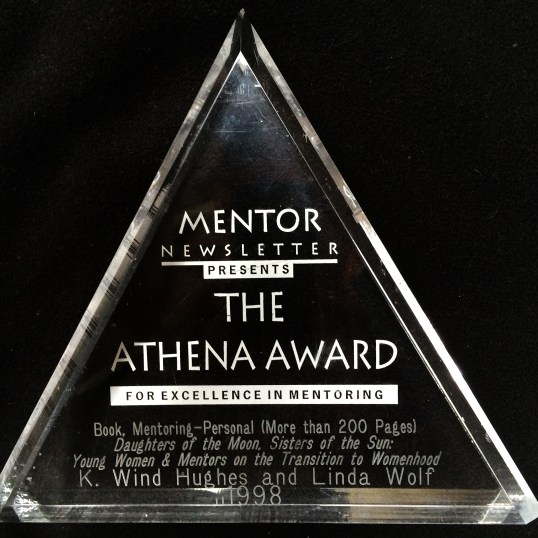
In 1998, K. Wind Hughes and Linda Wolf received the Athena Award for Excellence in Mentoring  for their work with teen girls and for their book, Daughters of the Moon, Sisters of the Sun: Young Women & Mentors on the Transition to Womanhood. (website for the Athena Award)

The nonprofit they founded, Daughters Sisters Project, now known as Teen Talking Circles started in 1993 with the first Girl’s Talking Circle. Today, there are talking circles around the world. TTC has been a pioneer in the development of talking circles for teenagers.

This June, Linda Wolf will lead a 4-day training for new adults who would like to learn how to facilitate a talking circle. Scholarships are available and a hotel on Bainbridge Island has offered to donate a double occupancy room to help defray the costs for two people who would be traveling from out of town.

For more information go to the registration page and/or call 206.842.3000.

Imagine you had a safe space each week where you could speak your truth with a supportive group of friends without fear of judgment — where you could see how the issues you face are connected to global issues — where you could discover you are not alone — where you could see your gifts and feel your self-worth. Now, imagine you are 13 years old and have this in your life… This is what teen circles offer.

Check the TTC website to listen to teens talk about why circle is essential to their lives.

Free hotel room for TTC Facilitator Training

A quick jot to say that the TTC Facilitator Training has a couple scholarships and a free hotel room for 2 people coming from out of town. June 16 – 19th, Bainbridge Island.

Register and contact our office, info @ teen talking circles dot com and let us know you want the room. It’s a double, so you would be sharing it with another participant of the training.

We only do 1 training per year… If you’ve wanted to do the training, start a circle, have better relationships with teens, learn Compassionate Listening, be a mentor and be mentored in return; this is the time! And you can’t beat this offer!

Go here to register:  www.ttcsummer2016.eventbrite.comlinda and heather--3

International Women’s day Shout out!

i am woman

Look into our eyes: I AM A FULL WOMAN


Inspired by: RACHEL BAGBY’S ENCHANTMENT


Are you for or against us?

Are you in or are you out?

Feminists come inside all genders…

Femicide

  • In Guatemala, two women are murdered, on average, each day.
  • In India, 8,093 cases of dowry-related death were reported in 2007; an unknown number of murders of women and young girls were falsely labeled ‘suicides’ or ‘accidents’.
  • In Australia, Canada, Israel, South Africa and the United States, between 40 and 70 percent of female murder victims were killed by their intimate partners.
  • In the State of Chihuahua, Mexico, 66 percent of murders of women were committed by husbands, boyfriends or other family members.

Violence and Young Women

  • Worldwide, up to 50 percent of sexual assaults are committed against girls under 16.
  • An estimated 150 million girls under the age of 18 suffered some form of sexual violence in 2002 alone.
  • The first sexual experience of some 30 percent of women was forced. The percentage is even higher among those who were under 15 at the time of their sexual initiation, with up to 45 percent reporting that the experience was forced.

Harmful Practices

  • Approximately 130 million girls and women in the world have experienced female genital mutilation/cutting, with more than 3 million girls in Africa annually at risk of the practice.
  • Over 60 million girls worldwide are child brides, married before the age of 18, primarily in South Asia (31.3 million) and sub-Saharan Africa (14.1 million). Violence and abuse characterize married life for many of these girls. Women who marry early are more likely to be beaten or threatened, and more likely to believe that a husband might sometimes be justified in beating his wife.

Trafficking

  • Women and girls are 80 percent of the estimated 800,000 people trafficked across national borders annually, with the majority (79 percent) trafficked for sexual exploitation. Within countries, many more women and girls are trafficked, often for purposes of sexual exploitation or domestic servitude.
  • One study in Europe found that 60 percent of trafficked women had experienced physical and/or sexual violence before being trafficked, pointing to gender-based violence as a push factor in the trafficking of women.

Sexual Harassment

  • Between 40 and 50 percent of women in European Union countries experience unwanted sexual advances, physical contact or other forms of sexual harassment at work.
  • Across Asia, studies in Japan, Malaysia, the Philippines and South Korea show that 30 to 40 percent of women suffer workplace sexual harassment.
  • In Nairobi, 20 percent of women have been sexually harassed at work or school.
  • In the United States, 83 percent of girls aged 12 to 16 experienced some form of sexual harassment in public schools.

Rape in the context of Conflict

  • Conservative estimates suggest that 20,000 to 50,000 women were raped during the 1992-1995 war in Bosnia and Herzegovina, while approximately 250,000 to 500,000 women and girls were targeted in the 1994 Rwandan genocide.
  • Between 50,000 and 64,000 women in camps for internally displaced people in Sierra Leone were sexually assaulted by combatants between 1991 and 2001.
  • In eastern Democratic Republic of Congo, at least 200,000 cases of sexual violence, mostly involving women and girls, have been documented since 1996: the actual numbers are believed to be far higher.

(The Facts: Violence Against Women & Millennium Development Goals (compiled by UNIFEM, 2010). Available in English, French and Spanish)

What are we living for? TTC Interview with Chiara Rose D’Angelo

chiara1-v2

Hey friends,

It’s about time for a new blog post interview. This one, long in coming, is with Chiara Rose D’Angelo, a youth activist I admire greatly. But before we get into it, you should know that we’ve scheduled our yearly Teen Talking Circle Facilitator’s Training. Check out the dates. Would love you to be there. The more circles we have going, the more youth will unlock their voices… And we need them unlocked!!! Youth activism comes from the discovery that we need not be diminished by our fears or issues, we are not alone, and we can empower each other to take action for what we care about. Upcoming TTC Training

I’ve always considered myself an activist. And an optimist. When faced with the shocking statistics, horrors, and dire consequences of our collective greed, lack of spiritual connection, global unconsciousness and self-centered aims I’m stricken, but my basic instinct is to be positive, imagine solutions, create something, and believe that we’re smart enough to figure this thing out. It’s people like Boyan Slat and Chiara Rose, two youth activists, who keep my spirits up.

Both Boyan and Chiara are great examples of what Joanna Macy, calls “The Great Turning.” The Great Turning is the essential adventure of our time: the shift from the industrial growth society to a life-sustaining civilization. Joanna says the Great Turning is happening right now in three dimensions: Holding Actions, Analysis, and a Shift in Consciousness. Check out The Great Turning

If you look back at previous TTC interviews, you’ll read about photographer/filmmaker, Chris Jordan’s documentation of the albatrosses on Midway Island, dying en mass due to plastic consumption. Yes, the mothers feed the babies plastic. Boyan is a Dutch student who has come up with a brilliant concept as to how to clean up those garbage patches of plastic in the ocean and it seems it is working…

What I believe: YES, WE ARE ONE INTERCONNECTED LIFE FORCE FLOWING THROUGH EVERY LIVING BEING ON A LIVING PLANET  IN A LIVING SOLAR SYSTEM IN A LIVING MULTIVERSE

About Chiara Rose D’Angelo

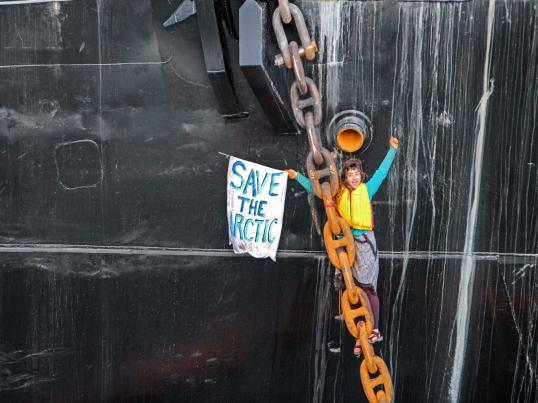
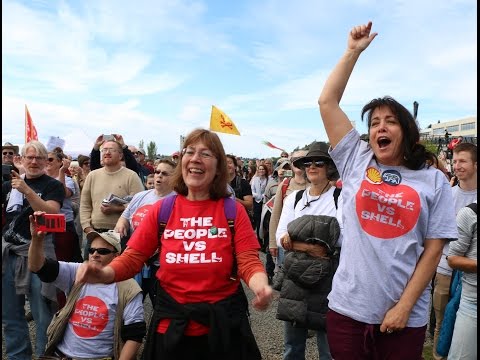
Last summer, on May 22, 2015,  Chiara Rose D’Angelo attached herself to the chain of the anchor of the Arctic Challenger as it moored north of Seattle. The ship was among those that Royal Dutch Shell intended to use as they drilled for oil in the in the remote and dangerous Chukchi Sea, the Arctic Ocean, off northwestern Alaska. Chiara stayed up on the chain for 66 hours contributing to a wide-scale protest heard around the world, $hell No, a massive activist effort to call attention to the insanity of drilling for oil in the Arctic Reserve and produce actions to stop any vessels from getting up to Alaska. Thousands of kyactivists took to their kayaks to block Shell’s rigs from moving up the waterways. The idea was that if the vessels were detained Shell would lose the critical time (weather) window they needed to have the rigs in place before winter.

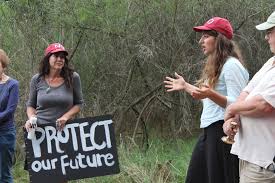
Chiara Rose, a 20-year-old student at Western Washington University, set out from Bellingham, Washington, in the dark of night. She paddled through choppy waves until she reached the anchor, and then jumped onto the chain. She fitted a hook through the links, dangled a harness down, and pulled herself up. “I thought to myself, ‘Oh my god, I actually did it!’” Rose said. “I’m actually on the chain!”

The guts it takes to do something like this is inspired and inspiring. It is a flagrant, empowered action that screams in the face of the powers that be, “NO, not in our names” – and a powerful, positive force that can only be spurred on by life affirming values.

In an interview with Yes Magazine Chiara described the physical effects of being strapped in a harness for three days and nights as, “Unbearable.” She said there were moments that helped push her through, like seeing her friends boating up with supplies for her or a school of fish underneath her feet. “I was on Lummi historic fishing grounds,” referring to a local Native American tribe. “Being on a toxic site that used to be such a thriving site, knowing that it would happen to the Arctic, helped me push through.”

Linda's shot

This was not the first mind-blowing act of heroism I’d seen Chiara do. A year earlier, in the pre-dawn hours of August 18th, 2014, she climbed 70 feet up to a platform, clandestinely built by friends of hers, and began a tree sit in protest to a controversial shopping development that would eliminate 800 trees in a forested area on her native Bainbridge Island. The aim of her tree sit was to create more time for the community to move into action and voice their opposition to the project. As more and more island residents learned of her action, a vigil formed at the base of the tree where one by one community members voiced reasoned arguments or simply anger and sadness at the idea of another shopping center on an island where there were already too many local vacant storefronts and no need for another pharmacy, let alone the proposed Walmarts.

Chiara eventually was convinced that she had accomplished her goal and descended two days later. The minute she came down armed officers hired by the developer, Visconti, cordoned off the site and began to bring in the bulldozers. In the months that followed, the shopping center was constructed and is finished now. One afternoon, just as the construction was coming to an end I noticed a captive deer running back and forth confused as to how to get out of the fence blocking off the construction site. Clearly, this animal’s habitat had been the forest that was no longer there.

My first interview with Chiara was directly after she came down from the tree sit in 2014. Let’s start there.

August 20, 2014:

L: Chiara, why did you climb that tree?

C: I wanted to create a platform for our community voices to be heard. I wanted to reawaken people’s sense that their own truth was more important than the truth that’s given to them to follow. I did the tree sit so that people could recognize that we are not the circumstances we are given, we are the vision we create.

L: You mean we are disempowered by the truth fed to us but empowered by having strong voices and speaking our own truth. I agree with that. How did it feel to be up in that tree and seeing everyone congregating below it? I was there in the morning but by afternoon it was a pretty big crowd. People taking the microphone and with each person speaking out it gave courage to others to come forward and express themselves.

DSC02161

C: All sorts of emotions came forward for me. It’s pretty incredible to be with those kind of trees that are slightly degraded in the sense that they have lots of invasive species at their trunks, but they’re still there, still vibrant, and have so much energy. And it was really great to see so many people on the ground coming and speaking and using the opportunity I created to let their voices be heard.

L: How does it feel to see those trees being cut down right now in front of you, just 3 days after you were sitting in one?

C: When I came back here and I first saw the trees being cut I started balling. It was really painful, and now it’s just another day. I think part of the reason I didn’t want to come back is because I’ve gotten numb to it. When things happen over and over again, it’s no longer painful. When you go to war, and you kill someone it’s probably traumatizing the first few times, but it begins to get more and more normalized. That’s what cutting trees is; it’s normalized for us. It’s really exhausting to think that’s the human condition — that’s what we’re up against — thinking all the things around us are so normal, when they’re not. This isn’t normal. This is pushing our lived environment to its max.

DSC02273

L: What prompted you to become a youth activist in the way that you are? What was the turning point?

C: At a young age I heard a story about a tribal nation in the Midwest that chains themselves to trees and that if their prayers are virtu

ous then they are released, and if they are not they are held forever. I realized that most of my prayers are virtuous; I just don’t ever actualize them. And at that point in time I was like, ‘alright, I’m going to go to school and be an oceanographer because my dream is to save the Puget Sound.’ I got two years into that plan and I realized I haven’t done anything, nothing; I’ve only contributed to harming something that I love so deeply. Eventually, it just clicked, and I started taking action. I really, really encourage people to think about what is that wish that you have, that one wish you could wish for that is not about yourself, but is about something you can see and feel and empathize with. What is that? Find it, and do something about it. Activate. That’s really where we need to go. That’s the path.

L: Do you ever feel hopeless?

C: Rarely. I’m not a big person on hope. Hope is too often something people proclaim and then not do anything about. But rarely do I feel hopeless. I have a lot of love. I used to feel hopeless, before I did things. But as a full-time activist it’s hard to feel hopeless these days. There are so many wins these days. A coal terminal in Boardman, Oregon just got shut down. Oregon is now coal terminal free. We have two left here in the Lummi Nation. Up in Bellingham, where I’m going to school right now, the Lummi say they are opposed to it, they are a sovereign nation, this has happened too many times, they’ve had their watershed destroyed too many times, and it is not happening. The chairman of the Lummi Nation just declared that. I am blessed to see so many wins. There is so much happening all the time. I am honored to be a part of these movements, because that is where the hope is. If people feel hopeless, it’s time to do something. Doing something is not a hopeless feeling – it’s the most hopeful feeling you’ll ever have.

L: What do you want young people to know?

C: What I want young people to know is the right now you have the most energy and power you’ll ever have, as far as being able to wake people up. You’ll never be able to touch peoples’ hearts as deeply as when you’re young. The wrong people might make fun of you, but the right people will have to open up and have to open their eyes. And if you start talking about your future and what you want in your future, there is something there that people can’t ignore anymore. It’s time that we all started speaking our truths, because we won’t be silenced anymore.

OK TURN UP YOUR SPEAKERS!!!

The next interview with Chiara took place a few months after her $hell No action. And it should be noted that Shell Oil pulled out of drilling in the Arctic – news we were all beyond relieved to hear! The official reason for pulling out was that Shell did not find enough oil once they put their drills down to assess to make the project viable.

720x405-kayactivists

L : You went through such an intense experience on that anchor? What was it like?

Chiara : Physically unbearable. It’s crazy because I’m telling it now as a story, but I still have the body memory of the unbearable fatigue and I can feel the stress points still where the harness was hitting me. The inability to move a muscle up there felt like I simply stuck in my body. But, spiritually, emotionally, and mentally, I was clear, full, and felt this infinite energy. So much was happening in the moment; everyone wanting to talk to me – the Coast Guard, reporters, family… What was amazing was how clear my words were and how in even all of that pain and stress and intensity, I was able to speak so clearly.

The first two nights another protester came up and sleep underneath me. He was in a much more uncomfortable situation than I was in. His presence was so helpful in calming me. I had someone to talk to. But I didn’t sleep. There was no sense of night; the Coast Guard had their lights shining on us all night long and the chain felt so cold and sterile. Spiritually, I could feel everybody’s support, as if they were right there saying, “Go Chiara!” So, I didn’t feel so alone. Then, there was these floods of moments where people boated out to me, to drop off gear, food and water.

During the day I could see my friend’s sailboat on the horizon with a banner saying, “75% chance of spill, WTF?!”, and that was just like this beaming light of truth which I could hold onto. Every time I spoke with my mom and she told me that everyone was supporting me, I felt so blessed.

supporters
Right: Debra D’Angelo (Chiara’s mom)

L : So, Miss Chiara, what’s life like now?

Chiara : Interesting…. It’s a mix between my desire to find community and normalize and keep working to protect waterways. I started my activism at sixteen; I was eighteen at the tree sit. When I was in high school, I thought I could either wait to start being active; go through college and then get a job doing something good, or just start now. I decided to start in high school. The more I did, the more I realized that the youth voice has this different kind of power — this potent truth. When you’re really young and you know what you believe in, people listen.

L : So, now what?

Chiara : I’m going be down to Evergreen College to study about women’s indigenous work and the untold stories of indigenous women fighting for justice. I’m going to be immersed in a very serious and rigorous classroom program, which is what I’m looking for, with people that take it seriously. Then I’m heading back to Fairhaven College. I feel set and on path. I’m going to spend the summer advocating for the Salish Sea Marine Sanctuary, which would designate the Salish Sea as a protected zone. This would create an agreement between Washington, British Columbia, and the 200 plus coastal Salish tribes to bring animal populations back up to 50% of historic levels and restore the ecosystem so that it actually functions.

index

L : As an activist you have to learn facts and face so many tragic realities. What do you do with your grief?

Chiara : I feel it.

L : Do you ever get just despondent – feel things are just futile?

Chiara : I get angry, but I’m getting pretty skillful at making action happen out of grief and going through the process. Joanna Macy has this really beautiful thing she calls The Spiral. (http://www.joannamacy.net/theworkthatreconnects/the-wtr-spiral.html) It is about four successive stages or movements that feed into each other — opening to gratitude, owning our pain for the world, seeing with new eyes, and just going forth. I have my own spiral, my own process. It hits me in a big wave. I feel the pain for the earth and I hold it and I know it, I don’t run away from it. I feel the grief in my body and then go and connect to what is beautiful about the earth and allow it to inspire me. Once I feel inspired, visions of what I can do come and once I have a vision I jump into it. I like to joke, when I go for swims in the Salish sea, I know it’s toxic, but I swim in it knowing it’s toxic. I feel the grief about that but my process brings me back to action.

Chiara: I have a question for you, Linda. How do you hold space so sacred? When I’m with you I just feel the good vibrations. How do you hold that?

L : I don’t know. I don’t try to do anything more than be authentic and be as kind as possible. I do my best to listen to my intuition and follow her lead! I am still learning to set boundaries and strike a balance for myself in every way. I’m very sensitive to vibrations around me. I play life by ear and think musically.

Chiara : How do you go about setting those boundaries?

L : I just energetically do my best to honor myself and my space. I’m an only child and most likely that helps and hinders me at the same time. When I was young, I didn’t listen enough to myself and learned from very uncomfortable feelings that I did not enjoy going along with things if I didn’t jibe with them…I also experienced early the rewards of being an activist and standing up for what matters to me. It helped that I was part of a strong 1960s movement as an activist. Strength in numbers so to speak. So, I’ve developed a strong response mechanism that reminds me to follow my feelings. If I don’t feel it, I excuse myself, or I speak my mind and usually that ends the conversation. Boundaries can be achieved gracefully – they also can be created with an energetic that causes broken relationships – so one has to choose the consequences one can imagine.

Chiara : How do you hold that? I come from a long line of women that were mistreated, so there’s this sense that just historically that’s the energy that I come from.

L : If you mean that you have patterns stemming from your family constellation, I know what you mean. That’s also a big part of my work to be more empowered. I felt “less-than” (others) when I was a teenager. Less pretty, less popular, less important, less liked… it stemmed from being different, feeling different, not being able to go along with the statis quo. I was very angry with the world of adults. They were in the dark ages and I was bursting at the seams. It was the beginning of a groundswell of change. When I discovered other people who felt like I did it was such a relief. Knowing I was not alone gave me the fuel to come out more and more – and of course, it was happening for a lot of people back then… it was the beginning of the realization of a generation gap, which was more like a generation paradigm shift. We were leaving the 1950s behind. LSD blew the lid off. Music also blew the lid off. Protest blew the lid off. With LSD people used to say it was like forcing the pedals of the flower to open rather than with meditation allow them to open organically and naturally. LSD and meditation were coupled for a good while, and yoga became popular in the West. It was almost like transform or die! I think my generation is the ageless generation in so many ways. I think what happened in the 1960s in terms of my solidifying my values and what I fight for, believe in, stand up for is the same now as then.

Today, the way I continue my personal transformation process is much gentler and slower and more basic. To encourage myself not to revert back to unkind ways of treating myself, I have a morning ritual. It’s very simple: I go to the sink in the bathroom, turn on the hot water and put a washcloth in the sink. Then I look up at myself and talk to myself as if I was just meeting a friend who had spent the night. I smile at myself and say with authentic loving feelings, “Good morning, Linda. I love you.“ If my monkey mind starts saying, “My God, you’re looking so old and wrinkled?” I push the thought away and smile at myself and say something like, “Linda, you are so beautiful. You are so talented. You’re doing great. Keep going, I’m with you all the way.” I want to speak to myself in the morning the same way I would speak to a child I was greeting first thing in the morning. I wouldn’t do it thinking judgmental thoughts, thus sending out downer vibes! I’d do it with love and positive regard. So, I give that to myself. It helps me start the day off knowing it is about uplifting my soul and spirit and hopefully, I remember to keep that attitude throughout the day. It is the only way I can contribute my best to the world and the only way I can trust I’ll treat others with the same love and respect. Doesn’t always work. I can fall into self-denigrating thoughts that stem from my family constellation, or get frustrated, tired, at the end of my rope and lose it –but essentially, I really do love life and people –and as long as I don’t allow myself to buy into any of the very misguided messages that we older women are over the hill, I’m fine. In fact, we older women are changing the world! And younger women, and feminists and activists and educators and spiritual guides… we are simply NOT alone!!!

DSC02970-2

Thank you Chiara, for your generosity and your deep love of life. Thank you for putting yourself on the line and for your strength and conviction. I love having you in my life!

February 15, 2016. Addendum:

Chiara is currently in school and will graduate this Spring with a degree in Ethno-Ecological Justice and is working on preparing for her hearing for her $20,000 dollars in fines she received from the US Coast Guard.


Freedom ; Love ; Belonging ; Trusting ; Knowing …

We have a great discounted TTC Facilitator’s Training coming up this Fall! Check the link.

I CHOOSE LIFE

I CHOOSE LIFE

Choose Life! I leaned recently the this symbol ; means a lot more than I ever thought. It means continuity; it means there is more to be said; more to learn and know and do – it means ongoing! Isn’t that what we all want from all our relationships — an ongoing quality that realizes the meaning and power of process? A period means full stop. No fun in that!, Especially when you’ve loved someone.

So, how do we love ourselves enough to keep going; keep loving; keep staying present in the process of living life; in the process of relationships?

How do we connect with our greatest self which exists in infinite space, connected to the infinite spirit of life blossoming  anew every millisecond?

And how do we connect with that great self in another?  Because surely, then the flow of our mutual lives remains unbroken.

Teen Talking Circles is not about one single circle on Bainbridge Island. It is about a philosophy and way of being that reaches across the planet and unites us in compassion and love, in acceptance, belonging, agency, and courage.

Teen Talking Circles are not just for teenagers. But to begin doing them at 12 years old makes an enormous difference in one’s life. To do them with kids on the street, in schools, in neighborhoods, everywhere is a great gift to give young people.

Homeless youth in Seattle

Homeless youth in Seattle

Teen Talking Circles are not panaceas – they don’t clear up all issues and problems we face, but they give us a strong opportunity to become responsible for our lives —  to tell the truth, to figure out our lives in healthy and conscious ways, and that surely frees us to find our ways in this world of so much pain and delight.

So, we have an offer for you  — we have been given a special gift of scholarship money in order to gift our next TTC Facilitator Training at cost. We have 9 spaces out of 11 to fill. Would you love to join us and experience TTC?

We’d love to have you come be with us for this positive experience.

Check out the registration page for more information. Love, linda

Pathway to Paris: An Interview with Jesse Paris Smith & Rebecca Foon

ttcflowerApril 2015

Hello dear friends,

So far, the TTC year ahead looks like it will be a sweet and potent one. This week nine women are on our way from around the US to Yelapa, Mexico for the 11th annual Women’s Sacred Circle Retreat – “a secret treasure”… And just last month we started a new Seattle Tween Girl’s Circle, which will be led by a collective of outstanding TTC facilitators, including Heather Wolf, Christine Castigliano, and Nora Harrington. We are planning a regional facilitator training in Oregon, and looking ahead to TTC trainings here at home and a super fundraiser in November again. It is hard to believe this is our 21st year!

In January, we were invited to support the annual benefit concert for Tibet House US, in NYC, by donating 38 handbooks to the stellar line-up of presenters, and 500 brochures went to audience members. In March, we were honored with a $1000 award from the Bainbridge Island Women’s Club, which will be augmented by the funds we will receive from One Call for All. If you’ve wanted to donate to TTC, doing it through One Call nearly doubles what we receive. It’s easy. Just click here. All funds go to scholarships.

In this blog post, I’m honored to be able to introduce Jesse Paris Smith and Rebecca Foon, who are clearly doing exactly this. They are on fire, giving themselves fully to the world in myriad creative ways. In the interview below, you’ll learn about their important project, Pathway to Paris — a powerful movement to bring together art, music, and attention to what Bill McKibben, founder of 350.org, says is THE most important world issue we face daily — climate change.

Recently, Christen Lien sent me a link to a powerful video on Youtube, which has gone viral — I want to share it with you.

This video is evidence of why TTC exists. We need each other. We need to hear ourselves being heard. We need to know that we are not alone and not the only ones who go through all these things that come with being alive. This is the way to solve conflicts and work together to create ingenious ways to address the many issues we face on the planet. Together, we can shift the paradigm and bring attention to what needs attention in order to evolve in the most conscious ways.

plum trees blossoming in our yard

plum trees blossoming in our yard

The evidence of climate change is clear. Even here, in the Pacific Northwest, in my own backyard, spring sprung in  early February. Our plum trees were in full bloom, while the bees slept on dreaming of the honey nectar they were not going to find this year in our trees. Another example of climate change’s “inconvenient truth?” Everywhere we look we see an intensification of weather and climate extremes. Climate change is making hot days hotter, flooding heavier, hurricanes stronger and droughts more severe. It’s causing dangerous and damaging changes to the landscape of our world, affecting wildlife, and it is increasingly getting worse.

In Paris, this year in December, the United Nations Framework on Climate Change Conference will be focused on achieving a legally binding and universal agreement between all nations to cut carbon emissions due to burning fossil fuels, which is a big part of the cause of greenhouse gases and climate change.

Bill McKibben

Bill McKibben in Beijing             Photo: Linda Wolf

I remember meeting Bill McKibben in Bejing while on a sustainability tour with Global Exchange in 2005. He was briefing a packed room of Chinese journalists about this crisis back then. Today he says, “The future is bleak and there is no room for speculation, wishful thinking, or doubt.” Manuel Maqueda, co-founder of the Plastic Pollution Coalition, and founder and director of Kumu, says it is more correct to call this the climate catastrophe or climate crisis.

IT IS TIME TO TOTALLY SPEAK OUT

In 2005, with Kevin Danaher, co-founder of Global Exchange, I went on a Sustainability Tour of China. While in Beijing, I visited the Graveyard of Extinction at The Milu Park.  What a chilling experience. There were approximately 145 tombstones in the cemetery, toppled over on each other like dominoes that cover a space of 100 meters. I wonder if the hand has been moved further back towards us, at the end of the line, before rats?

Untitled-1

Graveyard of Extinction, Milu Deer Park, Beijing China                                      Photo: Linda Wolf 2005

It’s crazy serious and yet we can’t allow ourselves to be flattened by a conclusion that we are all doomed. Over a decade ago, I interviewed Maya Angelou and asked her what she would tell young people who were scared that things were so bad there was nothing that would fix them. Here’s what she said,

PS8-00233

Maya Angelou handing the world to girls, Seattle 1998. From Daughters of the Moon, Sisters of the Sun: Young Women and Mentors on the Transition to Womanhood, by K. Wind Hughes and Linda Wolf                                  Photo: Linda Wolf

“It seems terrible. There’s racism and sexism and ageism and all sorts of idiocies. But bad news is not news. We’ve had bad news as a species for a long time. We’ve had slavery and human sacrifice and the holocaust and brutalities of such measure. We can’t imagine what Attila the Hun did or the cruelties of the period when the church, the great Inquisition, sliced people open from their heads to their groin and gutted them. And women were burned at the stake and stoned to death, as were men. We can’t imagine it. Today we say, “Ah, how horrible.” But the truth is, we have had bad news a long time. Yet, amazingly, we have survived. And while on the one hand we have the brutes, the bigots, and the bullies, at the same time we have had men and women who dreamed great dreams. We’ve had Galileo and Aesop, Paul Laurence Dunbar and W.E.B. DuBois. We’ve had Sholem Asch, and Shalom Aleichem – great dreamers. We’ve had women who stood alone, whether it was Harriet Tubman or Mother Jones. We’ve had Margaret Sanger. We’ve had women who have stood in the gap and said, “I’m here to try to save the world.” You have to think who we are. If you made a map five miles long and five miles wide of the universe, Earth would be smaller than a pin-head. I think it may have been Durant who said if you make a model the size of the Empire State Building, and flat on the top of the spire you put a postage stamp, the model would represent how long Earth has been here, the spire would represent how long life has been here, the thickness of the stamp would represent how long human beings have been here, and the thickness of the ink would represent how long we’ve been sentient. So we’re the newest group on this little blob of spit and sand. This is what young women and men should know. They should know that we are carnivorous, yet we have decided somehow not only to not eat our brothers and sisters, who may be delicious, but to accord them some rights and to try to love them and look after them. I don’t want young men and women looking around and saying, “Oh my God, oh mea culpa, it’s so awful.” It’s bad but it’s also good, and it’s up to each one of us to make it better. Every one of us. We deserve our future.”

I feel deeply honored each month to write these posts and share the people who inspire me and help me make it through the hard times and the painful thoughts. I am so grateful to my friends who give me space to grieve and to return to love that much more deeply. Thank you for being part of my world.

Love, linda

photo: Chris Jordan

photography by Chris Jordan, used with permission

“…The interconnected network in an old-growth forest is thousands of millions of times larger and more complex than any human brain. Isn’t it strange how we mow those forests down, calling them “overburden,” so we can get to the coal underneath to burn for electricity so we can chill our beer by a few degrees and watch “the game” on our plastic television screens. We are collectively missing the real game so badly that anyone watching from a distance would have to be laughing hysterically. Or crying their eyes out for the tragedy of it…” Chris Jordan

1A2A1870

Rebecca Foon & Jesse Paris Smith                                                                Photo: Bobby Singh

The following interview took place on Skype, February 12, 2015.

Jesse Paris Smith and Rebecca Foon are world-renown musicians, who are deeply passionate about conservation, climate change, and social justice issues.They are currently focused on the project they founded, Pathway to Paris, which is a series of concerts and events to draw attention to the lead up of the upcoming United Nations Climate Change Conference taking place in Paris in December, 2015. They are planning two nights of concerts during the talks in Paris, to help build awareness and dialogue around the importance of coming up with a legally binding agreement. The concerts will also serve as fundraisers for 350.org, the leading organization dedicating to building a global movement of climate change.

189140_1599548273092_7972737_nJesse Paris Smith is a composer, pianist, and multi instrumentalist. She performs globally in multiple configurations, and her compositions have been commissioned for art installations, book soundtracks, and live film score performances. She is a graduate of the Sound and Music Institute, trained in integrative practices of music and sound therapy. She is on the Associate Board at Tibet House US, curating a weekly event called Mindful Music and Sound Series and is a regular participant of the Tibet House US Annual Benefit Concert at Carnegie Hall. She also co-curates and hosts Talkingstick, a monthly true storytelling and music event at the Rubin Museum of Art. In September 2014, with cellist, Rebecca Foon, she launched Pathway to Paris, a year long event series and online portal, focused on innovative solutions for climate change.

beckRebecca Foon is a Canadian cellist, vocalist, and composer originally from Vancouver, BC. She currently records under the alias Saltland and is a member and co-founder of the Juno Award-winning modern chamber ensemble Esmerine. She is an environmental and social activist, yoga teacher, produces musical and artistic events, and performs and records with many world-renown musicians, artists, and poets. She is a member of Sustainability Solutions Group, a sustainability cooperative that works with cities and municipalities to create climate change action plans.

Linda Wolf: So, how did the two of you actually meet?

Rebecca Foon: We met in London at Ornette Coleman’s Meltdown Festival. Both of us were playing there and got talking. I was living full time in Montréal and Jesse in New York. It was clear to us both that we had a lot in common and we stayed in touch. We both care deeply about environmental and social justice issues, as well as being musicians ourselves and loving world music. I could tell that Jesse was a very open person with a vision and passion for making positive contributions to this planet. That kind of vision, positivity and inspiration to create on-the-ground change through art and hard work is so important to me. I was very grateful when we began to imagine weaving art and music together for Pathways to Paris.

Linda: What exactly is Pathway to Paris?

Rebecca: Pathway to Paris is about building a movement of thinkers, academics, activists, artists, NGOs, and government people who come together to imagine ways to bring attention to climate change issues, especially now in the wake of the UN Climate Change Conference happening at the end of this year in Paris.

Linda: How are you doing this?

11150249_431001670406982_7657141607190801584_nJesse Paris Smith: We’ve been producing events leading up to our final concerts which will be in Paris during the first weekend of the climate conference in December.  We just had our second event at The Greene Space in NYC on April 8th. The event was live streamed so anyone in the world could watch and the link is still live to watch, and the show will also be aired this month on David Garland’s WNYC/WQXR radio show, Spinning On Air.

http://www.thegreenespace.org/events/thegreenespace/2015/apr/08/spinning-on-earth/

It was such an incredible evening of speakers, poets, musicians, all sharing in this discussion of climate change under the umbrella of this theme of April, which is Earth month and Poetry month. We had May Boeve, the Executive Director of 350, and it was such a wonderful evening of positive energy, with education, activism, and celebration.

Rebecca: The objective of the conference is to achieve a legally binding and universal agreement between all the nations of the world. The overarching goal of the talks is to reduce greenhouse gas emissions to limit the global temperature increase to 2 degrees Celsius above pre-industrial levels. There are a lot of people and organizations also working to bring attention to the conference. We are working in partnership with 350.org as well as other sustainability organizations and groups.

Linda: The whole issue of climate change or climate crisis is hard to get our minds around. It’s so huge. I read on your site, Pathways to Paris, about the lead up and what’s at stake. I also read on the 350.org site that a big part of the crisis is that right now we’re at 400 ppm (parts per million) of carbon dioxide in our atmosphere, and we add 2 ppm of CO2 to the atmosphere every year. According to 350.org, unless we are able to rapidly turn that around and get back to below 350 ppm this century, we risk triggering irreversible impacts (tipping points) that could send climate change spinning truly out of control.

Recently, in my interview with Noam Chomsky, I asked him whether objectively he had any hope for us. He said, “No.” I said, “Really? Wow, that’s terrifying.” He said, “You asked the question objectively do I think there’s hope. Objectively, probably not. But it doesn’t follow that we have to give up hope, we don’t know.”

Rebecca: It’s something I think about a lot. It’s something I think about when I imagine having children. I have to ask myself, do I want to bring a child into this world? What’s going to happen to the next generation and the generation after that? What will this world look like in 100 years? I don’t think anyone knows the answer to these questions. Science speaks volumes and says a lot but nobody really knows what’s going to happen and what the impacts of climate change are really going to be, so, yes, it is terrifying for sure. But I think what keeps me inspired is that I really believe in humanity, and I believe in this planet, and I believe in beauty, and there’s so much beauty in this world in every moment, and when you can tap into that — really living moment to moment, being awake in that moment as fully as you can, life is truly spectacular. The more love you can bring to your relationships and the way you interact with your environment is what’s important. I think for me living each moment fully gives me the courage to take in the next moment. I can’t really think too far beyond each moment in terms of the impacts of climate change.

Right now, red alert lights are flashing emergency with regards to the future of our lives and all life on this planet. There’s an enormous amount of urgency to take action now.  It is incumbent upon the united nations of the world to come up with a binding agreement that will impact behavior changes, by-laws, policies and best practices. For sure, I’m terrified of the future when I think about the long-term possibilities if we don’t act fast, and yet we can’t live in that fear. For me to stay inspired and keep allowing myself to enjoy this life as much as possible with the people that I love means I can’t allow myself to live in paralyzing fear.

groupshotwindLinda: Working with young people in teen talking circles, I’ve seen countless times how when we share the ways we feel, especially what hurts, we are reminded that we are not alone. We can also map how the issues we face are inextricably tied to global issues and vice-verse. Then, the feelings of despair go away and our life force returns so that we become empowered to make a difference by taking action on what matters to us. The more we allow ourselves to grieve the more capacity we have to love and the more energy we have to give.

Jesse: The first time I learned about climate change, I was in high school. I was in 10th or 11th grade and I was in a history class where we had to do a current event assignment. It was very late, the night before school, and I hadn’t done my homework, so I went to the deli to buy a newspaper. I was looking through the paper for something to do my homework assignment on and I found an article and read the words ‘global warming’, ‘fossil fuels’, and ‘greenhouse gasses.’  I didn’t know what any of these phrases meant but being a lover of nature and earth science, I was intrigued by the words ‘greenhouse’ and ‘fossil.’ But the tone of the article wasn’t a lighthearted article about gardening, or an archeological dig. I had AOL instant messenger up on my computer, and since it was very late, there was only one classmate online who I barely knew, and I wrote to him, asking what these phrases meant. He explained everything to me about global warming, as it was  commonly called back then. I became very panicked also very upset that I hadn’t been taught about this in school. For hours I wrote back and forth with this classmate, as I delved deeper into the subject, reading more about it online, and quickly looking for books and articles to brush up with. I really couldn’t believe we hadn’t learned about all this in school, and was upset about that, as if they had been hiding the topic from us.

So, I wrote my paper and the next morning turned it into class. After that, climate change was it for me. At that time, I wanted to abandon music and any artistic endeavors, because suddenly they felt to me to be so self centered when the planet was in so much trouble. So, I ended up writing hundreds of letters and signing petitions, and for the last year of high school I volunteered and worked with environmental organizations based in NYC and also with Ralph Nader.

But like any other vocation, there is a dark side to activism. Working with activists and politicians I saw so many people completely rundown, feeling defeated by these overwhelming topics so much bigger than themselves, that I actually did my final project in 12th grade on activist burnout. I realized I didn’t want to feel that way. I wanted to find some sort of balance between the passions of music and the arts, and environmental activism.

Linda: You’re one of the busiest people I know, Jesse. How do you deal with that kind of stuff now?

CandlesJesse: The most important thing is self care. Before you can successfully tackle climate change or any environmental or social injustice issue, you have to take care of yourself first. You need to make sure you’re okay first. If everyone just took better care of themselves, the world would be a better place. Find different things that work for you, and make them habits. Eating healthy, drinking healthy drinks. Things you do every day that keep you feeling your best. Whether its a sport, or meditation, talking walks, yoga, playing an instrument, listening to a certain kind of music, reading a book of inspiring quotes, any rituals or routines you can have that help you to feel good.  And last resort things too for when you feel stressed or overwhelmed. A teacher of mine taught us to have a ‘safety kit’ for moments when we feel overwhelmed. Like a box you have in your room where you keep different things that make you feel calm and happy, like some music you love, or a tea you like to drink, a book that makes you smile, photos, anything. The second thing after self care, is talking to and connecting regularly with other people, and connecting with others when you feel overwhelmed. It is so important to have people around you that are your tribe, that relate to you, are of like mind, share in your passions, inspire you, and help you to feel encouraged and hopeful. And people who you believe in, and want to help in the same way. People of all walks of life and ages.

For example, I live next door to a family of creative and socially conscious artists, including Anne Waldman, a poet, activist, and amazing role model and inspiration. She always seems to be full of so much hope and optimism, always looking towards the future. It’s so important to be surrounded by that kind of energy. She is so supportive of Pathway to Paris, and so encouraging to younger generations.

Rebecca: One way I take care of myself is through yoga and meditation. Personally, I’ve felt somewhat sad and depressed, and I knew I needed to talk to somebody about how I was feeling. I knew it would have to be someone who inspires me. I found out Julia Butterfly Hill does life coaching and contacted her. She’s the woman who lived in a tree for two years to draw attention to the destruction of the Redwoods through cutting down the forest.

bookcoverLinda: Yes, Julie wrote one of the stories in my second book, Global Uprising: Confronting the Tyrannies of the 21st Century – Stories from a New Generation of Activists.

Rebecca: One thing I got out of all our wonderful conversations is her philosophy around problem solving, which is what I’m all about — creative problem solving, innovation and doing things that haven’t been done before — rethinking approaches to messy problems. Now, I see problems as awesome opportunities and get excited instead of seeing them as huge weights that take all the life force out of me. Instead, I can dig into the problem and try to figure it out and brainstorm it with others, which is so important. I’m a big believer that one person doesn’t have all the answers. It’s about collective brainstorming to come up with the best solutions. That takes the weight off you as an individual.

Jesse: It’s difficult to imagine being 14 right now and being able to go on the smart phone or computer and see all the overwhelming information and news this is constantly being put up. That’s another thing I think is super important for young people – not to be on the internet so much. Not to live in this world of screens where its hard to know whats reality and what is false information. Get out in nature, go on a little hike, go to the woods, go to the beach, go outside and be with your friends. It’s so important even as an adult, to alternate between being in the city, being on the computer, and on the phone and getting away from all that stuff to be in nature, be creative. It’s so important to make sure you’re paying attention to balancing it out.

Linda: Speaking of inspiration, how have your families inspired you? What qualities have your parents instilled in you?

Rebecca:  I’ve grown up in a political arts family. My dad and my mom started Green Thumb Theater, a theater company known for political children’s theater in Canada and the US. After leaving Green Thumb, my mother ran a number of arts festivals and over the last 20 years has been the director of Inner-City Angels, which is an innovative arts education organization that brings artists and musicians into inner city schools to work with mostly immigrant kids.

innercityangels-photo-1My mom’s passion and devotion to these kids and commitment to bringing the critical issues of our time into the public education system through art has been very inspiring to me. And as a person, my mom is an incredibly generous, compassionate person and cares deeply about her family and the people around her. I try to emulate all those values that she has, of compassion, love, and generosity.

Linda: And how has your father inspired you?

Rebecca: My father is quite brilliant as a writer, has a very creative

Becky & Dad

Becky & Dad (Dennis Foon)

mind and his writing alone has definitely been the source of inspiration for me. He is completely supportive of me and loves and adores his family. I think of him as my best friend. He, too, weaves critical issues into his art to make change and that has been very inspiring for me.

Linda: Jesse?

trio

Jesse, mom (Patti Smith), and brother (Jackson Smith)

Jesse: One thing that is inspiring about my mom is that she’s 100% true to herself. If she wants to do something, she just does it. She lives her path and her purpose 100%, so everything she puts her energy into and devotes herself to is coming from a genuine place. I think she just is herself and can’t imagine being any other way. She knows who she is and she follows her own path. She doesn’t act out of a place of fear, or because anyone else convinced her of what to do. She’s not driven by money, success, or fame, and I think she has probably always been that way. It is inspiring to see her follow through with everything she wants to do, with anything she thinks is worth seeing through.

Linda: I have so much respect for your mother, Jesse, and her work. I knew her when I was young. We met in NYC when I was on the Joe Cocker Tour. And you have a very talented brother, Jackson. All three of you play music together. What fortune! What a family! What about your father, Jesse, I know he died when you were young?

Jesse: He died when I was seven. He was a musician; a guitarist and songwriter. Throughout my life I have had times of getting upset when I wished I could play music with him, or wondered what he would think about me, and if he would approve of my life choices. Most of what I know about him is pieced together from listening to his music, talking with my mom and brother, hearing stories from others over the years, and doing my own research. The other day, a friend was reading a book about the Black Panther party and I told him that my dad was involved with the White Panther Party in the 1960’s in Detroit. I pulled up some videos of him on the computer. Watching the videos, I was reminded how eloquently he spoke, and how politically active he was when he was very young.  As a teenager, his band was deeply involved with political issues. They were very radical. I was watching an interview, and he was speaking so clearly and passionately about the political problems of the 60s. His band was using music as a way to communicate with the people. They were doing what they loved, and using their talents as a vehicle to spread awareness and to increase the power of their voices. That’s very inspiring, and similar to what we are trying to accomplish with Pathway to Paris.

Linda: Listening to you two, I’m just in awe of your gifts and your beauty. I just want to have you two come here and live in my little cabin and work in my veggie garden with me; introduce you to everyone I love, and play music together!

Jesse & Rebecca

Jesse & Rebecca

So, what words of advice would you give a young person?

Rebecca: Dive in and learn about the issues. Challenge yourself to find ways of exploring the issues, whether it be talking about them at school or building movements inside or outside school with your friends or community to raise awareness and foster dialogues and imagine solutions.  Create concerts or café sessions, getting speakers to talk or starting petitions, writing letters or measuring your ecological footprint and challenging your friends to measure theirs. There are tons of really great ecological footprint calendars online, so just getting a sense of your own impact on the planet and creating fun ways of trying to reduce it, and inspiring others to reduce theirs. Thinking about the modes of transportation that you use and ways to move towards the end of fossil fuels because that’s basically what we’re trying to do  — to move to the end of using fossil fuels by mid-century. Find out what that means and brainstorm creative ways to get there.

Jesse:  I would say to take the time the find your passions, and then seek out and create opportunities to explore them. For me, two of my passions are music and environmental activism specifically focused on climate change. These are things I discovered as a teenager. When I was a teenager and I got interested in this stuff, I found both the internet and actually meeting up with people in real life to be equally important. My favorite environmental organizations had websites with petitions and letters, articles and book suggestions, and sections that listed meet ups or group activities and easy ways to get involved. It can be overwhelming, because there is so much out there, and seemingly endless possibilities. My advice is to identify what matters to you and do what you love, because if you’re doing that, you’ll be able to do a great job. I also want to say how important it is to find and identify mentors and older more experienced people in the field you are passionate about who you can learn from.

Rebecca Foon & Jesse Paris Smith

Rebecca Foon & Jesse Paris Smith        Photo: Bobby Singh

Rebecca: I’m so happy to have been able to do this with you guys and to share the story and so grateful to be a part of this with Jesse. I feel like it’s just such a beautiful time for Jesse and me to link different parts of our passion — our music and our love for the world and our passion for climate change solutions and to bring all this together. That’s the most inspiring thing — being able to reach out to people that inspire us and see their reactions as we share Pathway to Paris with them. Being tapped into a common mission and vision with others is such a powerful transformational tool. If anything gives me hope, it’s that. And so my advice for young people is to band together and tap into a collective power, because there is so much opportunity for action when you’re part of a powerful energy committed to creating positive change.

Linda: Thank you so much for this interview, both of you.

“It’s not that we need to save the Earth, we need to save the systems that make the Earth compatible with human existence and the existence of other life forms” Naomi Klein, Author

“What if there were just one being looking out through all the eyes in the world, what would that being be seeing? There is a challenge to try to wrap your mind around.” Chris Jordan, Artist

Each day, we still turn at warp speed around the sun and the seasons follow one by one. We have no idea what our best thinking can achieve, what possibilities we can imagine and manifest, when each of us is willing to face and frame the crisis we’re in as an opportunity. The fact that we love is miracle enough to keep on a path with heart. Choose one and all the rest intersect. There are many organizations with helpful websites. Here are a few more links to follow:
350.org

The Nature Conservancy
The Union of Concerned Scientists

Pathway to Paris – Click here to learn much more and get involved!

Pathway to Paris on Facebook – LIKE!!! LOVE!!!

The Owl, The Dawn Chorus, Music for Bathing: It’s Cosmo Sheldrake, of course

2/1/15

Good February morning to you each and all. Crispy Hot Buttered Sour Dough Toast and Earl Grey Tea with 1/2 and 1/2 made me joyfully ready to begin this day, the first of February. Normally, I only eat seeds and nuts and dried fruit in the morning with my tea, but today I gave myself the delight of toast.This is going to be a powerful year, I feel it. My world of photography has taken a leap with a new commitment, a new friend (I’ve graduated to an Epson 7890), and a new photography website, and studio/office coming in this week.

Heather Wolf, Kellie Shannon Elliott and I are gearing up for The Yelapa Women’s Retreat in April; a TTC Facilitator Training is scheduled for July, and Teen Circles are in the planning; March & April blog interviews are scheduled with Jill Purce, Jesse Paris Smith & Rebecca Foon. Exciting!!! And way off in December, something important is brewing. Outside, the veggie garden is already sprouting garlic, planted in the rain last Fall. The world is a crazy painful beautiful place in need of all our love, positive vibrations, and good deeds. Spirit is calling us to breath deeply, slowly, stand with good posture and walk tall. We are called to be here now and live until our last story is writ. Blessings like red petals thrown from on high — dare to laugh, cry, hug, be — and live life fully. This month, we have the pleasure of introducing you to a most beautiful young man:

images-1

Before you read our new blog post here, click on the image above; then, come on back. Trying to describe Cosmo Sheldrake requires a lot of adjectives, and that will save me some, because it will be super apparent to you from the get-go who Cosmo is, and what talent he has!

cosmo header

Cosmo Sheldrake is a 25 year-old multi-instrumentalist, musician, composer, producer, performer, teacher, singer, improviser – a kind of a Puck-like spirit crossed with a romantic English gentleman crossed with a beat-box, hip hop artist crossed with a poet! Cosmo is simply someone you have to experience and thankfully you can do just that online and at his concerts and workshops, and sometimes even on Bainbridge Island at our very own family’s Iggy’s Brew House where he and his brother, Merlin, are part of the early story. (I fondly remember Heather & Sean (my daughter & son-in-law) and the Sheldrake boys brewing up some of their first experimental brews in our backyard.)

Based in London and Brighton, Cosmo also sings and performs with Merlin in their band the Gentle Mystics, OH YEAH! More of this please! In this crazy beautiful dangerous world, we need more gentle mystics.

But back to Cosmo. From the first moment I met him, I wished he were my rich uncle and I could go live with him in his castle in the British countryside. I was taken by his joyful spirit, his obvious talent and sonic gifts of music and song, which are infused with poetry, art, nature, history, and culture. His sounds are old and new all at once. He just made life more fun.

Cosmo is on his way up and out into the world, and I am so glad to be able to introduce him to the Teen Talking Circle world. Follow the golden crumbs and enjoy learning about, watching and listening to Cosmo Sheldrake.

All this said, we must remember every one of us starts at 0 with a drive or a passion, calling or vision and Cosmo is the first to say, if you have a vision, follow it –you must! — and hopefully you will be unfettered. I’ll quote William Blake here since Cosmo did him the honor of making a song from his poem, The Fly.

 “Poetry fettered, fetters the human race. Nations are destroyed or flourish in proportion as their poetry,
painting, and music are destroyed or flourish.”
William Blake

Cosmo is a reminder to us all to trust ourselves, and just plunge in and stick with it.

4

Linda Wolf: Cosmo, hello! So, tell me, what’s up?

Cosmo: As of today, I’ve just started to record a new album. I don’t have any idea quite yet where it’s going. I’m just starting to write it. It’s open-ended, actually.

Linda: How great. Where do you get your inspiration?

Cosmo: All sorts of places. I go on sound-foraging missions. I do a lot of field recording so a lot of the sounds or impetuses will become origins of tunes.

Sometimes, I’ll hear a tune on the radio and a tiny fragment will just stick in my head. Today, I was listening to Leonard Cohen on the train, and there was a tiny turn of phrase in The Partisan that stuck with me – a style of guitar plucking that ended up influencing the tune I’m making today. One time I was lying in India and there was a power cut and when it came back on there was this fan that started making this incredible noise and I recorded it, and made a tune out of the rhythm.

Linda: What a beautiful song.

Linda: Do personal relationships enter into your writing?

Cosmo: Yes, I’ve written a lot of songs for my girlfriend, Flora, and I write a lot of songs for family so yes, I love to write music specifically for certain people — and for specific times of day for those people. For Flora, for example, I’ve been making a series that starts with a lullaby — a piece of music that was made out of Owl songs for the night time, and then one of the dawn chorus for waking up, and one with whale songs called Music for Bathtubs.

Linda: Wow, a series of pieces that includes music for her baths. That is so beautiful. I love it. How old were you when you started making music?

Cosmo: I was four when I started taking lessons on the piano.

Cosmo Sheldrake, photo given to me by his mother for inclusion here

Before that, my parents packed me off to various classes that try to get young people clapping and playing glockenspiel and such. My brother, Merlin, had already started lessons and I was a bit jealous. My father made us practice, which I’m actually grateful for. Often young musicians quit if nobody is holding them accountable. It requires either a lot of personal will power or a structure to help them keep practicing. I was made to practice for 20 minutes a day and rewarded with dried fruit at the end. But when I was about thirteen I decided I wanted to stop lessons. It was a bit of a struggle because my dad was invested as he used to sit with us while we practiced. To him it was quite heart breaking that I wanted to quit. I both regret and don’t regret stopping lessons. I learned a lot from them. I never stopped playing. I carried on improvising.

Linda: Were other members of your family also playing?

Cosmo: My father always played piano and my mom was teaching workshops around the voice and chanting. And there were always musicians around the house. I was playing and listening to a lot of jazz, blues, and boogie-woogie when I was seven. When I was twelve, my mom gave me a recording of Keith Jarrett, The Köln Concert, and Miles Davis’s, Sketches in Spain. I fell in love with both of them; they were very influential.

Linda: Would you say the music you play today is in a genre of it’s own? Or is it a combination of forms?

Cosmo: When I first started, I was making hip-hop beats. I like to bring a lot of different sounds and styles together. I can trace in hindsight the influences on my music. I always struggle when people ask me what kind of music I make. What I’ve started saying is it’s sort of a collage, sort of cut and pasting, because I take bits and pieces from so many styles and places.

Linda: That idea of cut-ups was something William S Burroughs did quite a bit with his writing. Would you be wiling to play a little for me right now?

Cosmo: Sure

Linda: Can you support yourself with music?

Cosmo: I’ve had to just so I can carry on making it so that I don’t have to sacrifice my time by finding another way to make money and squash music into spare time. The ideal state is that an artist can live off their art. It’s never the primary goal. As long as I can use my time to make music and earn enough to keep it going, for the time being that’s all I want.

Linda: Do you worry about your future?

DSC09567Cosmo: Financially? Or just in general?

Linda: Both:

Cosmo: I have worried in the past but I have this sense of trust that things will work out. In the beginning, I had all this energy and motivation but no real way of getting it out. My music hadn’t realized itself yet, and I felt like I was smashing my head against a wall. But now, I don’t spend a lot of time worrying about it. I have a sense of trust and faith.

Linda: Do you have a spiritual life or religious life that you draw upon?

Cosmo: Well, I guess, both. Musically, I sang in the Church choir when I was younger and I’d been brought up going to Church. But, some of my most profound connections to music have been in ceremony. The power of music in that kind of sacred space is an awesome thing and has definitely had a profound impact on me. I’ve also been inspired by poets like William Blake, who is a visionary and a mythical force. I’ve put some of his poems to music.

I did a workshop with Bobby McFerrin in New York once. He’s a deeply religious and spiritual man and the way he led improvisation circles was extraordinary. People would get in states of complete frenzy, and have huge awakenings. He frames it as being a vessel or channel — these are my words, not his. There are many sorts of devotional forms of music – Sufi devotional music, for example.

There is so much power in it and is amazing how it can move people. I definitely aspire to that and am interested in the question as to what the contemporary meaning of devotional music looks like for us Western Europeans and North Americans. The Christian tradition has hymns, but when I’m in Church singing hymns, I’m not profoundly moved by the music. Some of the most powerful musical experiences I’ve have, have been singing — mainly improvising — late at night with groups of people, somewhere.

Linda: How you deal with the present realities of the world situation, which seem to be pretty much out of control? Like global warming, over-population, terrorism, hunger, the economy, the environment, beheading, etc.

Cosmo: I go in cycles, I suppose. Sometimes, I feel despair and other times I feel much more optimistic. When I was younger, I was more proactive and angry and I protested. When I got older, I was more involved with working with people than just stamping my feet.

Linda: You just got off the road with Johnny Flynn and have been more and more in the public eye.

How does it feel performing in front of hundreds or thousands of people? Do you ever feel insecure?

Cosmo: Yes, sometimes insecurity worms its way up. Performing in front of people has been a journey. I remember my first performance; I was unable to even look up. I just kept my head down, staring at my feet, but slowly I got more comfortable. I grew up learning Suzuki Piano, where everyone plays and performs to other people, very multigenerational. I think what I get the most uncomfortable about or nervous or shy about are people’s reactions afterwards, after I’ve performed. People put performers in general on pedestals – I’ve done it myself to people, it’s something we do.

Linda: I understand. It’s so human. You have a powerful family that has had its share of being in the public eye. Your mother, Jill Purce, is well known as a pioneer in the sound healing movement, your father, Rupert Sheldrake, is a well-known intellectual, scientist, and a controversial figure, and your brother, Merlin has won the highest praise and awards at Cambridge. Have you felt competitive?

Cosmo: With Merlin? Yes, certainly, at points, but not generally. We’re very different. There were periods of time when I didn’t really care about school, wasn’t really engaged or working, and he was doing fantastically well. And I think just generally the younger/older thing in sibling relationships often have these patterns, which are very easy to slip into, but no, I wouldn’t say our relationship is a competitive one.

I’m inspired by Merlin; by his ability to frame huge concepts, structures or narratives in tiny details. He has a powerful eye for detail without ever losing sight of the bigger picture. And the sense of discipline and rigorousness he has. When he gets his mind going on something he’ll completely zone in. My general disposition is quite the opposite – its big broad-brush strokes and less about the details.

Linda: How have you been inspired by your father?

Cosmo: In lots of ways. His resilience and ability to stay completely grounded, focused, positive and light in the face of some very severe opposition. He’s had to put up with a lot of personal attacks. When I was about a boy, I watched a BBC piece about his new book, A New Science of Life, that had just come out. The opening shot was a shocking picture of his face being set alight. So the first or second time I ever saw him on TV was his face burning and he was being branded as a heretic. They called his book a book for burning. I’m very inspired by him being able to see the bigger picture and not get dragged down by the personal attacks he’s gotten and just carry on being positive.

Linda: I remember when he was stabbed while doing a speaking engagement. That was something. And your mother? How does your mother inspire you?

Cosmo: Lots of ways. Of course, her work with overtone chanting has led me towards my fascination with Mongolian music. But watching her in the space she holds in workshops as she’s facilitating; some of the stuff that comes up is so intense especially in the family workshops. And it’s intense from 10am till 11pm and sometimes she does week-long ones. She never loses focus. She has remarkable ability and concentration. She holds so many people in intense situations so calmly and in such a safe way that the whole group has great trust and faith. It mystifies me where she gets that concentration.

Linda: Your mother pioneered Family Constellations, where people work with others in the room who sort of take on the persona of deceased family members. What do you believe happens when we die?

Cosmo: There is a sheer wealth and thousands of accounts of near-death experiences where people say they experience a sort of bliss state. I think death would be similar to dreaming, an extended dream.

Linda: I remember thinking death and old age were so far away when I was young. I smoked and did dangerous things, but now I marvel at young people who take massive risks, even just still smoking cigarettes when they know they’re cancer causing.

Cosmo: I don’t think young people have changed that much since you were a young person. Young people feel they need to learn their own lessons. That’s part of the problem with the general education system. Young people will always be slightly self-destructive, I think. That may be a huge generalization. Generally, people are more wild when they are young and get more domesticated when they’re older. And I think that’s probably a good thing.

Linda: Death is much more present for us older folks, I think. If we live long enough, if we are lucky to live into old age, we have to make end of life plans and talk about them with our adult children. Hard subjects. Do you talk about these things as a family? Do you know what your parents want?

Cosmo: They’ve never gone through it all with us, but I know that my dad is very strong that he hates the idea of it all being some super medicalized environment.. I’m fairly sure both of them would not want that. I’m sure they would like to be at home and have it be a peaceful and organic experience. I think they’re very much against the idea of spending some exceptional amount of money trying to keep people alive in their last week, and leaving their next of kin in vast debt. Death is treated like some kind of failure of medicine.

Linda: Do you have any advice for young people?

Cosmo: This may sound cheesy but one thing that has benefited me is not compromising. There were many points when I’d be asked, maybe my mom or others would ask how are you going to make money. I think it’s important to have a sense of trust, I guess.

Linda: Yes, a friend of mine recently said to me that when we venture out and risk in order to reach a goal, it’s like walking a tight rope – we have to keep our eyes on the distance, and not look down at the rope. She said it was like not over-thinking things, giving ourselves a chance to find all the reasons we might fail in out attempts.

Cosmo: Yeah, if someone has a vision of something they want to do, so many things like that get compromised because of pressures to be realistic. They get questions like, ‘how are you going to do that? How are you going to make that happen?’ So, for me, I think it’s really important to just dive headfirst and give it a go because unless they do, how is it ever going to happen? And generally speaking, it gets harder and harder as people get older and more entrenched in social and familial responsibilities. So, I’d say, and maybe it’s not my place to say it, but carry on charging through, and don’t listen to anyone if you’ve got a creative vision; follow it through.

Linda: I totally agree with you.

Cosmo’s upcoming schedule is listed on his website. You can also join him through his FB page. Follow this guy – he is a true Pied Piper! I just love him!