September 2013 TTC Interview with David Franklin, author of Radical Men, Simple Practices for Breaking the Myth of Masculinity and Embodying Your Authentic Self

Lilly Schneider: What motivated you to write your book?
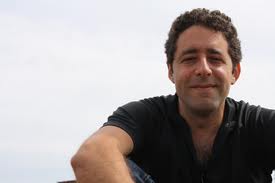
ImageDavid Franklin: It’s complicated. I’ve been doing counseling, coaching, workshops and facilitation for years and have a strong desire to create a new paradigm around what being a man could look like. I’ve realized that so many of us share a similar struggle. I think somewhere in the back of my mind I thought that one day I’d write a book. The idea came up, and my partner was like “Just do it.” So I sat with it for a couple weeks, and then I just started writing it. I think I wrote it in three weeks.

Lilly: Wow, only three weeks? That’s awesome.

David: It just kind of came out. There really wasn’t much planning or forethought, but it’s a culmination of the work I’ve been doing for the past twenty years.

Lilly: Could you tell us a little about the work that you’ve been doing and the work you’re doing now?

David: I do individual coaching, and I also facilitate groups and workshops for men. In my work, I emphasize embodiment and presence. Rather than only talking about issues, my work focuses more on creating present moment change, in a way that men can then practice and take into the rest of their lives. Rather than a theoretical experience, it’s about providing practical tools men can use, to ultimately feel more connected to who they are, and discover more of their authentic self. My work combines numerous modalities and practices that I’ve studied over the years –from meditation to ecstatic dance, to music, to core energetic therapy, to various coaching styles all rolled into one.


ImageImage

Lilly: So then does your book, as an extension of your work, provide exercises, and things people can do, with clear guidance?

David: There are fifty practices in the book, and they probably comprise the majority of the book. The rest of the book is more talking about where I’m coming from, what I’m proposing, and then how to actually achieve it.

Lilly: Was there an intended audience for the book?

David: It’s really meant for everyone. I think to some degree, the men who are going to get into it more are men who have already started thinking about it a little bit, or might have some idea that there’s more to what it means to be a man than what everyone takes for granted. I think anyone could pick it up regardless of where they’re at, and really get what I’m talking about—and do the practices. I also was hoping that women would look at it as well, hopefully women who are moms, or who are involved in raising boys— it will give them greater awareness around the possibilities of what it can look like to be a man so that they can parent or work with boys differently. Or for that matter with their partners—although a lot of times I’ve found that for men, when their partners want them to do something, they’re even more resistant to doing it.
Image

Lilly: So how did you get on this path? How did you find that this was your work?

David: Since I was young I had a sense of wanting to create real change on the planet. I didn’t necessarily know what that would look like, but I knew that something else was possible beyond how things were, and I just felt a strong call to do something about it, to step into leadership and to take action to create change. As a teen I went to a lot of counseling, as a client, and in my very late teens started exploring more spiritual practice, spirituality. Through those things I began to become a lot more aware, and also a lot more self-aware. I was twenty or so when I first joined a men’s group. I’d heard about men’s groups from a friend who had joined one and at first I was like, “Huh, that sounds kind of weird, I don’t understand.” Then he explained his experience and I was like “Wow, that sounds awesome, I would love something like that.” From that point on I experienced a strong resonance with it, both because of my own struggles as well as connecting and seeing how it impacted so many men. How men are expected to be seemed like such a burden to so many men, and I just really felt called to do something about it.
Image

Lilly: What do you see in our society that concerns you, that motivates you to do your work?

David: Men, historically and in our culture, have more power. And I think that men with that power very often misuse it, in a lot of different ways, because they’re so disconnected from themselves and from other people. A lot of our political leaders are men. A lot of people in positions of power and who make decisions are men, a lot of people who have control over how things get done are men. Realizing that, if you look at our world and the things that are happening, a lot of those things come as the result of decisions that people in power (men) have made. I think women have more so than men been willing to look at themselves and become more aware, maybe challenge themselves and challenge a lot of norms around how things are in culture. Many men really haven’t gotten there yet, and are either ignorant or in denial or stubborn, or just really don’t want to give up their power. If things are going to change, men are really going to have to step up and take the initiative and not wait for women to tell them to change or do it in reaction to that, but because they feel, “Wow, this really isn’t working” and that they have the power to do something about it.

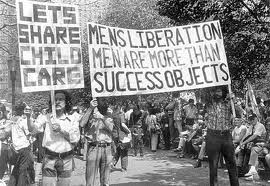
Lilly: I think most people in the Western world would say they’re aware of the gains of feminism, the women’s liberation movement, the women’s empowerment movement. But this could be a men’s liberation movement hat perhaps the average person isn’t aware of. Carol Gilligan says in a recent interview we did, “matriarchy is not the opposite of patriarchy, it’s democracy.” Democracy is power with, not power over.
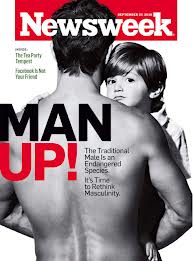
ImageDavid: In the late seventies, early eighties, there was definitely some men’s movement stuff going on, but at the same time it was nothing like the women’s movement. Where it gets tricky is people say “Oh, what’s the need for a men’s movement? Men have all the power. They’ve got it easy, they’ve got it good, so what do they need to change anything for?” Unfortunately that’s what keeps everything in check. People assume that men don’t suffer from the patriarchal system. But if you look at a lot of things that are going on in the world, it’s because men have problems and they’re not really looking at them. That impacts everyone. It impacts men, it impacts women, it impacts children, it impacts the planet. Men have all these things going on that aren’t really being acknowledged. Sure, they do have the power, and at the same time, look how they’re using it. Or misusing it.

Lilly: What are the challenges that you see facing you in your work—and what are the challenges that men face?
depression David: In my work there’s the initial challenge of just getting men to acknowledge that there is a problem. Because most men don’t want to look at it. Getting men to be open to the possibility of something beyond what is, or getting them to really look at themselves, is really challenging. And a lot of time it takes something really drastic to force men to look at themselves. It takes a midlife crisis or some severe event before men are like “Whoa, I feel totally disconnected from myself, from my family, I don’t feel happy with my work, I don’t really feel intensive meaning or purpose in my life, I feel kind of empty.” But a lot of men just don’t want to admit that. And again there’s the catch-22, because men’s programming sort of enforces the “don’t look at those things” attitude. The programming focuses them on achievement,  being big and powerful and having a lot of money; all those things that ultimately empty — not really fulfilling. So just getting men to hear the message is probably the biggest challenge. And again, the challenge is getting past the conditioning men have, getting men to be willing to feel and express their emotions, and communicate more openly with other people, getting them to have accountability for themselves and for their lives; getting them to be more active parents, and more active partners, and to actually do work in the world that’s meaningful, and that means something to them, rather than just doing it for a paycheck, just because they think it’s something they’re supposed to do.

Lilly: Thank you for talking with me today, David. Your work is so important. Best wishes.

Radical Men can be purchased online at David Franklin’s website, or checked out at your local public library. For more info go to: www.davidfranklin.net

For more info on important work by men, check out TTC board of advisor mentor, Jackson Katz. http://www.jacksonkatz.com
August Jubilee!!!

ImageHello Friends

TTC is officially no longer a teenager! We are 20 years old. I can’t believe it, actually. First, how fast time flies and second, how we keep on keepin’ on! Seems TTC is just as important now as it was then, if not more so. The world is just as confusing and just as exciting and teens are just as full of hormones, feelings, struggles, excitement, hopes, dreams, and adventurous spirits. 

We wanted you to know what we’ve been up to this past year (June to June). Because it’s because of YOU we are still here to meet the many various and awesome requests we receive to give whatever we know to others. 

Here’s the skinny – 
• In the past year, our teen circles, programs, handbook, trainings, retreats, fundraisers, Youtube movies, radio interviews, magazine articles, Facebook pages, Twitter feeds, TTC Blog, and conference presentations have reached thousands of people (Included on the list are a presentation of Full woman at the TEDx Elliott Bay Women Conference, interview on Women Rising Radio, feature in Lilipoh Magazine, presentations at the Deva Premal concert and the Ruins Fundrasier, our TTC Training and the Yelapa Women’s Retreat.)
• 31,700+ people from over 150 countries around the world, as of today, July 31st, 2013 have viewed and shared our Girl’s and Women’s Empowerment film, I Am A Full Woman (https://vimeo.com/35541100) and the comments they share are quite powerful. 
• We’ve provided 32 people from 24 organizations TTC Facilitator Trainings this year. (Included are people from Washington, DC Ethical Society, Tomales Bay Youth Center, Cliffside Malibu Rehabilitation Center, Oaks Christian School, Native American Community Academy, and Marin Indy High School)
• We reedited our TTC Handbook and had 2500 new copies printed of our 3rd Edition!
• We produced two fundrasiers, which 284 people attended.
• Our 2 Facebook pages and Twitter feeds have over 800+ people as friends.
• In an initial search 40+ partnering organizations and important people are presenting TTC on their websites (including, chomsky.info; bainbridgereview.com; seattlechildrens.org; ojaifoundation.org; womenintheworld.org)
• We have been invited to be consultants to 3 different programs, including my being present at the Generation Waking Up 4 day workshop, as an elder. 
• 13 people are on a list for a worldwide distance training (as soon as we can figure out how!)
• Countless youth and adults have benefitted from this past year’s ways we have continued to offer TTC into the world. We can’t even keep up with the many ways those who have been touched, trained, or involved with our work is unfurling in the world. We do know that there are currently 2 master theses and 1 PhD thesis that are using TTC as the central focus of their study.

Our exciting next project happens on September 14th. A Japanese film crew from the PBS station in Japan has hired TTC to run a circle of 10 youth on Bainbridge, which will be filmed for a segment in a series on cell biology. How cool is this! Our local girls group starts again this Fall, and believe or not I’m taking a 75% sabbatical after 20 years from September – April, 2014. Lilly will be in charge!

Thank you again for everything you do for TTC, me, and the world. With gratitude and love, Linda 

See http://www.teentalkingcircles.org for dates of our June 2014 training and April/May Women’s Retreat. 

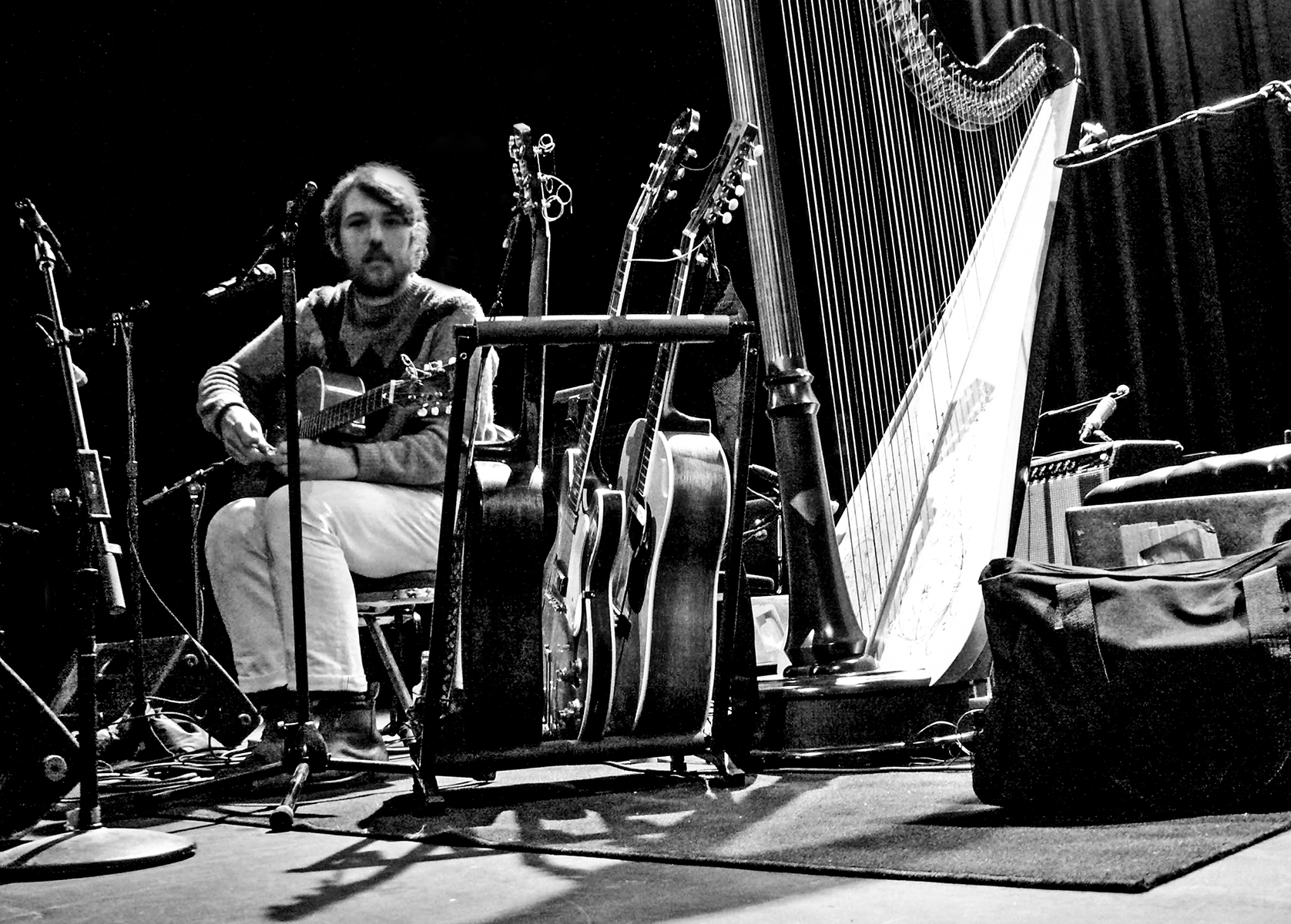
Joanna Newsom speaks with us, while Robin Pecknold practices. @ the Moore Theater, Seattle

ImageEric, Viox, Linda, Melanie Curran, Sean Matteson, Corbin, Joanna Newsom, Heather Wolf

Joanna Newsom Interview for Teen Talking Circles 

Well over a year ago, we met as a group with Joanna Newsom, one of the most prominent members of the modern psych-folk movement. Her recording Ys is one of the most beautiful CDs to have come out in the last few years. While we were talking backstage in her dressing room at the Moore Theater, Robin Pecknold, lead singer of the Fleet Foxes was rehearsing on stage. His gorgeous guitar and voice echoed ethereally through the halls and created the perfect background sounds for this interview.

The following conversation with Joanna addresses topics we all feel: The courage to share our authentic voice; pressures to to fit in; staying true to oneself; creative inspiration; insecurity and the songwriting process.  Feel free to forward this to share this with the teens you love and care about. 

Heather Wolf: I’ve been thinking a lot about one’s voice and true expression, particularly the female voice. I facilitate a youth arts camp where I find few young women with any musical practice of their own. I find many young women at the camps have blocks to opening that form of creative expression, because of their discomfort with being heard. I am curious about your experience with this, especially because I witness your own unique voice in your work, and recognize the courage and trust that takes. 

Joanna: I feel like I had a lot of luck and blessing to come of age creatively in an environment that really welcomed my voice — a family and music teacher that welcomed it. I had a music teacher that encouraged improvisation and composition from the very first lesson, from when I was a little child. She always valued the writing voice of her students. 

I did have a very similar experience, not only in terms of hearing someone’s singing voice, but in hearing someone’s writing voice. It was very rare, I felt, for girls to be heard. Growing up in my small town, I knew a lot of young women who were musicians, but almost all of them were classical or folk musicians and none of them wrote. It was one of those towns where all the people who were a few years older than me were in a band; amazing local bands that we were fans of. There was a certain point that I realized they were all guys, all of them, including my big brother, whom I idolized. He was in all of these rock bands and I was kind of the weirdo harpist, you know, writing music. 

For years between about age ten and age nineteen, I didn’t sing at all. I wrote music. I decided in my teens I wanted to pursue composition as a career, but I stopped singing, because I didn’t think I had a pretty voice. Prettiness or a lack of prettiness is often something that’s discussed vis a vis the female voice much more than with the male voice. Even in popular music my examples and the idiosyncratic voices that I admired were men, like Bob Dylan. And then when I was in college I started taking classes that were surveys of American music and starting hearing women’s voices that were very different than those in pop music. 

I started to realize my own voice was something I could consider to be a tool, at my disposal, in the same way that the harp was, and in the way that my compositional voice was. But it took a long time, and I sympathize with any young person, male or female, who’s trying to find their own singing voice, because if you happen to not be exposed to a very wide array of music, I feel like it’s hard to know that there are lots of ways that beauty can reveal itself in music. 

Melanie: This is just the struggle I’m experiencing, getting into the Jell-O of my own creativity. With your work, something that amazes me is the level of authenticity you bring out into the world that you don’t keep within yourself. I’m curious to know what the process of coming out is like. 

Joanna: You mentioned the idea of authenticity, being able to make music that is truly a reflection of yourself on every level, and I think I certainly went through a period in my life of inauthenticity. That happened for me, as I think it does for a lot of young people, from maybe sixth to eighth grade, when I was trying really hard to fit in. I really wanted to like the things that other people liked. The music other people liked, the clothes other people liked. I was trying to locate the appeal in those things desperately, listening to pop music, wanting to be tough—the whole gamut of things people do to be liked and admired by all their peers, and this also coincided with me not being very happy.  

I moved around in schools. To public school, then to a more creative private school,  and scattered years in Waldorf schools. Even when I was in Waldorf school in eighth grade, it wasn’t some perfectly idyllic place where the pressures of wanting to be cool didn’t apply, it just maybe had different standards. I think anywhere you are at that age, most folks struggle with that. 

Honestly, somehow, around my ninth or tenth grade year, I just stopped caring. I just stopped. I started wearing really weird clothes, and having a wide range of friends who didn’t necessarily know each other. What I think it was, actually, was that I was in love with music. 

The key, I believe, for pulling yourself out of the limbo of not knowing who you are or not embracing who you are, is to love something enough to not care. Sometimes it takes us a long time to find it. There are so many things out there, there’s so much nuance to being human beings, it sometimes takes a really long time to locate it. But for me I loved it [music] more than I loved the unattainable goal of being cool. 

I think it’s really important not to wonder too much about the question of whether what you’re doing creatively is brand new, or whether what you’re doing has never been done before. I think the only time that happens is when that’s not the reason you’re making it. The reason you’re making music is because “This brings me joy.” I might have to work through version after version of this song, or this piece of art, until it’s like a bell ringing, where you’re like “Oh wait, that’s me!” 

It is important not to judge yourself or censor yourself along the way with those questions: “Has this been done before?” or “What am I doing right now that makes this worth doing?” You just kind of do it. 

Heather: How do you work through self-criticism? 

Joanna: I work in phases. When I’m sketching out a song, I don’t let myself be too critical of it. I actually love editing my work. I love interacting with the text, transforming it by rearranging it, the syntax, nuance, and all that. There’s a way to approach it where it’s not scary and judgmental towards yourself. There are different phases where different kinds of editing come in, and the phase where I’m allowed to wonder if a song or a record is going to be terrible is when it’s finished. And then sometimes I will throw out a song, or be like “No, this one doesn’t represent what I want this record to sound like.” I make little deals with myself: hold it at bay until the work is done, and then you can tear it apart as much as you want to. 

Image

Linda: It’s so beautiful to hear Robin Pecknold upstairs, isn’t it? I love his music…
Just a moment ago, Melanie mentioned the word “ritual.” I’m wondering, are you a disciplined person by nature? Do you have any rituals that help you creatively?

Joanna: No. In fact music is the only thing in my life that I’ve ever had any discipline about. Ever!

Linda: So you don’t get up in the morning and ritually do yoga and meditate?

Joanna: I stay up ‘til six in the morning and sleep ‘til two some days and get a coffee and look at silly things on the internet. You know, I would deeply love to get more discipline into my life but there’s the one thing that you really love, and sometimes for people that’s lots of things, but you’re able to summon discipline around that task because it brings you joy. If you’re forcing it, if it’s a chore, you don’t want to do it.

Corbin: I play music, and when I perform it, I always feel I’m giving just a little piece of myself to an audience, and sometimes it’s received and sometimes not. Would you give insight on how that must be on a daily, yearly basis, to be constantly giving, and how you rejuvenate yourself, or when you get off balance, what you do.

Joanna: I don’t know before I go onstage whether or not it’s going to be a performance where I’m totally present, connecting with the band and the audience, or whether it’s going to be a performance where I’m struggling the whole time to get there. In a way I actually love that it’s so possible to have a terrible show, because it reminds me of the lack of control. If you could guarantee that every show you played for the rest of your life was going to be amazing, it would be so boring. There would be no stakes.

I’m still learning how to construct tours, or arrange my day before a show so that that I’m not completely run ragged by the end of a tour. I used to do seven or eight week long tours and now I’m doing three, two-week tours and then taking big breaks between them.

Linda: How do you pronounce “Ys?”

Joanna: “Ees.” It’s the name of a mythical French city on an island in Brittany, and there are various mythical and historical documents that suggest it did exist, that it sunk beneath the ocean. 

Viox: What inspired the Ys album, and what are the mythological implications of that?

Joanna: With that record, I had gone through one of the harder years of my life, in a very unquiet way. I think some years are harder in a way you can’t put your finger on; this one was hard in very notable ways, and a lot of the hard stuff of life happened over the space of basically a single year. The “Ys” idea infiltrated the record from all sides slowly. The album isn’t about that myth, but a theme that runs throughout the entire album is an excess of water, as a metaphor for the way that year felt

 I actually dreamt that the album title needed to have a “y” and an “s” in it, in some permutation of those letters, and it needed to be single syllabic, and a word that didn’t immediately connote anything for most people who picked the album up. Basically the whole album had been constructed as this very delicate and in many ways formalized or stylized projection of very brutal and simple human emotions that I had gone through. I finished it, it was like it was in a snow globe—this little hyper-stylized, detailed world, where I had been so detail-oriented, from the lyrics to the composition to the arrangements to everything, and somehow I wanted the title to feel just like a rock through a window. To have this brutality and instantaneous confrontational energy to it, like, ‘What is this word?’, ‘This is hard to pronounce’, ‘It looks funny’. I was actually reading somewhere a text about Ys, and there was a line in the text that was the exact wording of a line in one of the songs, the wording “It is that damnable bell.” It was really weird. There were all these connections that chose the title for me. 

Linda: So it sounds like you get very inspired by your own emotions and your life, really, and that is what you bring to most of your music?

Joanna: This is a very controversial position of mine, but I personally believe that every fiction that we gravitate towards, reading or writing, is some reflection or projection of our own lives and is our way of working through it. One of the reasons that, say, a novel is successful–in terms of the story that’s being told–is often because it resonates with something that has happened to many of us, an emotional truth.

Eric: I think a lot about voice, and I’ve heard you talk about composition. Were you always a songwriter, were you always writing lyrics?

Joanna: No. For a number of years, I was writing music and I was writing poetry and prose, and I was refusing to connect the two in my mind for a really long time. The missing key was that I didn’t consider myself a singer. I couldn’t write lyrics, because I wasn’t a singer. So I wrote very structurally archaic poetry, because I was drawn towards rhymes, methodical distribution of syllabic emphases, and all these older approaches to poetry that actually are more related to song structure and musicality. And then I would write these very overwrought and embarrassing short stories. I did try writing words for years and years, but not songs, until I was about nineteen or twenty. Before I was about ten years old I wrote lots of songs, before I learned to dislike my voice. [Laughs.]

 Linda: Thankfully for all of us who love music, that phase didn’t last!

Image

Now for the news: The last TTC Facilitator’s Training, a week ago was off the charts. Here’s a quote from one of the participants:  “Thanks to all of y’all for feeding my soul and bringing me to deep knowings that 15 years and 87,000 therapy modalities could not.” LK, Malibu. The next training is happening in September. Check here: http://ttcsept2013.eventbrite.com

LOTS OF LUV AND HAPPY SUMMER – Linda & Lilly 

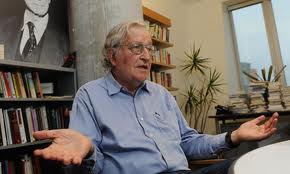
Noam Chomsky Interview with Linda Wolf for TTC – April 9, 2013

Image

Linda: It’s so good to actually speak with you again, Noam, instead of emails. It’s been about thirteen years. The last time we spoke on the phone was for the book “Global Uprising.”

Noam: Yes, yes, I remember that.

Linda: First off, I just want to say how much I love you. Our correspondence over the years has been such an inspiration to me. BTW, how is your “pseudo grandson,” as you call him, Ernesto?

Noam: Oh thank you, that’s a nice way to start. He’s doing fine. I just saw him this weekend, coming up to his third birthday… It was pretty nice weather, so we went out for a walk in the woods. He had a ball climbing rocks. Lovely, little kid. It’s interesting with his mother, and his aunt. These are young women who grew up in villages in Guatemala; by the time they were four years old, they were adults, working in agriculture, climbing trees to pick avocados. As soon as we get out in the woods, they start acting like children, and climbing the trees, you know, climbing boulders, jumping around. Ernesto with them, of course. It was fun to watch.

Linda: Oh, nice! So you were all together?

Noam: …Yes, there are some nice pictures that one of them took; the girls on top of a big boulder and Ernesto on the boulder.

Linda:  Noam, there are so many things I want to ask you. For example, I have a friend, Christen Lien is her name, she’s a tremendous musician, and she’s just created an album called Elpis. Elpis is the last of the evils in Pandora’s box. The Greeks translated Elpis as hope.

ImageChristen Lien

Noam: What is it about?

Linda: In Pandora’s box Elpis was the last, heaviest, of the evils, according to the Greeks. Christen is doing a study of the concept of hope. Thirteen years ago, I ended our last interview with “Do you have hope, Noam?” Everything that you speak of, that we know of, about the ills of the world, which are so terrifying, in so many ways, especially to young people—

Noam: They should be.

Linda: And they are. You know, there’s this spirit that we need to have, which we call “hope.” But I’d like you to dwell on that for a minute with me. If the Greeks thought it was the heaviest evil in Pandora’s Box, how can we come to terms with this idea of hope? Do you have some thoughts on that?

Noam: Well, the easiest way to do it is kind of like what I just described. Go out in the woods with a lovely three-year old kid and his mother and his aunt, who escaped from hideous atrocities. These are refugees. They’re Mayan, so they’re refugees from the genocide in the highlands in the early eighties. Everything was destroyed; people are still fleeing. It was very courageous—the mother of this kid crossed the border, I think, seven times…She was picked up the last time, and she was pregnant the whole time. She finally made it through, in her seventh month of pregnancy. I don’t have to describe to you what a border crossing is like. Solidarity workers who have hope, wonderful people in Tucson, you may know some of them, who roam the desert, illegally in fact, because they try to pick up stragglers, or leave water bottles, and so on –they managed to get her, to find her. She had a sister here, in Boston, so they got her here, and when she moved in with her sister, the landlady kicked them both out, so they’ve been living with my daughter, and Ernesto was born here while they were living with my daughter. But anyway, when you watch these people, and you just think of the—I mean you look at this little kid, of course he’s happy, he doesn’t know what’s happening — but there’s a shadow hanging over him. I mean his mother could be picked up any minute and be sent back to Guatemala. He’d go with her and grow up in miserable poverty in Guatemala, or would never see her again. All of this is right over their heads, but they’re happy, and cheerful, and looking forward to the future. Many things like this, you can duplicate them all over the world, and they’re signs of hope. In fact, if you look at what—it’s kind of a remarkable situation now—but if you take a look at what indigenous people, tribal societies, first nations, what they’re doing all over the world, it’s pretty spectacular. I mean they’re the only ones who are making a serious effort to try to avert major catastrophes that are looming — like environmental catastrophes. They’re actually trying to do something about it. Now, we’re doing the opposite. So, you want to have hope, look at people who are struggling and achieving. You can always find them.

Image

Linda: It’s a beautiful definition of hope, this story. But do you honestly think there’s much hope for this world, as it is?

Noam: Honestly?

Linda: Yeah, honestly.

Noam: No, but you can’t give up. I mean, objectively speaking if I try to be completely objective, if I forget about caring about people and the world and so on, then we’re just racing towards disaster, eyes open, going as fast as we can. In fact it’s rather striking to compare the poorest, least developed, least educated, what are called the “primitive” societies of the world, and the richest, most powerful, most educated countries of the world, and at the poorer end, you have what I just described. Ecuador has a large indigenous population, enough to influence policy. And one of the policy efforts in Ecuador is to try to gain support from the wealthy countries to keep their oil in the ground. They’re a big oil exporter. Keep it in the ground, where it ought to be: that’s Ecuador. Indigenous population. You go up north, to Canada, and the United States, the richest countries, ever—they’re putting every effort into extracting every drop of hydrocarbons out of the ground and using it as fast as possible. And are lauding the possibility, are euphoric at the possibility, of a century of energy independence, while busy accelerating the destruction of the world. If ever a future historian is looking back at this moment, he or she would think the species is insane.

Linda: Well we could be! This morning, I was ruminating about death and asking you what you think happens when we die. For me, spirituality is so deeply rooted in nature, and everything has its life, its lifetime. And I’m thinking, well maybe we’re just part of this, too. We Homo sapiens, we have a life span, and maybe that’s what we’re doing.

Noam: I wrote about this once. There’s a great biologist Ernst Mayr, died recently, about a hundred years old, he was a grand old man of American biology. He once wrote an article, in which he basically argued that intelligence is a kind of lethal mutation. He looked at it as biologist. You ask about the biological success of various species, and the ones who do very well are things like bacteria, which mutate very quickly and adapt to changing circumstances. Or beetles, which are all over the place, they have a fixed ecological niche, they can’t survive anywhere else. They stick to it, and they make out. But as you move up the scale of intelligence, to mammals, primates,  Homo sapiens, you find less and less biological success. That’s why there are very few apes around. Humans look like an exception, but that’s only in the last few thousand years. Go back to ninety-five percent of Homo sapiens’ history, we were scattered bands of hunter-gatherers. He points out just what you said, that the average life span of a species is about a hundred thousand years, and that’s roughly what homosapiens are approaching. So we may be following that unpleasant natural law which says we have achieved the capacity to destroy ourselves, so let’s go ahead and do it.

Linda: Wow. You spoke the word “no.” You said “No, really I don’t ultimately have any hope for us.”

Noam: But I do have hope, because you have to have hope. Otherwise you wouldn’t do anything, to try to carry things forward. And there’s always a chance, you know. You asked the question objectively, do I think there’s hope. Objectively probably not. But it doesn’t follow that we have to give up hope, we don’t know.

Linda: Are you afraid of dying?

Noam: I used to be when I was about ten years old but I got over it (laughs.)

Linda: If you could go back, if you were let’s say thirty, or twenty again, what would you invest your life energy in right now?

Noam: I don’t know about you, but when I was twenty, or even thirty, I didn’t really think about it much. I just did what I thought I oughta do.

Linda: Get married, and have children?

Noam: Not even that, just anything. Now first of all there’s an interesting fact about the male brain which is relevant. The male brain matures rather late.

Image

The female brain matures at maybe eighteen or so. The male brain doesn’t mature about until mid-twenties. In fact in some countries like Canada they’re thinking of treating young men in their early twenties as juveniles, because that’s basically what they are. But one of the aspects of that is that you just don’t think about risk. I mean I can remember it myself, and I can see it with my children and grandchildren. Just do anything, because you’re invulnerable, you don’t have to think about the future. I didn’t think about it much, I just did the things I wanted to do. In fact I already was married, by the time I was twenty, and I didn’t think much about planning for the future. In fact I had no academic prospects. I was working, and it’s kind of an accident that I’m in the academic world. I was working, developing an area that actually didn’t exist, there was no academic—but it never bothered me much, I figured I’ll do something or other. The same with the political activity. I was very active about doing things I felt oughta be done.

Linda: But if you were forty, let’s say, now—

Noam: By the time I was forty I was pretty well settled, had responsibilities. By the time I was forty, actually, I was facing a long jail sentence. By then, consciously, I was thinking of what I was doing, because of the involvement in resistance activities. I was in fact up for trial when the TET Offensive came along, and it convinced the government to drop the trials. [The TET Offensive in 1968 [the National Liberation Front’s surprise temporary takeover of virtually all of South Vietnam’s cities overnight –Ed.]

Linda: I heard you say something so important in an interview recently about the movie, “Manufacturing Consent.” You said you were skeptical about that movie because it sort of placed you in a position of stardom…

Noam: I like the guys who made the movie, they’re friends, but they were just following me around. If I got off an airplane, you know…like some kind of celebrity. I’m not a celebrity.

Linda: Right, I really appreciate that, because as you said, it’s those who are working together on the ground, shoulder to shoulder, that never maybe get any recognition—

Noam: Like these indigenous people in Ecuador, for example. They’re really doing something. Who knows who they are?

Linda: So with young people today, my question is, where would you put your energy now, in what arena? I mean would you go to Ecuador, would you work with the Ecuadorians—?

Noam: The most important place to be is the United States. For one thing I’d stay here because it’s where my attachments and everything else are, but just objectively it’s the most important place to be. Because what happens here is going to be much more influential in the whole world than what happens elsewhere. Very important things happen elsewhere, it’s not that the United States runs the world, but you look at the degree of influence and power, although U.S. power is declining, has been for a long time, it’s still incomparable and will be for a long time to come. For example, take almost anything that’s happening. There was an international conference recently, and they general assembly reached a small arms treaty. Well that’s kind of important, you know. Tens of thousands are being slaughtered all over the world from small arms exports. In Mexico alone, most of the deaths come from guns from the United States, which incidentally wouldn’t be affected by the treaty. But the small arms treaty is important. Will it have any effect? Not if the United States doesn’t sign it. And it’s very likely that the U.S. won’t sign it. That’s one example, but you can proliferate them enormously. So the most important thing that can be done right now are changes within the United States.

Linda: Did you vote?

Noam: Ah, sort of. I mean Massachusetts happens to be a safe state, it’s gonna go Democratic, so I voted for Jill Stein, Green candidate, nice person. But if I had been in a swing state, I would have held my nose and voted for Obama because the alternative was—you know I don’t like him and his associates, the alternative was much worse. These things make a difference. Given U.S. power, it makes a difference whether say, if Bush was in office or Gore.

Linda: Thank you so much for speaking with me today, Noam. We’ll talk again soon, I’m sure. Best wishes to everyone. I hope you and Ernesto liked the cookies.

Noam: Yes, Cookies don’t last long here in the office!

Addendum:

June 11, 2013

Just prior to posting this interview, The Obama administration is reportedly preparing to charge NSA whistleblower Edward Snowden with leaking classified information. I wrote Noam for his response:

Noam: “He should be admired for bravely meeting the responsibilities of citizenship: letting the public know what their government is doing to them. The claim that the massive government surveillance programs are necessary to secure the population from terror barely merits ridicule, coming from a government that has quite consciously been increasing the threat of terror to Americans as the predictable consequence, well-understood in high places, of the global drone assassination program, which is also by far the most extreme international terrorist campaign in the world.”

Yelapa Mexico, Edward Snowden, Noam Chomsky, and the benefits of Kraut!

Lilly Schneider Interviews Linda Wolf, director of TTCImage

Lilly: Hi Linda, welcome back from Mexico. How was the women’s retreat?

Linda: Fantastic.  It was the best retreat yet.  There were 9 of us, a full house. A mother and daughter, who have come three times, already signed up for next year. They consider it a yearly “tune-up” for their relationship! For me, it’s an opportunity to feel very free, in nature, like I was as a young woman. And the nature there makes me euphoric. It is 2nd in biodiversity to the Amazon. Check out this house, Lilly, it belongs to Claudia Brown. She’s a massage therapist, a tropical garden gardener, has a bird sanctuary, and makes the most beautiful jewelry – lives in Yelapa full time. This lily pond is inside the house!

Lilly: Wow! Remind me where the retreat takes place?

Linda: In Yelapa, Mexico, a fishing village. Kellie Shannon Elliott (who will come next year again) led 5Rhythms dance each morning; we met in circle for a few hours before a late lunch, and later Norma Jean Young, a great Reiki Master, led us in relaxation in the late afternoons.  The thing I love the most about Yelapa is feeling of sun, the air on my skin, the sound of the waves 24/7, and that we get to swim in some of the most pristine water on the planet – One day, we hiked to this waterfall in another village to swim in a glorious poor. We just strip down and jump in. Here, see these photos. After the waterfall, we go by boat to another little fishing village and have a home cooked lunch with a Mexican family, replete with moonshine and guitars.

Lilly: That sound amazing! Well, that’s not the only event that the beginning of summer has in store for TTC, is it?

Linda: That’s right. Not only are we doing our facilitator training, which is happening in a couple weeks, and BTW, there are still a few places left (check our website: www.teentalkingcircles.org), but also some other partner organizations have some great offerings this summer. Check this out:

We have Isabel Machuca-Kelly from Wild Whatcom, along with Vanessa Osage of Rooted Emerging, offering girls’ talking circles in Bellingham, Washington. People can find out more about the details by checking this site: wildwhatcom.org/about-teen-talking-circles/ Also, Rite of Passage Journeys, in Washington, is doing some really powerful summer camps where they do circle. And Wilderness Awareness School has some amazing programs this summer. http://www.wildernessawareness.org

Lilly: I heard you’re invited to be an “elder” this summer at the Generation Waking Up Leadership Training, which is happening in a couple weeks on Whidbey Island, at the Whidbey Institute.

Linda: Yes, it’s true –  I don’t know many youth on the face of the planet who are more incredible than Barbara Jefferson, Dan Mahle, and Joshua Gorman, who are leading this Wake-Up. Check it out; there are scholarships and more spaces…http://www.whidbeyinstitute.org/conversation/id/53080a

By the way, we have an exciting event in the planning stages in September: We’ve been invited by the PBS station in Japan to create a special circle, which will be filmed for a segment of a series on cell biology. This one will be about youth development. I’m intrigued to see what they’re going to be doing. More about that later. We’re going to need some volunteers – so the call is out there. Any teens interested???

Lilly: Wow. How does something like that happen? That’s great…

Linda: They found us on the Internet.

Lilly: Hey, what about that Noam Chomsky interview I just transcribed – when does it come out? And the Joanna Newsom interview from so long ago?

Linda: The interview I did in April with Noam will come right after this blog post. The one with Joanna, very soon. Both are powerful and important. I’ve been interviewing Noam since 1999. I just wrote him today asking him to comment on the Edward Snowden’s leak. I just heard that ACLU has put forth a lawsuit against the government now, as well. Here’s what Noam wrote back. “He should be admired for bravely meeting the responsibilities of citizenship: letting the public know what their government is doing to them.  The claim that the massive government surveillance programs are necessary to secure the population from terror barely merits ridicule, coming from a government that has quite consciously been increasing the threat of terror to Americans as the predictable consequence, well-understood in high places, of the global drone assassination program, which is also by far the most extreme international terrorist campaign in the world.” Noam does not mince words.  I say, Activists UNITE… I asked Eric the other night what he thought we can do other than what we are already doing… I said it feels like the machine is so big, we’re like Cervantes’ Don Quixote, tilting at windmills. We agreed, we just gotta keep doing what we’re already doing. Working to help shift from the patriarchal, dominate paradigm to the holistic, partnership paradigm…

Speaking of interviews and just keeping focused on what one person can do, Brenda Starr, star reporter for KHSU, Humboldt State U interviewed me for Through the Eyes of Women. It will be aired Monday, July 8th, at 1:30pm PST and will be streamed on the station website, and on their blog: www.khsuwomen.wordpress.com. I speak not only about TTC, but about my photography, and how both these acts give me a way to express my values.

Other than that, we’re having a beautiful summer here in the Pacific Northwest – the veggie garden is full and we’re eating out of it daily – we’re also eating a lot of Kraut – Iggy’s Sauerkraut, to be exact. My tummy has gone down, which feels so much better. I was pretty bloated for some reason, but the Kraut, and this cleanse I’m doing with Chaparro Amargo, which we got in Mexico, is a summer boon to my system. I’m also intensely glad to have my daughter, Heather, back in town, and her sis, Genevieve is done with her first year of UW Nursing School (halleuluja), and Eric wrote another story while we were in Mexico…so life is good. Plus, I also love that you’re working here in the office with me on Tuesdays and Wednesdays, Lilly…

Lilly: I love working here, Linda!

Linda: Thank you, Lilly. I love having you here!

Lilly: Thank you, Linda!

Linda: Ok, enough work for today – let’s go jump on the trampoline and get outta this office!  The sun’s out… can’t miss it while its here, now can we!  Oh wait, it just started to rain. Dang! No, wait, it’s back… let’s get outta here!

April 2013 Newsletter: Rockin’ the training at Point Reyes Station

Image

Hello friends,

We begin by expressing our sadness and solidarity with the people of Boston, who have experienced another terrorist act of violence. We pray for them, and all of us on the planet, in this time of dire beauty. We dedicate our work to the continued blossoming of compassion worldwide.

In 1993, when Wind and I first conceived what would become the Daughters Sisters Project, our strongest motivating intention was to seed teen talking circles as far and wide as possible, because every teen needs a safe space to tell the truth, experience deep listening, feel out-loud, have each other’s backs, and know they matter.

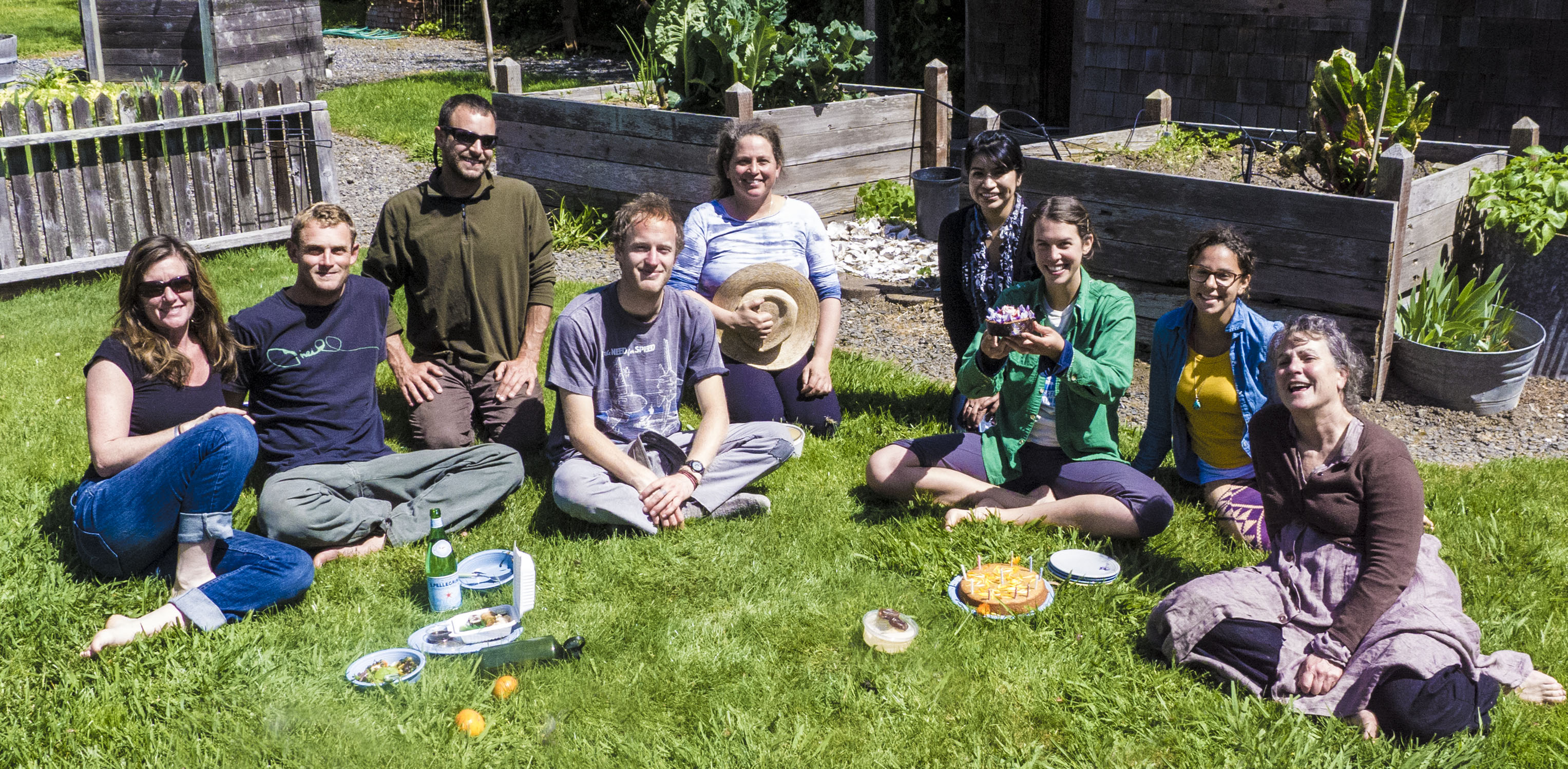
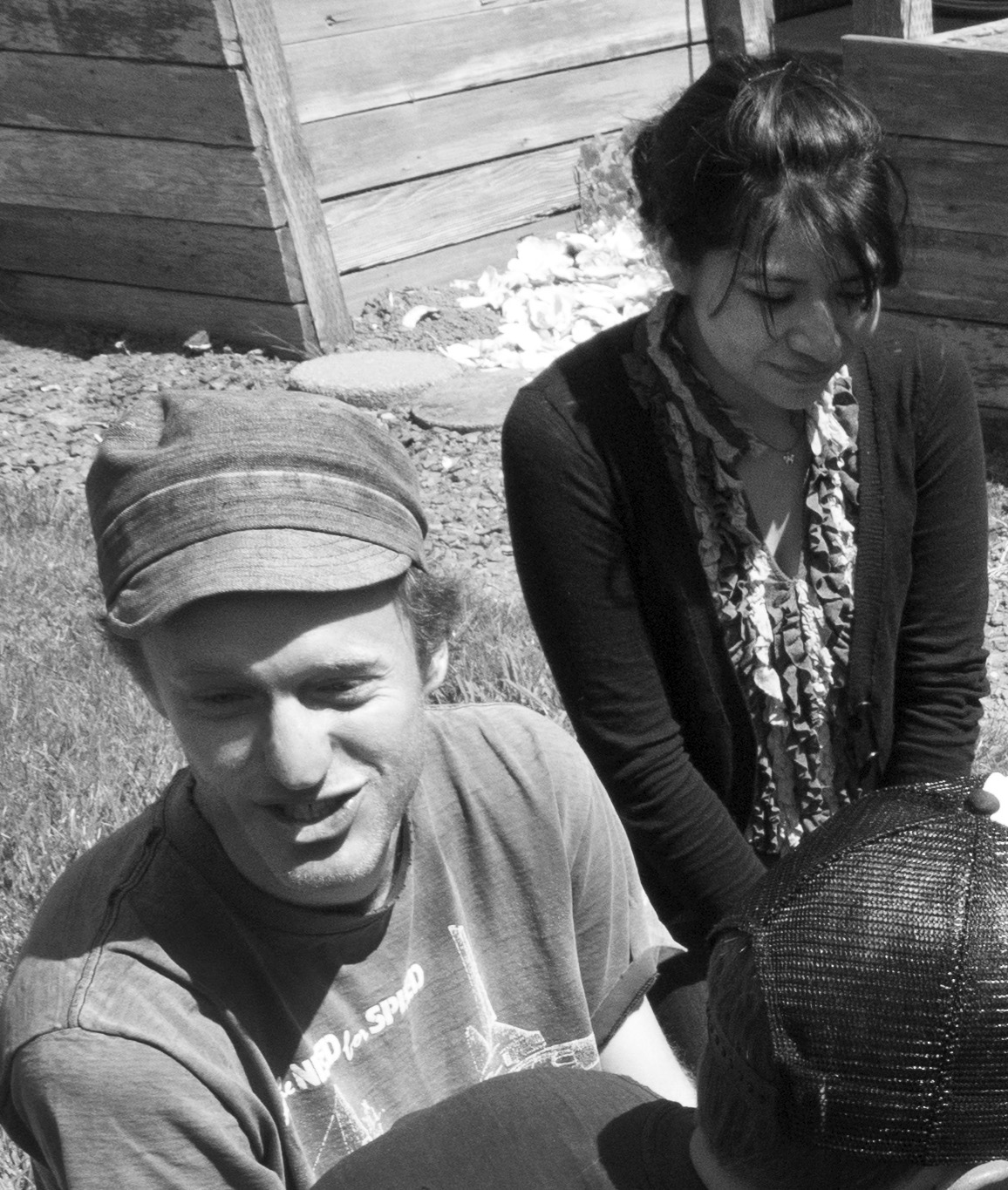
Last week, I traveled to Point Reyes, Calif. to lead nine adults, mixed gender, between the ages of 20-something and 60 in a three-day TTC Facilitator’s Training. They’d invited me down as a group because it was easier than having them all fly up to one of our trainings on Bainbridge. They were a diverse group of ingenious and heart-centered youth advocates  – some wanted more ideas and tools to deepen their existing circles, some wanted to start teen talking circles for the first time, and some didn’t know why they were drawn to attend. They were teachers, administrators, artists, parents, wilderness education leaders, environmentalists — from the California Global Youth Summit, Marin Independent High School, Tomales Bay Youth Center, Bolinas Stinson Youth Foundation, Lasting Adventures and other youth serving orgs.

group 2

For me the experience was powerful. To be with so many people from the same community, committed to talking circles was such an honor. Plus, having three young men in the training was special enough (not many men do the ttc facilitator’s training), but these young men blew  the doors of my heart wide open! They are the kind of male role models teen teens really need. Everyone shared deep truths about their own teen years, easily accessing their authenticity, compassion, and emotions. I left Marin on Monday knowing that what each one experienced in the training would impact their relationships with teens, I took away with me more to share with the next training group from the wisdom and experience of these amazing people.

Sending blossoms of blessings in this beautiful new Spring, linda

Over the past few days, Lilly and I spoke with a couple participants to hear their reaction to the training. Below, Ariana Aparicio, College Access Advisor at Tomales High School, and Alex Warner, wilderness guide and early childhood teacher filled us in.

ImageAlex & Ariana

Linda Wolf: Hi, Alex. What did you think of the training this past weekend?

Alex: It was powerful. We had a good facilitator. It was super productive,  and the people I would consider stakeholders in the community attended it which made for a good circle, a powerful circle. Having already facilitated a lot of circles, I got more ideas and tools to deepen the circles that I’m already doing. I learned more tools and ideas and ways to be in circle with other adults. I think that the most impactful part was to revisit my teen years, and then to have an opportunity to talk to myself [as a teen] was pretty amazing.I guide wilderness trips for teens in the summers, and I work with second graders during the year doing counsel, and also even younger kids, five, six, seven years old, and we have opportunity to be in circle with them too.

ArianaLilly: Hi Ariana, thanks for talking to me this morning! How was your experience of the training this past weekend?

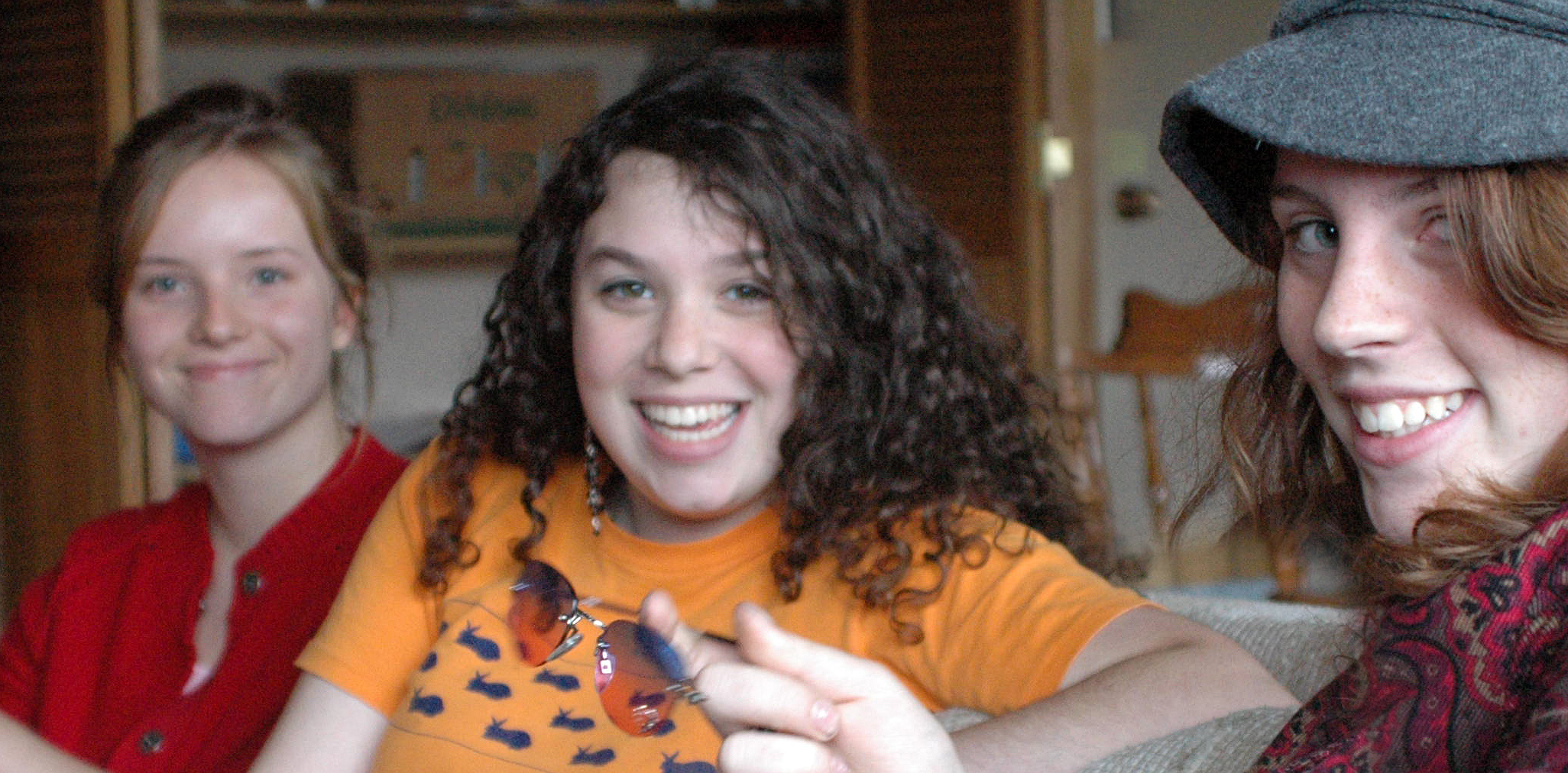
Ariana: I didn’t know what to expect before I went… Now that I did it, I understand. It was one of the best three days I have spent. I felt truly     privileged to have been part of that group, included in this opportunity…at the end I was like, “Wow, I didn’t realize I needed this” –a comfortable safe space where you were listened to, without judgment. I’d like to provide a circle for the teens in my community.

Lilly: Could you tell me about your community?

Ariana:  My community is a small rural town in west Marin, about 400 people… Half the population is Latino, and half predominantly white. We have a youth center, but nothing where students or teens feel like they can go and just talk. After college, I went back to my old high school, Tomales  High School, to help students prepare for college. I’ll use what I’ve learned in our training in my work with them. There is a need for teen talking circles here.

Lilly: I’m assuming you didn’t have a teen talking circle growing up. Could you describe the need for that, your needs as a teen that weren’t being met?

Ariana: I grew up in a community where I was trying to receive resources from the school, support from certain people that I thought I could rely on because they were also Latino and would understand my situation. When I didn’t receive their support I felt rejected, ignored, and pushed aside. I felt like I wasn’t deserving of their help, and felt humiliated at times because I didn’t understand why I was treated like that. But then I used that negligence from the adults in my life to push forward and seek help from others. I’m still looking back and wondering why, why it had to be like that. But it’s like a blessing, because I learned to be independent. I learned to be my own advocate. I found my voice. I learned to question authority, and learned that I mattered too. I learned that my points of view should be addressed. I learned to empower myself. Now I want to provide that support for teens at the high school level. Leaving the training, I felt truly humbled and honored to have shared this experience with the members in the group, and Linda herself.

For info about our June TTC Facilitator’s Training, check this link: TTC June

Linda Wolf

March 2013 Newsletter: One Girl’s Story

Claire & Lilly

To hear Lilly read this piece, click the photo of Claire and Lily

In honor of our 20th year doing Girl’s Group on Bainbridge Island, each month we will feature a true story. This one is by Lilly Schneider. Lilly was sixteen when she started group. She graduated university, travelled around the world and is back on Bainbridge for the moment and working in the TTC office as my assistant. On her first day, today, I asked her to write about her time as a teen girl in Girl’s Group, for our reedited handbook. But, after reading this through my tears and belly laughs, I had to put it out immediately. What a beautiful writer, gorgeous person and I love Lilly so much. Thank you, Lil.

Here’s Lilly’s story…

I was 16 when my mom died. A month later my friend Claire told me about Group and invited me. She told me who would be there. A girl I was afraid of, this bigmouthed theatre girl I’d heard my friends call a bitch. A girl I thought had weird eyes, I’d heard my friends call her a slut. A pixie blonde so pretty I couldn’t imagine we’d have anything to say to each other, me being so frizzy and fidgety and fat and all. All older.  A younger girl I’d seen in a long tapestry coat in the hallway, and who did she think she was anyway, looking all cool like that? I had fear, jealousy, hate in the hallways for all of them. I thought of myself as a nice person back then, too.

It was a period of extreme stress for me. I kept bashing up against the wall that said my mom was never coming back and I kept looking for a way around that wall like a stupid little fly against a window. I focused much of my stress into planning my college applications, which was the most important thing in the world. My classmates, many of whom I had known—Claire included—since childhood, I now found ridiculous because they hadn’t gone through what I was going through. I had no real respect for anyone my age, suddenly zero patience for the chattering, crush-crazy girls who had been my sleepover set and who had saved me in middle school when I had had no friends; I respected adults, who had sometimes already lost their parents, and who seemed always to have wise things to say. I had barely any fingernails left from gnawing, and the skin around them was tattered and dead. My house was cold always and my father, brother and I, though friends, were all alone, islanded, castaways in the storm of grief, even as we sat over dinner together. Dinner was brought every night that year by people from the community, and dessert too, usually brownies. I’d eat a whole paper plate of them in one standing at the kitchen counter. The families who knew us made our favorite things, dishes we’d all enjoyed together, pesto, salmon, and kid stuff—pasta and chicken nuggets and meatloaf. Families I’d never met before gave us walnutty casseroles and strange vinegary salads. Love was coming to us in food form. Automatically, we swallowed. But the food arrived in the afternoons, was sitting on our cold woodstove when I got home from school, or was delivered quickly by bosomy ladies I didn’t know (they’d explain we’d met when I was five or something) and who hugged me desperately and seemed to want to drop the food and get out of there, back to their own happy homes. I hated that they could just waltz home to their own families. They had an escape from the bad place. They only came to peek in the doorway, and they didn’t bash into the wall all the time, the wall that made school, home and everywhere in between almost intolerable—most waking life intolerable. People said I was strong, but I simply went through the motions of living because the alternative, as I pictured it, was lying facedown in a mud puddle all day.

I remember the first thing that I said in Group: well, hi, my name is Lilly and uh I’m 16, I’m 16 and I’m on the newspaper with Claire and I like reading, writing, collecting big earrings at thrift stores, and uh my mom died so yeah. When? Oh, last month.  Everyone gasped at that. I remember peering out sort of vaguely at their clear shock and horror being totally unable to relate to it. It was as if I’d been slowly turning purple over the eight years my mom was sick and now that I was doomed to be purple permanently I was faced with some people who didn’t even know people came in purple at all. How could they not realize I was purple? They were green, that’s why. Everyone my age was ignorant and green, and also skinnier than me.

The part of Group that changed my life wasn’t the part where I talked. I’ve always been good at talking, communicating, finding people to listen, making people laugh. That year I saw a therapist, who mostly listened to me babble hyperspeed about college deadlines, and I had tea and coffee with my mother’s friends, who made sure to be there for me. The part that changed everything, quickly, for me, was listening to these girls talk.

They had feelings and they had fears. They were scared of other girls too. One who I thought was mean didn’t know anyone was afraid of her. One who I thought was boring was not. One who I thought was obnoxious was hilarious. One who I thought was snotty was down to earth. One who I thought was stupid was sensitive. Claire who I thought was always in one mood was often in a different mood. And everyone was worried about their bodies, and no one would break the circle. It was as simple as that. We had agreed to create a safe space together, and so we did—us, just girls who didn’t even know each other before. As an adult nurtured by Group I am able to create these spaces temporarily but at the time I literally did not believe such an environment was possible. It was absurd to me, and miraculous. I learned every person was a person just like me. Now it seems obvious, but not then: then, this was a revolution. Circle asked for active compassionate listening, and I learned to give it. I had never had the opportunity to practice it before. High school was no place for it—or was it?

EPSON DSC picture            The equality I learned about in Group began to seep into the whole canvas of high school I’d painted for myself. I realized that if I had been so wrong about all these girls, I was probably wrong about everyone. Everyone I saw in school must also have feelings and fears and their own story, their own humanness. During a time when no one demanded anything of poor motherless me, a time when I was spoiled with pity and blessed with whole casserole dishes of compassion, I began to work on respecting other people, a lifelong project. Deep respect for others is essential for peace—world peace, and also personal peace. I’d wasted enough energy fearing, hating, manipulating and being manipulated. There was another way to be. Kind.

Living with active compassion, it turned out, was such a better way to live.  Writing people off cuts their connections to you; respecting them opens the channels. This has been one of the greatest gifts of my life: the gift of other people. I think in high school many people squint out at a crowd which holds only a few desirable or possible companions. For some, most unfortunately, this continues into adulthood. We draw lines to protect or maybe even just amuse ourselves, lines that do not really exist, and then we are unable to cross those lines, and then we suffer from loneliness, from staleness, from pettiness, from not enough pokes in the ribs and rolls in the hay and dances with the devil who’s not no devil really. I’d drawn lines, surface-level ones tied to appearance, reputation, popularity, GPA. The big line I drew was losing my mom, and group smudged it.

Body image was also a big thing. The girls in group suffered insecurity over their noses, thighs, bellies, butts, breasts—so needlessly, it seemed to me, when they were so gorgeous. Over time I began to realize the needlessness of my own suffering, misery that made me so sick with myself some nights that I couldn’t sleep and lay burning in the darkness with a desperate furious wish to wake up twenty pounds lighter. With the beauty of my Circle goddesses in mind I made daily choices to love and respect my body, to feed it healthfully and appreciate the way it let me breathe, express myself and play. I began to see myself as beautiful. I began to allow myself to let boys see me that way too.

Lilly Schneider

Linda and I ran into each other at a burrito place when I was 19 or 20, and she grabbed my hands and inspected them. “You have nails!” she said. “Cuticles! Tips!” When she knew me, I hadn’t had any of that. I’d  been biting into my own skin, hurting myself. I’m 24 now, and my nails are long and strong. My guiding belief, which I’ve come to suspect I share with my mother, is that everyone is as much a person as anyone else, and deserving of equal love and respect. It is my greatest satisfaction to give that love and respect to anyone, everyone, and feel it spinning back to me in endless reams of light. I delight in crossing those lines we draw, in showing other people that it’s possible, even pleasurable, and important; I am attuned to responding to others who can help me cross the lines I draw and I focus on erasing those lines so that, as often in daily life as possible, I can stay on the level we all lived on in Circle.

Killing Us Softly

Jean KIlbourne, recent past president of the Teen Talking Circle board of directors, and one of our top advisors has been a pioneer helping develop and popularize the study of gender representation in advertising.

Her award-winning Killing us Softly films have influenced millions of college and high school students across two generations and on an international scale. In this important new film, Kilbourne reviews if and how the image of women in advertising has changed over the last 20 years.

With wit and warmth, Kilbourne uses over 160 ads and TV commercials to critique advertising’s image of women. By fostering creative and productive dialogue, she invites viewers to look at familiar images in a new way, that moves and empowers them to take action.

Share this…